With tragic suddenness the death occurred on Tuesday night last of one of Deniliquin’s oldest and most highly respected residents in Mr. George Henry Perrin, senr., aged 78 years proprietor of the Chronicle newspaper.
Following his usual custom Mr. Perrin set out on foot from his home in George street on Tuesday evening to deliver his newspapers. He had only proceeded into Cressy street when he apparently was seized with a heart attack and sat down on the edge of the footpath, where he collapsed. His plight was noticed by Mrs. Halliday, who secured aid and a call was made for a doctor and Mrs. Perrin, who arrived at her husband’s side as he passed ‘away. Mr. Perrin had never appeared to have been seriously in disposed in his lifetime, and news of his passing came as a very severe blow not only to his family and relatives, but also to every resident of the town, because he was universally respected and deservedly popular with all sections of the community. He had a cheery word for everyone, and was of a remarkably jovial nature for one of his age, while his activity was surprising.
A native of Collingwood (Vic.), the late Mr. Perrin, came to Deniliquin with his parents 75 years ago and had resided continuously in the town ever since. He served his time as a carpenter with the late Mr. Hunter and after being associated with the last named in the undertaking business for a few years he took over the business, and for the past 50 years he has been the town’s undertaker. For a considerable period, he carried on the business of builder and contractor, and for several years was the Municipal Council’s building inspector.
His record of 75 years’ residence and a wonderful retentive memory caused Mr. Perrin to be regarded as the town’s historian, and his aid was frequently sought in tracing back events and residents of the earlier days. He saw Deniliquin grow from a struggling township to what it is today, and his reminiscences, if they had been printed, would have been exceedingly interesting.
Deceased was the oldest member of the Deniliquin Lodge of the M.U.I. O.Q.F., of which he was Past District Grand Master, and retained his interest in lodge affairs to the end.
He joined the lodge 55 years ago.
The late Mr. Perrin also took his part in civic affairs. He was elected an alderman of the Municipal Council in 1897 and was Mayor in 1900. Resigning in 1902, Mr. Perrin returned as an alderman in 1905, and held office continuously until the end of 1919, when he resigned from office.
Deceased was a Justice of the Peace for both New South Wales and Victoria, and his efforts on behalf of hundreds of local residents, many a time going out of his way to assist them in preparing documents and statements and signing them as a justice, is remembered by them with deepest gratitude.
For the past 24 years Mr. Perrin conducted the Chronicle newspaper.
In his editorship of that journal his comments on public topics were always very fair, and he could be very outspoken if he believed an injustice had been done to anyone. Fellow craftsmen in Deniliquin and throughout the Riverina held Mr. Perrin in the highest esteem and extend their deepest sympathy to the relatives.
The late Mr. Perrin was twice married. He is survived by his second wife and eight daughters— Mrs. R. Eames (New Zealand), Mrs. Walter Daish (Deniliquin), Mrs. A. Campbell (Deniliquin), Miss Elizabeth Perrin (Deniliquin), Mrs. G. Wharton junr. (Deniliquin), Mrs. W. Young (Deniliquin), and Miss Ena Perrin (Deniliquin) and one son, Charles (Windsor, Vic.). Messrs. Fred Perrin senr., and J. O. Perrin, of Deniliquin, are younger brothers of deceased.
The funeral took place yesterday afternoon to the Methodist portion of the Deniliquin cemetery, the Rev. G. L., Walker officiating at the graveside.
A large number of town and district friends joined in the cortege.
Independent Deniliquin, NSW, Friday 24 April 1936, page 3
CORONER’S INQUIRY- DEATH OF MR. G. H. PERRIN , DUE TO NATURAL CAUSES.
In the absence of the Coroner, the police magistrate (Mr. I. Beavers) conducted an inquiry on Tuesday afternoon into the death of the late George Henry Perrin. A finding was recorded that death was due to natural causes.
Dr. A. P. Gorman, Deniliquin, stated that at about 7.30 p.m. on April 14 he received a telephone call to go to Perrin’s place. On arrival Miss Perrin told him there, was something the matter with her father in Cressy street. For about 10 minutes he could not locate the scene. He eventually saw George Henry Perrin lying on his side partly against a fire hydrant on the edge of the footpath. He examined the body and found life extinct. In his opinion death was due to acute myocarditis (heart failure). There were no marks on the body, which was perfectly normal otherwise. Deceased was approximately 78 years of age, and though he had never examined him physically his appearance was consistent with heart failure. It appeared to witness as though deceased had sat down on the side of the footpath. Life had been extinct about 15 minutes when he arrived.’ To Mr. Beavers: Witness had spoken to deceased in the last 12 months about walking round with the papers at night, and about four months ago deceased told him that the exertion of walking around made him feel rather tired. The heart failure which, he believed was the cause of death was more of a muscular type. Inspector F. C. Ruffles, of Deniliquin, said that at 8 April 14 he received a message and went to the home of the late G. H. Perrin, whom he knew well. On arrival he saw the body of deceased, which was fully clothed. He made a thorough examination of the body, but there were no marks of any sort. Mrs. Aura Maria Constance Perrin, widow of deceased, said that on April 14 at 6.45 p.m. deceased had tea with the family, and shortly afterwards her that her husband had been hurt and asked her to come around into Cressy street. Upon arrival she saw deceased lying on the side near the fire hydrant. Deceased expired shortly after she arrived. It appeared as though deceased had sat down slowly and then fallen over on his side. His papers were beside him. Deceased would have walked less than half a mile after leaving home. He was 77 years of age on July 14 last. Though in the last few weeks deceased appeared to have been quite well, he had previously said he was tired after doing the paper round. Deceased life was insured and he left a will. Deceased who had resided in Deniliquin since he was 4 1/2 years old, had never consulted a doctor in his life. Mrs. Florence Mildred Halliday, Cressy street, Deniliquin said that I was going home between 7.30 and 7.45 p.m., on April 14 when she noticed a man lying on his side near the fire plug. – She asked Andrew Barnes who was passing, who the man was and on looking at him Barnes said it was Mr. George Perrin. Witness attention was attracted by the man sighing heavily. She went to him but could not feel the man’s pulse, heart beating, and he did not (?). She hurried to Mrs. Perrin and brought her to the scene, The coroner found that death was due to natural causes, .vis., acute carditis.
The Cobram Courier 23 Apr 1936 P2.
The death took place at Deniliquin on Tuesday night of George Henry Perrin, one of the oldest residents of that town.
Deceased gentleman, who was 78 years of age, was the proprietor of the “Chronicle” and when delivering his newspapers he was overcome with a heart turn and passed away within a few minutes.
Deniliquin Cemetery Sexton’s Hut built by George Henry Perrin.
Above. Delegate’s to Federation 1901 (G. H. Perrin front/left.)
Joseph Wright was a First Fleeter traveling on the “Scarborough” departing Portsmouth, Eng. on 12 May 1787 and arriving in Port Jackson N. S. W. on 26 Jan 1788. He was sentenced to 7 years in London Court on 26 May 1784. He was granted 30 acres. Block No. 12 on the Hawkesbury River, Mulgrave, Pitt Town Bottoms, N. S. W. Aust. on 3 Nov 1794. He died in 1811, father of 7 to a fellow convict Eleanor Gott.
Eleanor, baptised Ellen, Gott arrived in Australia as a convict aboard the “Neptune” in 1790. In March 1787 was sentenced at Liverpool to three months imprisonment in the Preston House of Correction for stealing a cloak and a gown. In August 1789, Ellen Gott was again tried at Liverpool, for the theft of various articles from her employer Charles Norris. This time she received a more severe sentence: 3 years transportation to New South Wales. This sentence was unusually lenient because at the time, the usual sentence for minor theft was seven years transportation. Ellen was embarked on the “Neptune”, one of the ships of the Second Fleet, which left England in January 1790 and arrived at Sydney Cove, Port Jackson on 26 June 1790. The “Neptune” was probably the worst of the convict ships to come to Australia, with extremely high mortality among the 424 male convicts who were chained together, the shackles being the same as those used in the slave trade, and confined in filthy conditions, receiving inadequate rations. Luckily for Ellen, the 78 women were unchained and housed in a section of the upper deck in better conditions. On 13 December 1790 at Sydney Cove, she married Joseph Wright, a convict who had arrived in January 1788 on the “Scarborough”, one of the ships of the First Fleet. Reverend Richard Johnson recorded her name in the register as Eleanor Gott, however she signed her name as “Ellen Gott”, and Joseph Wright marked with a cross. In the colony, she was known as Eleanor: nearly all records, including her children’s baptisms have Eleanor as her name. Eleanor and Joseph had 7 children. Eleanor married Daniel Buckridge on 31 Mar 1812, following the 1811 death of Joseph, in Windsor, N. S. W. (Hobbs, Halbert, Bryan connected.)
Wright & Gott
Mary Brennan came to Australia on the “Margaret” as a 19 year old housemaid on 30 May 1837 after being tried at Limerick in 1836 for stealing and was sentenced to 7 years transportation. She stated that she had a single brother Denis Brennan in the colony who had arrived in 1835 as a convict. Denis actually arrived on the “Waterloo” on 6 September 1836. Michael another brother came on the “Neptune” 1 January 1838 and confirmed that he has a single brother Denis and a sister Mary already in the colony as convicts. (Blake, McMillan, Perrin, Bryan connected.)
William Counsell was convicted on 2nd Apr. 1840, transported to Tasmania in 1842 aboard the “Susan”. William absconded with a married woman, Eliza Greenwood (previously McLaren), nee Stewart, in 1855, marrying her in 1874, Victoria. (Gammage, Lewis, Bryant connected.)
George Hayman was convicted on 19 July 1849 at Exeter, Devon, England; (4711) Exeter Assizes, and sentenced to death. He immigrated on 1 January 1858 to Fremantle, Western Australia on the “Nile”. His Ticket of Leave was granted on 18 March 1858 at Perth, Western Australia. His Conditional Pardon was granted on 13 November 1860 at Perth, Western Australia. (Catchpole, Halbert, Bryan connected.)
Robert Hobbs was convicted and transported with the Third Fleet – on the ship “Active” – transportation for 7 years for theft of calico.
Robert Hobbs was indicted together with a Solomon Bockerah at the Old Bailey, London, on 10 December 1788 for “burglariously breaking and entering the dwelling house of James Pinkinton , about the hour of seven in the night, on the 1st of November last, and burglariously stealing one piece of velveteen, containing thirty-nine yards, value 8 l. 4 s. his property.” Bockerah was found guilty and sentenced to death; Hobbs was found not guilty. Robert Hobbs appeared again in Old Bailey records on the 8th July 1789, when he was indicted on a misdemeanour charge “for obtaining three kits of pickled salmon by false pretences.” This time he was found guilty, was whipped and imprisoned for one month.
Robert’s last Old Bailey appearance was on 27th October 1790, when he was indicted for stealing, on the 20th of September, thirty-eight pieces of calico, containing 760 yards, value 60 pounds, the property of Thomas Martin. He was found guilty and sentenced to transportation for 7 years. He was sent to New South Wales as a convict aboard the ship “Active” a member of the Third Fleet (1791).
At Parramatta, in 1793, he fell in love with a freed ex-convict woman, Bridget Heslin, and they lived together, at Pitt Town, near Windsor, for the rest of their lives, welcoming 10 children. (Halbert, Bryan connected.)
Bridget Heslin was a convict on board the “Sugarcane” which left Cork on 12 April 1793 and arrived in Sydney on 17 September 1793. Her story is written in: “A Nimble Fingered Tribe – the convicts of the Sugar Cane” by Barbara Hall. She was convicted and sentenced to 7 years transportation. Bridget arrived in Sydney Cove on 17/9/1793 on “Sugar Cane”. Bridget was a member of a gang which included (her father Patrick [executed], her mother [unnamed], brother Patrick [transported on “Boddingtons” 1793], brother John, Joseph Kearns/Dungan [transported “Boddingtons” 1793], Mary Hughes [transported “Sugar Cane” 1793], Michael Dooley [executed] and Thomas Hughes). On 30/10/1815 she married Robert HOBBS at Windsor and they had 10 children. Bridget died on 25/10/1843 at Pitt Town. (Halbert, Bryan connected.)
William Mitchell was convicted on 18 Apr 1822 at the Dublin, Ireland Lenten Assizes as Patrick William Mitchell and was sentenced to 7 years transportation. He arrived in Port Jackson, Sydney on 21 Dec 1822 on the ship “Countess of Harcourt”. He received his Ticket o Leave on 21 Mar 1827 in Parramatta, NSW. He received his Certificate of Freedom on 20 May 1829. He applied for and received permission to marry Elizabeth nee Armstrong on 15 Oct 1831. They were married on 24 Oct 1831 in Sydney, NSW. Elizabeth and William had 6 (six), children, Elizabeth, William John, Ellen, Mary, John Patrick , and Henry. (MacIntosh, Crothers, Bryan connected also Hillier, Perrin.)
Elizabeth Armstrong. On 13 Mar 1828 at the Enniskillen, County Fermanagh, Northern Ireland Lenten Assizes, Elizabeth was convicted and sentenced to 7 years transportation for stealing yarn. She arrived in Port Jackson, Sydney on 26 Apr 1829 on the ship “Edward”. She received a Ticket of Leave on 30 Jul 1831 in Sydney, NSW. Elizabeth and William Patrick Mitchell applied and received permission to marry on 15 Oct 1831. They were married on 24 Oct 1831 in Sydney, NSW. They had 6 children. She later married James MacIntosh and they had 1 son. (MacIntosh, Crothers, Bryan connected.)
Thomas Henry Neal was convicted at Southampton Special Gaol Delivery and sentenced to a term of 14 years transportation to Australia. He departed England on 15th February, 1831, aged 19 or 20, travelling with 132 other convicts on the “Eleanor” arriving in Sydney, Australia on 15th October 1831. He and his wife Mary Ann (nee Hughes) died in a house fire in Molong, N. S. W. in 1895. They had 10 children. (Hobbs, Halbert, Bryan connected.)
Thomas Hughes his father-in-law was a convict on the “Asia” in 1825, from Wiltshire, England. Convicted: 13 March 1824 – Crime: Stealing 2 flitches of bacon and chine- Sentenced to Life, occupation, ploughman. Arrived in Sydney, NSW – Ship: “Asia” in 1825. Conditional Pardon: 1 May 1840. (Hobbs, Halbert, Bryan connected.)
Joseph Temple was 17 years old when indicted for breaking in and entering the shop of John Lonsdale and stealing 3 pairs of half boots, value 15s. He had been convicted of a felony before. Convicted at London Gaol on 17/10/1833 (age17) for housebreaking – 14 years. Transported on “the Hive” ship on 15/1/1835, arrived in Sydney 11/6/1836 (2 weeks prior to his 20th birthday) with 249 other convicts. Married at age 30 years in 1864 to Mary Ann Croker. Freehold, 1856, Goulburn N. S. W. Aust Freehold, 1863, Oallen, N. S. W., Australia. They had 7 children. (Hobbs connected.)
Mary Ann (nee Croker) wife of Joseph, was also a convict sent to Australia in the 1800’s. After the death of Joseph in 1864 she remarried on 7/08/1865 to Michael English in Braidwood and bore 6 more children.
Thomas Webber, was a convict, sentenced to life transportation, at Devon Eng. on 11-8-1821, for stealing a teapot which had 2 one pound notes in it; He was sentenced to death in Aug 1821 at Devon Lammas Assizes and arrived on the ship “Asia” in 1822. Thomas was then 23 years old. Mary Oxley his later wife was also a convict, convicted in Eng. and sentenced to life, arriving on the ship, “Harmony” in 1827. They both went to work as servants of Mrs Drumond. On the 3-12-1827 Thomas & Mary got married at St Johns, Parramatta. He was granted a ticket of leave in 1836 and was made a Police Constable at Cook’s River, then Chief Constable at Irish Town (Bankstown ), 1837—1850, lock-up keeper at Bungonia N.S.W. on the property Reevesdale. (Blewitt, Perrin, Bryan connected.)
Mary Webber (nee Oxley) died in1834 childless, and Thomas married Elizabeth Smith on the 22/12/1835. (Elizabeth signed her name with a cross.) On 3rd Nov. 1851 Thomas became Chief Constable at Queanbeyan N.S.W. In 1853 William O’Neil went to Queanbeyan as Chief Constable in succession to Thomas Webber, who either died or disappeared——his fate was never proven “Thomas Webber was to appear as a witness in a murder/robbery trial.” Thomas had 8 children with 2nd wife Elizabeth Jane Smith. (Webber, Blewitt, Perrin Bryan connected.)
William Sloan Convict # 3264, arrived in Australia on 23 May 1855 per the “Stag”; He married Catherine Gibbon /Gibbings in 1859 at the Wesley Chapple, Perth, Western Australia. Children from the marriage were: Hugh Henry 1859; William George 1861; Thomas John 1863; Henry 1865; Louisa Mary “Christie” 1867; Anna 1869. He was a colonist of 50 years, working as a Builder and Contractor. He died Mid-November his Funeral departing from the residence of son-in-law Mr E. Christie, Schafer Street, Leederville. Funeral Notice 14/11/1907 The Daily News pg 3; New and Notes 19/11/1907 The West Australian pg 4.
Wayne, the great grandson of George Henry Perrin, was born in Deniliquin N. S. W. on the 9th Sep. 1951 to Michael and Joan (nee Wharton) Bradley making him a true baby boomer. His first school , in 1957 was the George St. Public School Deniliquin (1862-1972), the family residing at 484 Maher St. (Both pictured below.)
Two years later the family moved to a property on the Hay Rd. which they called “Mulloka”. Aboriginal legend has it as “the spirit that lives in the water”. In keeping with this …. a dam was built!
Farm life was tough but fun and all chipped in, the farm being sold in 1971, 12 years later.
His first “snow bunny” experience came in 1963 as a school excursion took the grade 6’s to Mt Buffalo. Later that year Wayne, taking on the role of Tarzan, unseen by his grandmother and family, leapt from a box reaching out to grab a gambrel, used to hang lambs for the kill, but only made contact with one side. His hand slid down the rope and caught the curled end, ripping the palm of his right hand, requiring an ambulance trip to hospital and 13 stitches. This made “handball” sports extremely unlikely for a very long time, the scars still apparent.
1964 saw another serious health issue, Osteomyelitis, which was eating into his shin bone. Much time was spent in the local hospital and the Children’s Hospital, Melbourne, and he suffered months of using crutches. Clearly “all active sports” far off the agenda for now.
In 1968 four family members (Grandma Iris aged 62, father Michael, brother Christopher and Wayne) attended St Paul’s Anglican Church for a confirmation service.
In 1969 Wayne was invested as a Prefect at Deniliquin High School going on to complete a very successful HSC year. His results earned him a scholarship to Wagga Wagga Teachers College which he took up in 1970. He was passed over in the 1971 national service conscription ballot, while those born either side were not so lucky.
His teaching career began on 11th February 1972 at Ariah Park Central School and with help from the bank of mum and dad he purchased his first car, an orange Corolla.
Soon after, while driving a friend’s car in Wagga Wagga, Wayne became aware that driving with your lights on high beam when approaching oncoming traffic (in this case a police car!) was an offence. Accommodation that night was free…… in the police lock up. A lesson learnt.
In 1975 after 3 years teaching at Ariah Park School, Wayne returned to his home town to teach at the brand new (not quite finished) Edward School.
Wayne and his brothers Christopher and Scott played together with the Hay Rovers Seniors top 18 footy team on quite a few occasions. A thrill I’m sure for them and family to have all three brothers on the oval at the same time. (Which of the three do you barrack for?)
For Wayne it’s Essendon …… all the way. (Mmmm)
This picture below taken July 1976
Wayne married Cheryl Perry on the 14th January 1977 at the Courthouse in Hay. Friends and family attended the blessing of the marriage the following day at St Paul’s Anglican Church, in Deniliquin and all celebrated after at the Commercial Hotel.
Wayne & Cheryl’s son Anthony Joel was born on the 17th February 1979.
Anthony was big on footy in his teens, making the State AFL Under 16 Side in 1994, but has always enjoyed and shared a lifelong association and passion for cricket with his dad.
1988 sees Wayne completing 5 years of external studies at Charles Sturt University, Wagga Wagga and gaining a Bachelor of Education to accompany his Diploma of Education. His cap and gown being presented in Wagga Wagga on 13th Apr ‘1989 with his mum, dad and wife proudly there to witness.
In 1989 Wayne and Cheryl took on Coaching and Administrative roles for the Deniliquin Junior Soccer Club, a dedication earning them both Life Memberships.
Joan Bradley, Wayne’s mum, in celebrating Wayne’s 40th birthday penned a story titled “This is your life” in 1991. An interesting read with lots of photos.
In 1994 Wayne was asked to attend the Australia Day Celebrations in Waring Gardens, Deniliquin. To his great surprise Tommy Tycho (musician and Australia Day Ambassador for Deniliquin) bestowed two awards in his favour. Wayne received the title of Deniliquin “Citizen of the Year” AND within moments was also the recipient of the inaugural “Sports Administrator of the Year”. A great surprise and wonderful achievement for a 42 year old and an extremely proud time for family and friends. Also achieving an award as “Young Citizen of the Year” was a former student of Wayne’s, Rohana Rapley.
(Wayne , Tommy Ticho and Rohana Rapley)
It doesn’t get much better than that………..
OR DOES IT?
In 1996 Wayne (nicknamed “Wriggler”, by his Year 1 class mate Greg Collins – apparently he couldn’t sit still in class) made a successful comeback to DDCA B grade cricket taking 3 for 28 in 10 overs for his beloved “Wests”(not bad eh?). The West Deniliquin Cricket Club celebrated 50 years in that year with all of the organisation and planning managed successfully by Wayne. Ex-cricketers came from all over and John Williamson entertained at the main event at the Deniliquin RSL.
A gut wrenching fire destroyed many rooms of the Edward Street school on Easter Sunday 1996.
Wayne’s records, programs and his beloved guitar were all destroyed. Indeed memories for many teachers, parents and children were lost for all time and all who saw it were reduced to tears, while desperately searching the rubble for “anything”.
Wayne’s father Michael died in 1997 and Wayne became his Mum’s right hand man on the farm “Pinseside”. He took on all the “heavy lifting” jobs, removing and carting rubbish, cleaning and clearing out the sheds, painting, burning off, mowing…… you name it, he did it. This on top of his teaching, sports and sports administration work.
In August 2000 Wayne relinquished his role as Riverina Cricket Zone Administrator, a position he had held for 9 years saying “I’ve enjoyed my time in the position and I think it has been of benefit to the cricket in Deniliquin to have a local person in this position. The advantage of having cricket contacts associated with Deniliquin, as well as funding has hopefully been a benefit to local cricket,”.
He retained his role as Secretary/Treasurer for the Southern Riverina Cricket Council, a position he has held for 40 years from 1981 to 2021. He also continued his ongoing role as co-ordinator of junior cricket in Deniliquin.
The following article from the Deniliquin Pastoral Times dated 13th July 2004 celebrates Wayne’s Life Membership of the Riverina Cricket Zone. In doing so it lists many of his achievements not all widely known.
“DENILIQUIN’S Wayne Bradley has been described as the most important man in Riverina cricket in being inducted as a life member of the Riverina Cricket Zone.
Bradley was inducted at the Riverina Cricket Zone annual general meeting and inaugural dinner held at Barooga recently.
He was one of six inaugural life members inducted on the night.
Bradley has been involved with the Riverina Cricket Zone for 11 seasons, as either secretary or administrator.
He has been the administrator for the Southern Riverina Council since 1983 and has 30 years involvement in both senior and junior cricket in Deniliquin.
Others to receive life memberships were Greg Bennett, Cootamundra, Gordon Browne, Griffith, Warren Smith, Wagga Wagga, Arthur Stacey, Temora and Eric Thorburn, Cootamundra.
An extensive citation was read out at the dinner, detailing Bradley’s illustrious career in cricket.
It read: “His expertise and attention to detail makes Wayne the most important man in Riverina cricket.”
Gerry Corrigan’s book, A History of West Deniliquin Cricket Club was also quoted, “Wayne was a right hand batsman who at times scored useful runs, but is better known as a right arm medium pace bowler with a very proud record behind him, including three hat tricks, 35 times collecting five or more wickets in an innings with a best haul of 8/20.”
Bradley won the Deniliquin B grade cricket of the year in 1978/79 (63 wickets at 9.9) and in 1979/80 (66 wickets at 7.4).
He played 170 matches for West in B grade, capturing 487 wickets at 11.3, top score with the bat was 85 (up to season 95/96).
Bradley’s actual playing career spanned over 26 seasons, 1975 – 2001.
Bradley was the administrator of the Deniliquin Junior Cricket Association for 28 years, 1974/75 – 2001/02 and since then has taken on the role of treasurer.
He is a foundation member of the Southern Riverina Cricket Council and a Deniliquin delegate since 1982.
In 1994, Bradley was awarded the Deniliquin Australia Day Council Citizen of the Year for services to junior sport, and in the same year was awarded the Deniliquin Sports Council, Sports Administrator of the Year Award.
His life membership into the Riverina Cricket Zone adds to his life memberships in the West Deniliquin Cricket Club (1990), Deniliquin and District Cricket Association (1992), Deniliquin Junior Soccer Club (1992), Southern Riverina Cricket Council (1993) and the Deniliquin Junior Australian Football League (1995).
Among his many other talents, Bradley has had 30 years of continuing involvement in the NSW Primary Schools Sports Association, is an accredited lifesaving instructor and award examiner and has been involved with the Royal Life Saving Society of Australia (NSW Branch) since 1975.
He was club secretary of the Deniliquin Junior Soccer Club from 1985 to 1992 and his wife Cheryl is also a life member of this club.
Bradley was involved with the Deniliquin Junior Australian Rules Football League for ten years and has also been secretary of the Deniliquin Rovers Football Club in 1985 and 1986 and is also a Justice of the Peace.
With all these achievements under his belt, Deniliquin’s own Wayne Bradley is certainly a deserving life member.”
BUT IT GETS EVEN BETTER!
In 2007 Wayne, together with another Deniliquin cricket identity Mary Loy, were awarded O. A. M’s in the General Div. for their years of tireless service to cricket and the community in the Queen’s birthday honours list.
On the 21st September 2007 Wayne received his O. A. M. presented at Government House Sydney, overlooking the Harbour, by the Governor of N. S. W. Dame Marie Bashir. This was in recognition of his contribution to cricket administration and the development of junior sport in Deniliquin.
(Above: 1. N. S. W. Governor Dame Marie Bashir centre, with Wayne’s sister Jill, wife Cheryl and mother Joan. 2. with Jill, Joan & Cheryl on Investiture Day.)
The article below courtesy of the Deniliquin Pastoral Times 12th June 2007 by Nathan Holahan further lists his achievements some not previously mentioned.
He has been a delegate to the Riverina Zone since 1983 and an administrator since 1983.
The 55 year-old was awarded life membership in 1993.
He was the Deniliquin and District Cricket Association president from 1997 to 1999, the treasurer from 1979 to 1984 and 1985 to1997 and became a life member in 1992.
Mr Bradley has been the treasurer of the Deniliquin Junior Cricket Association since 2002 and took on the role of administrator from 1974 to 2002.
He was West Deniliquin Cricket Club president from 1980 to 1986 and from 1992 to 1994, the delegate to the Deniliquin Association from 1975 to 2000 and received life membership in 1990.
The Edward School assistant principal was the Administrator of NSW Primary Schools Sports Association (Deniliquin Branch), for 11 years and was actively involved since 1975.
He is an accredited lifesaving instructor and awards examiner with the Royal Life Saving Society of Australia (NSW Branch), with which he has been involved since 1975.
Mr Bradley is also a life member of the Deniliquin Junior Soccer Club where he served as secretary from 1985 to 1992.
He was the Deniliquin Rovers Football Club secretary in 1985 and `86 and was the Edward River (Deniliquin) Junior Football League treasurer, club delegate, committee member and publicity officer and received life membership in 1995.
Mr Bradley has taught at the Edward Public School since 1974 and colleagues report he has continuously contributed to the school’s Parents and Citizens Association.
Other awards and recognition has included the Deniliquin Citizen of the Year in 1994, Sports Administrator of the Year for the Deniliquin Sports Council in 1994 and Distinguished Service Award for Royal Life Saving Society of Australia in 1990.
In 2010 he was pulled over again by police for a lapsed Rego. Not a bad record really….. 2 very minor breeches in 40 licensed years. Well done.
His biggest sin however was playing footy with brother Christopher in the loungeroom at “Mulloka” and breaking his mum’s two very expensive Ming vases. Guilt plagued both boys for decades.
On a lighter note, and also in 2010, Wayne was awarded a Life Membership of the Deniliquin District Primary Schools Sports Association (PSSA). Described below in another article also courtesy of the Deniliquin Pastoral Times on 3 December 2010.
In 2011 as Assistant Principle of the Edward Public School, Wayne was further honoured with the naming of the very large and brand new school hall, to be used for assemblies and some classes, as “BRADLEY HALL”. Family, friends, teachers, past school captains and students were all invited to this very special day on 6th March 2011.
Later that year on 9th September 2011 on his 60th birthday, Wayne retired from teaching.
But that didn’t mean RETIRED….. just not full time teaching anymore, spending instead the next 10 years teaching casually in Deniliquin and at small district schools.
In August 2025 Wayne & Cheryl jointly received a Riverina Cricket Council “Volunteer of the year” award.
Forward to November 2025, Wayne became an inductee to the Murray Valley Cricket Association, Hall of Fame. His home club the Deni Rhino’s saying “His service is a powerful reminder that the Heart of our sport is not only found in runs and wickets, but also in the dedication of administrators, volunteers and leaders who help clubs and associations thrive.”
To hear what Adam Gilchrist, pictured below with Wayne and son Anthony, had to say. CLICK HERE
Now, Wayne did say “I was never tempted to bowl underarm” BUT that’s not quite true because in 2013 Wayne joined the Deniliquin R. S. L Bowls Club and has bowled underarm ever since (!!!), whilst also serving on Committee and as Secretary for the last 5 years. (2020-25)
(The Bradley’s, back L to R, Christopher, Scott, Wayne, middle L to R, Mandy, Robyn, Jill, front, mother of 6 Joan.)
BUT WAIT…….. THERE’S MORE!!!!!!
Just when you thought we we were up to date, we weren’t! Read the latest from The Deniliquin Pastoral Times dated 12 Jan 2026 by Rowan Frazer byCLICKING HERE.
AND YET AGAIN BY…….. CLICKING HERE for words of praise by Helen Dalton M. P. on 11 Feb ’26. Helen is a Member of the Legislative Assembly and the Independent Member for Murray.
“What we have done for ourselves alone dies with us; what we have done for others and the world remains and is immortal.”
After years of ups, downs and I give ups, my quest to have my Great Uncle Gordon recognised as the most probable identity/candidate, and subject of, the naming of Lake Halbert in W. A., seems done for now. Gordon was a lovely man, treasured and admired by many and now not forgotten.
Lake Halbert, W. A., Aust.
With Harry Crocker by Reg MorrisonGordon Dudley Halbert. 1903-1990
(Former N. S. W. Deputy Commissioner of Police 1982-1986.)
(John Colin Perrin 7 Sep 1926 – 14 Sep 2001)
John was the son of Alfred James and Mary Henrietta Ruby Perrin (nee Grube), pictured below.
He was born and bred in Deniliquin N. S. W. growing up on `Bullawa’, a farm managed by his parents, not far away. On leaving the George St school at age 14, he joined his father, droving throughout the Riverina. Three years later, on 1st May 1944 and aged 17, he moved to Sydney where he joined the N. S. W. Police Force via their Cadet system. He was duly appointed a Probationary Constable on the 17th Mar 1947.
Around this time he tried out the sport of football but it seems no other sport was to grab his fancy.
On 25th Sep 1948 he married Mercia Beverley Wallace in Glebe, N. S. W. Mercia by choice, became known as Terry but her beloved husband always called her “Mus”. They had 2 girls and 2 boys, 12 grandchildren and 10 Great Grandchildren.
He was appointed Sergeant 3rd class on 4th Apr 1962 and Sergeant 2nd class on 30th Jun 1968 moving on to Inspector 3rd class on 14th Mar 1976 and Senior Inspector in 1980.
In 1978 Mr. Perrin was admitted to the NSW Bar after completing a law course at Sydney University.
Senior Inspector Perrin was appointed Superintendent on 30th Jun 1981 and with the approval of his Excellency the Governor and on the advice of the Executive Council, reached the lofty heights of Deputy Commissioner of Police, Sydney, in 1982.
Over the years he held posts in Internal Affairs, headed Special Branch and had country appointments serving with the Vice Squad and as a Lock-up Keeper at Nimatabel, Yass, Eden, Coonabarabran and Canowindra. He was a Cadet Instructor at the Police Academy and worked in Public Relations and Licensing.
To those that knew him he was considered to be “ the policeman’s, policeman”. AND…. he was referred to in an edition of the Sydney Morning Herald as the “most experienced cop ever to put on a pair of police boots”.
To family he was nick named the “silastic man” as silicon was his favourite tool, indeed his only tool. The builder/neighbour came to his help with any other “handyman” jobs.
He was one of the youngest Deputy Commissioners appointed since WW11 and probably the only one who left school at 14! His legacy to his fellow police officers was to allow “suspended with pay” as he always said, “innocent until proven guilty”. “Police are always getting berated for doing their job”.
He had been strongly tipped to become the next N.S.W. Commissioner of Police in 1984, on the retirement of Cec Abbott, and had State Cabinet support. He was however unexpectantly pipped at the post by John Avery, the Executive Chief Superintendent of Personnel.
His medals included: Her Majesty’s Silver Jubilee Medal 1977, the Queen’s Police Medal for Distinguished Service on 16th Jun 1979, the National Medal on 29th Jun 1984 and the Australian Police Medal on 9th Jun 1986 (this medal from the Queen’s Birthday Honours list, was instituted in early 1986 and this was the first time it had been awarded), all recognising his long service and good conduct.
He retired in 1986 and the well-attended event to celebrate his service was duly reported on by the Sydney Morning Herald on 11th July 1986 (P.5).
After retirement, Mr. Perrin worked as a part-time legal adviser for 13 years.
John died aged 75 from cancer at Smithfield N. S. W. on 14th Sep 2001, 3 days after the “9/11” disaster. (11/9 to us Aussies.) He was afforded a full police funeral with full honours and his ashes rest in the Forrest Lawn Memorial Park, Camden Valley Way, Leppington, N. S. W., alongside those of his wife Terry who died in 2012. John was the first family member to choose cremation. His five siblings all predeceased him.
His family continued the policing tradition.
Sincere thanks to John’s daughter Tracie for the information provided.
A very pretty wedding took place at the Clifton Hill (Melbourne) Wesleyan Church on Wednesday afternoon, the 3rd inst, when Richard Joseph fifth son of the late Mr William Eames, of Bendigo, was united in wedlock to Marianne Esther, eldest daughter of Mr G H Perrin, J.P. of Deniliquin. The marriage ceremony was performed by the Rev S Adamson. The bride, who was given away by her father, was prettily attired in a pale green Scandivan flounced shirt, fashioned in Eton style, trimmed with white Chantilly lace, and under bodice of white tucked chiffon, cuffs, and collar of cream silk and guipure lace, picture hat of white straw, trimmed with white chiffon on rich tips with gold buckles, and orange blossoms. The bride carried a beautiful bouquet composed of ageless camellias and fern, the gift of the bridegroom. Miss Elsie Simpson, who was charmingly costumed, was bridesmaid. Mr J H Eames performed the duties of “best man”. At the conclusion of the ceremony breakfast was partaken of by the company at the residence of the bridegroom’s brother, when the usual toasts were honored and felicitation accorded. Mr and Mrs Eames left on Wednesday last for the North Island of New Zealand where the honeymoon will be spent. The present were numerous and costly, the following being completes a list: – Bridegroom to Bride – travelling case Father of the Bride – cheque and silver mounted silk umbrella Mr J R Eames – cheque and carving knife and folk Mr G Eames – cheque Mr H Lloyd – silver and pearl butterdish Mrs H Lloyd – silver spoons and tongs Mr J Simpson – silver mounted sweets dish Mr H C Langley – silver roast rack Miss Wyes – silver mounted butter dish and knife Miss Ellen Perrin – silver mounted pickle jar and prongs Mr W Harry – set of carvets Dr and Mrs A W F Noyes – silver salt cellars and spoon Mrs A H Windeyer – handsome photo frame Little Jean Lawson – silver sugar scuttles and scoop Master Jack Hooper – silver thimble in case Mrs Norwood – silver mounted cruet Miss E Perrin – Canterbury Bible and supper cloth Pupils Superior Public School – silver mounted preserves stand Miss Eames – hand knitted quilt and paint lace table centre Miss Willoughby – worked mirror drape Mrs Rawnsley (Hay) – worked sideboard cloth Miss Roberts – embroidered table centre and tray cloth Miss J Burgess – wine glasses Mr and Mrs J H Moltine – fruit plates Miss S Collins – hand painted handkerchief sachet Miss E Pollard – one glass biscuit barrel Miss Trainer – ruby butter and sugar basin Miss M Robertson – tea pot Miss J Stringer – salad bowl Master L Cutter – cut glass fruit dish Miss S Matthews – vases Mr W Daish – rianmarsh lamp Miss L Matthews – glass dish and doyleys Mrs J Perrin – inlaid Dalton vases Mr and Mrs Stringer – China cups and saucers; pillow cases Miss Lean – tea cosy and salt cellars Mr W Henderson – vases Miss Stringer – breakfast cruet Mr G Evans – tea set Mr R and Miss Simpson – writing case Mrs Bradley – cheese crock Miss C Lloyd – gift photo frame Miss S Evans – glass jug and tumblers Mrs Mortimer – hand painted perfume sachet Miss L Pollard – cake dish Miss N Matthews – pair honey jars Miss J Mason – photo frame Mrs W Matthews – afternoon tea set Miss W and N Bradley – glass jug Miss E Simpson – hand painted vases Miss Pollard – cut glass cheese crock Misses B and M Willoughby – ruby vases Master C Stringer – sweet dishes Miss J Matthewson – vases Misses E and K Harrison – salt cellars Master H Willoughby – sweets dish Mrs Burchfield – hand bag and silk handkerchief Mrs F Perrin – flower bowl and mirror Misses S and M Henderson – glass dishes Miss E Stringer – jam dish Miss F Loy – specimen glasses Master R and H Matthews – sweets dishes Miss E Tipping – dinner serviettes and articles of trousseau Master C Branston – fruit plate Miss V Branston – vases Mrs Coe – sauce jug Miss Mudie – silver jam spoon Mrs A E Perrin – silver and pearl jam and sugar spoons Master A Perrin – decanter Miss F White – ink stand Miss A White – afternoon tea cup Master A Potts – card Master W Potts – card Miss M White – afternoon tea cup Misses L and G Adams – sideboard cloth Mrs G White – half a dozen tumblers Mrs and Miss Buchanan – handsome lamp Mr A F Perrin – silver bread knife Master G Perrin – bread platter Mrs G Evans – set of jugs Miss M Gard – hand painted vases Miss K Tyler – work basket.
Perrin, Marianne E. Eames, Richard J.
Photos enhanced & colourised courtesy of My Heritage.
Betty is the grand daughter of George Henry Perrin and Aura Marie Constance (nee McMillan), the daughter of George William Wharton and Lina Iris Mona (nee Perrin) and my first cousin once removed.
Her book, 10 years in the making, stretches 436 pages and includes hundreds of photos from the WW11 era. It is widely aclaimed and going into a second print.
It was a project supported by the Create N. S. W. Cultural Grants program, a devolved funding program administered by the Royal Australian Historical Society on behalf of the N. S. W. Government.
Donna Newton (Librarian) of The Royal Australian Historical Society magazine “History” provides the following precis in its June 2024 (P20) publication.
The Deniliquin War Cemetery contains over 30 burials of RAAF aircrew, most of whom died in air training accidents on Wirraways. All feature in this book.
For more on this book or to purchase a copy for yourself , just contact the Deniliquin & District Historical Society. denihistorical@gmail.com
(Arnold is the son-in-law of Richard Welch & Lilias, nee McMillan)
Arnold Markey was a Corporal in the 6th Field Ambulance Corp. He joined up on 18th January 1915 and sailed to the front in November 1915. He was awarded the Military Medal for Bravery while in France. At the age of 24, he wrote to his parents.
Taken from the “Murrumbidgee Irrigator” 3rd November 1916
“I have very trying experiences, lately as regimental stretcher bearer, and thank God, I got through it alright, as I had others with me killed; in fact, blown to pieces. I shall never forget it although one gets hardened to seeing dead lying everywhere. You will know by this that I have won the Military Medal [for Bravery] although I will always do the same again if I am spared. We had been bearing, which I guarantee is the hardest and most strenuous work there is, for 5 days and nights without a stop and encountering experiences I am sure if I told you what I went through with my comrades, it would not make you feel happy. We had practically little trench left and dead bodies lying everywhere, some blown to pieces, and the cruel part of it was to have to walk on your own dead which in this particular part of the trench was numerous. We lived with the dead and the smell was cruel. The flies – why they nearly flew away with you. It was a sad sight and many a tear I shed to see these brave Australians lying there; also to think what a mother goes through to rear them and then to be killed like they were here. No one will ever know, unless at this great Somme battle what the wounded suffered, and the way the boys bore their wounds. It makes you love being Australian, and feel proud to be one if spared and return to Australia. I volunteered with some other comrades to go and get the wounded which were at very close distance to the German line. I will relate my experiences, and you will consider that the good God above us was carefully watching over me. We hopped the first line of trenches and proceeded on our way, and hadn’t gone far before old Fritz was after us. Talk ab0ut shelling! Why it takes about ten tons of lead to kill a man. Anyhow, we arrived at this particular part of the trench to get the Australian wounded out, but our bad luck was to see about four Australians to about 8 to 10 Germans [wounded] alive. They were down a German dug-out like worms. Dead and Blood everywhere and all mixed up together. We counted 8 Australians dead and God knows how many Germans. The Germans, most of them could speak English begged us to get them out, offering all sorts of things, but we came to get the bravest and best ever born, Australians, so we started. We had to get an oilsheet and drag them through a hole which was part of the dug-out and the pain they suffered was cruel. They never complained only saying, “You stretcher bearers deserve the Victoria Cross”, and thanking us all the while. We started leaving the Fritzes to be blown to pieces, although if I could have saved any of them I would have, but delay meant death to all of us. We gave them a nip of water, also a cigarette. As we proceeded back my cobber – one of the bravest born, a WA boy got wounded. I bound his wounds up after which he carried the stretcher for some time. Then I called for volunteers; and volunteers were hard to get at this time as everyone’s nerves were settled, for at this time we had twelve days and nights with very little sleep; and the smell of the bodies and the lice and fleas and with very little decent food we weren’t the best. Anyhow, two lads volunteered and we started. By this, the German artillery was cruel. We hadn’t got 20 yards when a coal box got us and blew the lads’ heads practically off, also blew me and the poor devil up in the air and then we got buried, the four of us. The sensation I will never forget. I have been buried a lot of times, but this particular occasion was cruel. What saved my life was a sand bag and the position in which I lay. I was soon dug out. I was covered in blood off the lads that had their heads blown off. The chap on the stretcher was still alive but died seconds later. I was taken to the Doctor’s First Aid post, but refused to go away as I heard in the meanwhile that I had been posted missing and knew the anxiety young Hector and you would be wondering all the worst at home. My officers treated me like a gentleman and poor Hector, you would think he was a father to me. He is one of the best and works like a nigger and is always happy and the most popular boy at camp. Well parents, I will say good-bye, as we have left the Somme battle and are now somewhere in Belgium, and I hope the luck will stick with me.
Best love to all………………………
In WW2, Arnold Markey was a Sergeant Major, attached to the Records Branch, Eastern Command.
From: ‘The Riverine Grazier’ Tuesday 3rd October 1916
Private Arnold Markey is a native of Hay, where he was born 23 years ago, and where he has spent practically all his life. For some years he was engaged at Messers G.H. Harrison and Sons and then went to Sydney to learn hairdressing, after which he came back to Hay and started on his own account. His parents are at present living in Leeton.
Private Markey was also attached to the 30th Battalion, but at latest advices was acting as a stretcher bearer. No recent letters from him are available, and it is not yet known for what conduct he has earned this distinction. His brother Hector Markey who is also in the firing line in France, writing to his parents on August 2nd said: Putting the whole time that was on the Peninsula and the three months spent in another part of France together, it goes far from balancing what I have seen here this last three weeks. I think this time the Australians have earrned undying glory. As for stretcher bearers well, it was said on the Peninsula that everyone of them earned distinction, but here one cannot think enough of them. It is absolutely marvellous to see the way they stand the strain. I am glad to to say that Arnold is amongst them. They say that self praise is no recommendation, but I am prouud to say that Arnold is as good as any man in this unit and many others. Although he has had the top of his steel helmet dinted in with a shell, he still keeps going on strong.
Prior to enlisting, Private Markey was conducting the hairdressing saloon at the corner of Moffatt and Lachlan Streets where he was working up a very good business and those who are in a position to judge consider he made a material sacrifice in going to fight for his country.
Taken from; “The Riverine Grazier” Friday, 20 October 1916. p.2.
Writing to a relative in Hay, Private Arnold Markey describes how he won the recent military distinction:- “I was regimental stretcher bearer for five days and nights without sleep or any decent food. of course we could get plenty of bully beef and biscuits out of dead heroes’ haversacks, but water was very scarce. On paper I shall never be able to explain as only God above and the lads left with me will ever know what we went through. Word came along the line that there were eight Australians wounded in a German dug-out and they wanted volunteers to get them out. Although I was not fit to go, God gave me strength, and I yelled out to my ‘cobber’, one of the bravest ever made to come with me. Some of the boys tried to stop us, but on we went. We walked over our dear lads in the hopping-out sap, they were lying in all positions, never to return to their loved ones. After a good walk with our stretchers we got to the dug-out expecting to find eight Australians alive. The dug-out was practically blown in, and the shell fire was terrific. We then started to go down the dug-out, and it was full of German wounded and about a dozen Australians – only four alive. After lighting matches and having a good look at our lads, to bind their wounds and finding out who was dead, we started to get them up. We had to put them on an oiled sheet, and then pull them up steep steps and through the little hole which was once a big dug-out entrance. The pain they went through no one can imagine, as their wounds were cruel. The Germans wanted us to get them out – they were just like worms, and all sitting in a puddle of blood. We gave them a cigarette each and a small nip of water and then started back to get to the first aid post. We walked up and down shell holes, which are here in millions, and every few lines bodies of Germans and our lads – the smell was cruel, as they cannot be buried, although every possible means is taken to do so, and great risks incurred. All of a sudden a shell burst about ten yards off us and hit my ‘cobber’ through the shoulder. I encouraged him to stick to the stretcher until we got to a deep shell hole, and then I would bind his wound. Anyhow, with all his pain, he managed to stick to the stretcher, till he got to the hopping-out sap, and then I bandaged his wound, and called out for a couple of volunteers to help me. At that moment it was very hard to get volunteers as this sap I talk of was just a mass of dead Australian bodies. At last I got two, and away we went, but we had only gone about 20 yards when a “coal box” [we call them that] landed on us. I went sailing up in the air, but soon landed, and was buries and the two things that saved my life were that a sandbag fell across my head and my stretchers sling slipped off. The next thing I felt was blood trickling down my face, and it was from one of the lads who had his head blown practically off. All that I thought of was breathing and felt that I was ripped to pieces. A few minutes elapsed and I felt dirt being pulled away, and a chap say, ‘They’re all dead.’ But I was well and alive – and the only one; the lads who volunteered when I called them both had their head practically blown off. The poor chap that volunteered to get was cut in the forehead again, and died just as the boys pulled the stretcher out. The next thing I remembered I was down the aid post. I was covered in blood off the others. I got the doctor to examine me, but thank God, I escaped with only bruises and shell shock. I then made haste to get back to the field ambulance, staying in the hospital that night, and was found by my brother, Hector who was nearly silly about me, as I had been posted missing. It cost us seven volunteers, and we got back with three.
From: ‘The Riverine Grazier’ Tuesday, 7 October 1919 p.2
His relatives have been advised that Private Arnold Markey M.M. has sailed for Australia, and is expected to land early November. His brother, Lieutenant Hector Markey of the Flying Corps, has been promoted to the rank of Adjutant.
Taken from “The Riverine Grazier” Tuesday, 9 December 1919 p. 2
Sergeant Arnold Markey, M.M. who enlisted in 1915 and saw a great deal of fighting on the Western Front, and had some rough experiences, landed back in Hay on Friday’s train. He was to have been tendered a welcome home but the arrival of his train at 2am prevented this taking place. Sergeant Markey has come through a long spell in hospital in England where owing to an old wound breaking out he had to undergo a number of operations. He is not yet by any means his old self, but is now making satisfactory progress towards recovery. His younger brother, Flight Lieut. Hector Markey, is now well on his way to Australia.
Information below from the A. W. M.
Honours and Awards (Recommendation):Unit 6th Field Ambulance Temporarily Attached 5th Field Ambulance Conflict First World War, 1914-1918 Rank Private
Honours and Awards:Unit 6th Australian Field Ambulance Conflict First World War, 1914-1918 Rank Private London Gazette21 September 1916 on page 9205 at position 62 Commonwealth Gazette14 December 1916 on page 3381 at position 9
Date of recommendation honour or award 16 August 1916
Date returned to Australia 6 October 1919
NSW Fire Brigades Roll of Honour
Born 2 April 1892 Hay, NSW. Occupation: Hairdresser
Service: NSWFB
Appointed Hay Volunteer Fire Brigade 1 March 1915
Resigned 31 July 1915
First AIF
Enlisted 5 August 1915, 1260 Private, 30th Infantry Battalion, 6th Field Ambulance
WIA 18 May 1918 Gun Shot Wound Right Hip
Discharged 17 March 1920
Awarded Military Medal. London Gazette 19 September 1916
1260 Private Arnold Markey
6th Australian Field Ambulance
attached to 5th Australian Field Ambulance
At Pozieres on August 6th 1916, when Division had been relieved this man volunteered for duty of a most dangerous type, namely, to clear away as far as possible all 2nd Australian Division wounded before complete relief of Division. He proceeded to front trenches, previously held by 19th Australian Infantry Battalion. One man was brought down on stretcher amidst a heavy barrage fire, and on the next carry from trenches, a shell burst killing patient and two bearers (Pioneers). He was buried and next found himself at the Ambulance. His work to date has been of uniform excellence.
WWII – Militia
Enlisted 11 October 1939, 246534 (N65747) Staff Sergeant, Headquarters Eastern Command. Discharged 5 September 1952
Military Medal
1914/15 Star
British War Medal
Victory Medal
939-45 War Medal
Australian Service Medal 1939-45
Australian Defence Medal Deceased 1969, Wollongong
William Fredrick Francis Halbert 7 Sep 1912, Kundip, W. A., Aust. – 30 Dec 1930, Ardath, W. A., Aust.
(Photo courtesy Rik Revett, enhanced and colourized courtesy of My Heritage. )
Part 2 – “The Ardath Murders – The Wash Up”
The Coroner’s enquiry commenced at 10am on Tuesday 20th January 1931 at the Bruce Rock Courthouse and was conducted by Acting Coroner, Mr P. A. Pinel J. P.
Appearing for the Police were: Detective Sergeants Doyle and Muller. Hubert Stanley Wyborn Parker, left (a qualified solicitor and distinguished military officer who had served at Gallipoli and in France during WW1.) appeared for McCaskill, Gordon James for the National Mutual Life Assurance Company and Langley Lloyd for his deceased sister Mrs Eva Trena McCaskill and nephew Robin. (As previously mentioned, Hubert S. W. Parker would, later on, appear for the Mine owners of Youanmi Mines in the Coroner’s Inquest into the death of William Halbert’s brother, James Lindsay Halbert. (Review page 60 for more on Mr. Parker.)
The Bruce Rock Post and The Corrigin and Narembeen Guardian of the 23rd January 1931 reported on the inquest. The first witness called was an elderly gent Mr. Alfred George Prior.
“Alfred Geo. Prior, driver of a meat cart in the employ of Geo. Slade, at Ardath, stated that on Tuesday, December 30th, witness was delivering meat at Ardath and Yarding. He also delivered mail, newspapers and bread. About noon that day he was near the cross roads at Wm. Merredith’s place. He saw McCaskill working in a paddock a little distance from the road. He was sewing bags. Witness had a newspaper for McCaskill, also some bread. McCaskill waved to him to go on.
Witness went on to Yarding and delivered goods to other customers. The last place he called at prior to returning to Ardath was Brekell’s. He then returned to McCaskill’s and tied his horse to the gate, arriving there about 4 pm. He took the paper, mail and bread in to the kitchen. He saw a man lying in the pathway, his feet were pointing west. Witness didn’t know the man. He took the bread inside and returning saw he was dead. There was an axe on the table in the kitchen. He did not notice anything on it. The man was blue in the face and was not breathing. He was dressed in blue dungaree pants and was very cleanly shaved. As far as he knew there was nothing round the man’s neck. He did not see any rope hanging from a beam. A motor car was standing outside the fence facing west. Witness got back into his cart and drove away with a view to seeing (if) McCaskill was about. He went to Ardath where he saw Merredith and Bell at the post office. He spoke to the girl in the office and she told him “Mr. Merredith had notified the police”.
“Dr. Malcolm Sylvester Bell said that on Tuesday, December 30, at 4.45 p.m. he received a telephone message from P.C. Williams. Witness, with the constable and Mr. Severtus Bruce, went to McCaskill’s farm. They arrived there at about 5 p.m. He saw Mr. Merredith another man named Bell and boy named Cook. Merredith informed him there were three bodies in McCaskill’s house. He viewed the body of a dead woman, also the dead child lying at the feet of the woman. There was a pool of blood on the right-hand side of the bed. As they came out of the house, he saw P.C. Williams with an axe similar to that produced with crust of blood. He next saw the body of Wm. Halbert in an outer room of the house covered with a tarpaulin. The body was lying under the roof of the verandah. The skin was livid and there was a distinctly darker blue above where a rope was tied round the neck. The rope was drawn tightly around his neck. The body was dressed in boots, dungarees, shirt and a dirty white handkerchief round the neck. There was a longer piece of rope hanging from the beam above. Witness made a brief examination of the three bodies. The post mortem revealed that Mrs Trena McCaskill’s death was due to shock from a wound on her face which might have been caused by an axe or similar weapon, the wound in the back being received after death. The reason for thinking this is that the back wound has more of a post mortem appearance, being less stained with blood at the margins and contained fluid blood, while the facial wound contained clotted blood. The baby Robin Victor McCaskill’s death was due to shock from wounds which might have been made with both front and back of an axe or similar instrument striking the head and body.
In Wm. Halbert’s case the post mortem revealed that death was due to heart failure from asphyxia due to strangulation by a rope or other narrow cord which encircled the neck above the tracheal cartilage.
Victor James McCaskill’s death was found to be due to head and upper thorax being blown off by high explosive, probably inserted in the mouth by the right hand, which was not found at the time. A right rib was retrieved a hundred yards away. (Ed. Note: The right hand was found some years later by the subsequent owners of the property.)
“John Scott Rae, farmer, residing at Ardath, stated that he had known McCaskill for about two years and his wife about seven years. He had a farm adjoining McCaskill’s. On December 30th, about 2.30 p.m., he was harvesting in a paddock adjoining McCaskill’s property. He saw McCaskill going through his paddock towards the house. Witness waited until he came along. Witness noticed he was carrying something in his arms covered with a towel. When McCaskill approached, he lifted the towel and showed witness the body of the baby and collapsed. All he said was “My poor child”. He said that man of mine has murdered my wife, killed my child and then hanged himself. He asked witness for assistance, which he promised to render on taking his team home. There was a cut on the baby’s head, cheek and arm. When witness reached home, he met Merredith, who was on his way to Ardath with a team and a load of wheat. Witness asked him to phone to the police from Ardath. Witness returned to McCaskill’s, where he was still, walking about carrying the baby in his arms. He went into the house and saw the body of Halbert lying in the doorway. He found Mrs McCaskill lying on the bed covered over with a sheet. There was a piece of rope round Halbert’s neck. Halbert was dead and witness covered his body. Witness asked McCaskill how it happened and he said he had given the boy notice and he was to have gone that afternoon. The boy said on receiving notice “You’ll be sorry for this.” He said that the boy went down the paddock to sew some bags and he (McCaskill) went down shortly after in a different part. Later he missed Halbert and thinking he might be at the stables, went there, but Halbert was not there. He found the body of Halbert hanging from a beam on the door and his wife and child dead in the bedroom. Witness asked him why he thought the lad did it, and McCaskill said the boy had a nasty habit of blowing his nose in the kitchen. He told him about it and said that it would cost him his job if he did it again. The boy did it again and he told him he would have to go. He said he would go that afternoon. He asked him why he would have attacked his wife and child and he replied that the only reason he could think was that his wife complained of the habit. Witness eventually persuaded McCaskill to put the baby down and go across to Brekell’s. Witness asked what he considered, had been used to cause the deaths and he pointed to an axe which was on the kitchen table and similar to that produced.
Mr. Parker: You have known McCaskill for a long time. Didn’t he seem peculiar? — “Yes”. Didn’t he seem very fond of his wife and child? — “I could hardly say so, he did not appear very much so.”
To Mr. James: I would not say he was exactly insane.
Wm. W. Merredith, farmer, residing at Ardath, adjoining McCaskill’s on the north side, said that on the 29th December during the afternoon witness met McCaskill at Ardath. McCaskill told him he was in trouble with his harvester and asked for advice as to whether he would have it repaired or get someone to take the crop off for him.
He asked witness if he would take the crop off and he told him he couldn’t, as his hand was leaving. McCaskill told him he had given Halbert notice and he replied “You’ll be sorry for this” McCaskill said to the boy “Why will I be sorry. You can burn my crop it’s of no value to me or you might shoot at me, but you might miss, and in any case whatever you do, you’ll get a stretch for it.” Witness then told McCaskill he could borrow his harvester when he had finished.
The next day about 2.30 p.m. he saw McCaskill coming in a car. He turned the corner and went up towards Yarding. The car stopped at a heap of bags in the paddock. After loading wheat witness went to Ardath. About an hour later witness returned for another load. On the way to Ardath with the second load of wheat he saw Rae at the stables and he informed witness of the tragedy at McCaskill’s place. A Mr Bell and witness drove into Ardath and rang up the doctor.
“On arrival, he saw the body of Halbert lying on the ground outside covered up with a tarpaulin. They all went in through the kitchen. He saw the dead body of Mrs McCaskill and the body of the baby on the bed. P.C. Williams and the doctor later arrived, and in company with P.C. Williams witness conveyed the bodies to Bruce Rock. The following day between 10.30 and 11 a.m. witness saw McCaskill standing near the place where Halbert’s body had been. He appeared to be looking for something. Witness asked him the time of the funeral McCaskill staggered out and said “I want my mother; I want my mother.” Witness said that his mother would probably be in Bruce Rock by then and he suggested that McCaskill should go into Bruce Rock and see her. He asked witness to get him a case of papers, but immediately changed his mind, saying leave them.
McCaskill then motored to Bruce Rock.
At 3 p.m. he saw McCaskill’s car coming along the road from the direction of Bruce Rock. It passed along the road in front of witness’s house towards McCaskill’s. It was bumping along the road. It turned into McCaskill’s farm and went straight towards the haystack, where it pulled up. About three minutes later he heard a loud explosion. He turned and saw smoke in the air at McCaskill’s place. Witness went in the car to McCaskill’s haystack and found the body of McCaskill minus head, shoulders and arm lying on the ground close by the haystack. Witness threw a bag over the body, and almost immediately P.C. Williams and J. Courtney came along and they placed the remains, in the car and conveyed same to Bruce Rock.
Mr. James: Did you see a box on the verandah? — Yes. It was too large to kick away or to be used for hanging. Was Halbert’s body directly under the rope? — Practically. Did you see any signs of a meal on the table? — Yes. Do you consider they had dined? — No, they had not. Did you see much of McCaskill? — No. He seldom called on me. The photos produced are of the haystack.
Thomas Edwin Brekell, farmer, six miles north-west of Ardath, knew the McCaskill family for some time. Their property adjoins his. About 5 p.m. on December 30 a car drew up to his blacksmith’s shop, and Rae came across to him. He saw Rae, who told him of the tragedy. He was speaking to McCaskill and on witness asking him who committed the crime McCaskill said the lad had done it and had hanged himself. Witness asked how he knew the lad had hanged himself and he said “I cut him down.” Witness told him he had no right to do so, as that was the police’s job. McCaskill said he cut him down because he was gasping and he revived him. He also said he could have killed him with the same axe as he used for killing his wife and child. On further questioning, McCaskill said that he had given Halbert notice and he said “You will be sorry.”
Witness told him he could not take notice of such a remark, as it was mere bravado and that there must be some stronger motive. He took witness round to the car and showed him the impression of the baby’s foot marks on the bonnet. He said, “Look at me; a big fellow like me could not defend my wife and child.” Witness asked him if they had had a row. He was a good lad as far as he knew and did his work well. McCaskill said he was good with horses, but slovenly with farm work.
Witness contended he was a good worker and carried on well after his own workers had knocked off. At McCaskill’s request witness called Wray, who was at his (witnesses) house having a cup of tea. McCaskill accepted an invitation to stay the night. About 9.30 Mr. Farrall, jun., called and took McCaskill into town, returning after 11.30 p.m. At breakfast time witness again referred to any motive for the crime and McCaskill said the lad had been inquiring about workers’ compensation and that it was very funny thing that about, two weeks ago the cow had butted him in the back. McCaskill said he asked to see the injury, but Halbert had said it was alright. McCaskill and his wife had been talking about this. He said his wife was heavily insured and he also had told the boy that. He also said that the boy had taken his wife’s insurance papers, as he could not find them. Witness said the boy didn’t show much brains if he took the insurance papers and hanged himself. He said that there was a tin on the table full of dirt and that there was gelignite and a detonator in the tin and the lad had planned it for three weeks. He said when he went to his place, he would see what was in the tin. McCaskill went straight across to the table and picked up a tin similar to one produced and took a plug of gelignite out of it, to which was attached a small piece of fuse and a detonator. Witness asked what the lad intended to do with it and he replied ”Blow up the place, I suppose”. Witness put the gelignite back in the tin and hid it under a big tank. They went back to the house. McCaskill showed him a paper signed by the boy stating that during the time he was in his employ he had met with no accidents.
Mr. Parker: “Do you agree with other witnesses that this unfortunate man was insane? — He seemed very eccentric.”
To Mr. James: “He seems more eccentric than insane.”
Mr. S. Bruce, Clerk of Courts, Bruce Rock, stated that about 5 p.m. on December 30th he accompanied P.C. Williams and Dr. Bell to McCaskill’s home near Ardath. He saw the three bodies. On Friday, January 2nd, at 9 a.m., he accompanied Detective Sergeant Muller and P.C. Williams to the place and assisted the police in making a search of the house. He examined pass books — Union Bank (Perth) pass book was up to date. The last entry was a deposit of £70, £250 by State Savings Bank paid in to his credit on December 16th. Another book E. T. McCaskill, (Savings Bank) showed a withdrawal of £250 on December 15th. Commonwealth Bank book on Narrogin branch (Eva Trena McCaskill) was closed on October 25th, with the withdrawal of £86 10s 4d.
To Mr. Parker: He kept a peculiar, sort of diary. Witness saw his correspondence over 10 years and it seemed to indicate he had a decided “kink”. He was very strange and did not seem to be normal. I have seen no insurance policies.
P.C. Williams stated that on December 30 at 4.15 p.m. he received a message from William W. Merredith and in company with Dr. Bell and Mr. Bruce he proceeded to McCaskill’s farm. On arrival there, he met Merredith who told him that there were been committed (stet), and that there were three dead bodies in McCaskill’s house. Between the corner of the structure and two galvanised iron tanks he saw the dead body of William Halbert lying on the ground.
Immediately above the head was a single piece of rope. In the passage way was a large box standing on its end. The box was about 3ft. x 20 inches. The wall was about 8ft from the ground. He went into the kitchen and bedroom and saw the body of Mrs McCaskill lying on the double bed, also the body of the child lying near her feet on the opposite side of the bed. He found the axe (produced) on the table in the kitchen. It had blood stains on the face and handle. He proceeded with Dr. Bell and Mr. Bruce to Brekell’s farm. Midway between the two farms he met Wray and McCaskill. Witness asked McCaskill what had happened and he replied that his wife and child had been killed and he wanted his mother. He gave witness his mother’s address as, 35 Bagot Rd. Subiaco. He was wearing grey dungaree trousers, shirt and military boots. He had bloodstains on his clothes and on hands and hairs of his arm. He was too hysterical at that time to supply any particulars.
Witness, with the assistance of Dr. Bell and Mr. Bruce had the bodies placed on Mr. Merredith’s truck and conveyed to the hospital morgue. About 11 o’clock that night McCaskill arrived at the Bruce Rock police station with Mr. Farrall to inquire if his mother had arrived. Witness informed him that she had not, and advised him to go home, promising to take his mother out when she arrived.
On December 31st between 10.30 and 11 a.m. witness saw McCaskill in Bruce Rock and told him his mother and sister had arrived, and were having a sleep at the hotel. He asked McCaskill to come into the Courtroom and give him a statement as to what took place. He said “What do you want to know”. Witness replied that he wanted the facts concerning the tragedy. McCaskill said that he wanted to see his mother first and that he would explain it all to him later.
About 15 minutes later witness saw McCaskill with his mother and sister in a room at the hotel. He asked for a statement, to which McCaskill said, “About 1 p.m. on the previous day he took his wife and baby for a swim” He said “No, my wife did, I stayed in the car with the baby,” He said that he then took them home. He took his wife and baby out of the car near the house and then went to have a look at the soak at the north end of his property near the junction of his property with Merredith’s, to see if it contained any water, but found it empty. He then went to the next paddock to sew bags. Questioned, he said he got suspicious of the lad he had working for him in that he had become peculiar in his habits. Asked if he had paid him his wages, he said “No, I have paid him nothing since April 7th.” Asked if he intended paying him, he said he was going to make arrangements with the I.A.B. He said the reason (for) his suspicion was that he had recently had his wife insured for £2000 in the National Mutual Insurance Co. He then went into pretence of fainting. Coming to, he said he suspected the lad of having stolen the insurance papers.
Witness shook him and asked if the papers were gone. He still went on feigning fainting. He said the insurance papers were in his wife’s case in the bedroom and that he would explain the whole matter later.
Witness beckoned his mother and told her not to let him out of her sight, and she agreed.
Witness called up to the courtroom to obtain further information re insurance. About the same time, he received a telephone message from Inspector Clarke regarding the insurance, and that there was a detective coming from Perth to investigate the case.
Witness then returned to the police station at about 1.30pm when Mr Baxter Jnr. came to say, “Do you know McCaskill has gone out of town?”. Witness went to the hotel saw the mother and asked her where McCaskill was. She said he had just left the room to go to the lavatory. Witness found he had gone home towards Ardath. Witness secured a car and pursued him. At one stage he saw McCaskill’s car on the road but lost it in the bend of the road. When he eventually approached the property, he saw a cloud of dust from a haystack, which he took to be a willy willy. On reaching the gate he saw McCaskill’s car, and pulling up, was told by Merredith that he was about 5 minutes too late. For McCaskill had blown himself up!
He took witness round the haystack, where there were signs of a great explosion and McCaskill’s body badly damaged, fragments of body and dust scattered for about 100yds. Witness also found his driver’s license and portion of a £10 note etc. Witness had the remains gathered and removed to Bruce Rock. At the morgue witness searched the pockets and hip pocket of the trousers and found £2 7s 4d in notes, silver and copper.
On January 2nd witness with Detective Sergeant Muller and Mr. P. A. Pinel visited McCaskill’s and Brekell’s properties. At McCaskill’s farm he found a tin containing gelignite between two tanks at the rear of the house. The centre ping had a detonator and a piece of fuse about 3 inches long attached to it. There was a piece of rope hanging from the wall plate in one knot. Deceased Halbert was about 5ft 6in or 5ft 7in. From where the box was it would have been impossible for Halbert to have put the rope round the wall plate and impossible for him to have hanged himself and left the box where he found it. With Detective Muller he attached piece of rope around wall plate and applied approximately same weight as McCaskill’s and on cutting it the strands were frayed, whereas the rope supposed by McCaskill to have done the hanging was not frayed.
Detective Sergeant Muller stated that he had investigated the tragedy and also insurance policies on the life of Mr and Mrs McCaskill, with the National Mutual Insurance Co. There was an insurance policy for £2000 (October 24th, 1930) for seven years; also, a policy on the life of McCaskill (14th October), for £200 for seven years. McCaskill was asked to take out the insurance policy for a longer period but refused. Halbert was 18 years of age on 7th September, 1930. He was a most inoffensive boy. He had not seen his mother for three years, but always corresponded with her. He was looking forward to visiting home after harvest as he was expecting a good cheque, not having drawn any money since being at McCaskill’s. It would have been impossible for Halbert to have hanged himself from the position of the beam and the rope.
To Mr. Parker: You saw a lot of writings in McCaskill’s hand which covered a number of years. Did they suggest anything? — “Yes, that he was mad, or had a decided kink?”
After adjourning the Court for half an hour, the Coroner returned the following verdict:
William F. Halbert came to his death by being strangled by a rope by Victor James McCaskill; that Mrs Trena McCaskill’s death and also that of the baby, resulted from shock due to wounds inflicted by Victor James McCaskill; and that McCaskill died from a gelignite explosion self-caused; the crimes having been committed whilst he was of unsound mind.
The Death Certificates of the four victims state:
(Death Certificate of William F. F. Halbert) Cause of Death: … being strangled with a rope by Victor James McCaskill.
(Death Certificate of Eva McCaskill) Cause of Death: Shock caused by axe wounds inflicted by Victor James McCaskill.
(Death Certificate of Robin McCaskill) Cause of Death: Shock caused by axe wounds inflicted by Victor James McCaskill.
(Death Certificate of Victor McCaskill) Cause of Death: … by an explosion, such explosion being the result of his own hand.
(Left below, gravesite of William F. F. Halbert, Bruce Rock) (Right below, McCaskill gravesite, Victor, Eva Trena & Robin at Bruce Rock.) Can you believe it! Eva goes to the grave with her son, and what remains of Victor, their brutal killer, …. shares the grave!
William Halbert Grave Bruce Rock McCaskill Grave Bruce Rock
From the Mirror Newspaper of Saturday 3rd January 1931:
‘A TRIPLE FUNERAL’ Only 17 people stood round the grave when two coffins, one containing the bodies of Mrs. McCaskill and another the husband, were lowered into the grave on Thursday, the funeral was originally arranged for Wednesday afternoon and many friends came in to Bruce Rock specially. But when the interment was deferred on Instructions from the C.I.B many of them returned to their homes.
‘LETTER FOUND. BABY – A GREAT JOY’ The baby, a bonny boy of eight months, seems to have been the late Mrs. McCaskill’s greatest joy in life. She adored him, her friends say, and in a letter, she wrote to a girlfriend but never posted, she said that ‘though Vic’s castles had fallen to the ground, they hoped for better times’, and ‘above all, I have my baby’. ‘He is eight months old and has five teeth, he can walk a little holding onto the rail of his playground. He is a great joy to me.’
‘HOME OF TRAGEDY’ The McCaskill home at Ardath was practically devoid of comfort.
Apparently with the idea of getting on his feet before he spent money on an elaborate house, McCaskill and his wife lived in a rough shed, with no floor, only a crude partition separating the living room from the bedroom. The furniture was inexpensive and comfortless, the only attractive piece being: a silver-plated dressing case that had been presented to Mrs. McCaskill on her 21st birthday. In the ”dining” room there was a makeshift table, with cases for cup boards. The presence of a baby was evidenced in the toys about the house. On Christmas Day, Mrs. McCaskill, while having dinner with a friend, told her that they hoped to have a new home where they would be able to ask their friends before next Christmas.
‘ILLFATED FAMILY’ The tragedy of Mrs. Eva McCaskill’s death is the latest and most terrible phase of a long run of ill luck that has dogged her family for years. Her father was a member of an aristocratic Welsh family, but coming to Australia he had to go a good few rungs down the social ladder to take up camel driving. It was at Leonora where his wife still resides that Eva Lloyd was born. Tragedy hit the family hard when one of the boys went to Adelaide and was killed in an accident. Badly shocked by his boy’s death, the father died or disappeared a short while later. But exactly what happened to him no one seems to know. Another son was killed in the war, while a surviving boy is in the Wagin district, and there is a sister in Bellevue. (Ed. Note: There was no sister).
“From the Editor” – William died intestate (without a will) so his mother Rose Ann Halbert sought authority from the Supreme Court to administer her son’s estate. William Halbert’s only asset was a “50-pound interest in the estate of V. J. McCaskill deceased”. Rose Halbert was granted probate and received the fifty pounds in wages owed to Billy.
Detective Sergeant Charles Muller, born in Ballarat, Victoria, joined the W. A. Police Service in 1898. He was attached to the Perth C. I. B. in 1901 and after 35 years of service, retired to North Beach. He served in Coolgardie and Kalgoorlie over time, and as a J. P. after retirement.
He died at his North Beach home in Aug. 1938, leaving a widow and two sons.
Did Eva have terrifying thoughts racing around in her head when Victor turned up for lunch without Billy, on the fateful day? What excuses did Victor offer as to Billy’s non-appearance? Billy shared every meal, it was his “only remuneration” for now. Did she know Billy was already dead, had she seen his body? Did Victor’s demeanour seem even stranger than the haunted man he had recently become. Did she have any inkling as to what may lay ahead for her and Robin? He’d already taken her money just weeks ago and placed a large insurance on her demise, 2 months ago. That poor, unhappy women, what fears flashed though her mind over the next 2-4 hours?
(You may have noticed, that in this document, I have changed McCaskell to McCaskill about 100 times! All of the newspapers of the day used ‘kell not ‘kill. Victor and BDMWA used ‘kill. (Editor.)
The Ardath property was sold not long after these events to a family that have worked and expanded the farm, successfully, over 3 generations. The right “hand” belonging to Victor was found in the haystack many years later.
(Above, all that is left of the “house of horrors” is this gimlet verandah strut.)
Tenders Returnable at Bruce Rock, 2/5/31. 23/1586. Avon Location 14545, being the whole of the land comprised in conditional purchase leases 28791/55, 12033/56 standing in the name of VICTOR JAMES MCCASKILL, containing 1000 acres situated 4 miles west of Ardath, described as 572 acres 1st class mallee and gimlet. I80 acres 2nd class white-gum, balance 3rd class scrub, 970 acres cleared. 1000 cy. dam, 280 chains 5, 6 and 7 wire, 73 chains 2, 3 and 4 wire, and 30 chains posts fencing, 2 camps stable and chaff house. Stock and plant that may be in our possession and belonging to place at time of purchase. 112 acres fallow. (Courtesy Sunday Times, Sunday 19 April 1931, page 21)
Google cars, wandering around the country took these photos, but whenever I show them, people suggest that they can see a woman holding a child, both with hat or bonnet, a man to the right and maybe a fourth person above! I absolutely agree! But as I see it, this man Victor, must have a beard, and I cannot confirm he did. Though he did have a long chin? Grab yourself a magnifier!
The Lloyd Family coped…. just.
(Left, family thank you. Courtesy Kalgoorlie Miner 12 January 1931)
A year later, in 1932, Eva’s brother Langley and sister-in-law May Lloyd placed memoriam notices for all deceased in the Papers, yes including Victor!
McCaskill. —In loving memory of our dear sister and nephew,
Trena and Robin, who were called home on December 31, 1930.
“Sunshine pauses, shadows fall, love and memory outlast all” Inserted by May and Langley.
McCaskill. — In memory of Victor, who departed this life on January 1st 1931. R. I. P. Inserted by May and Langley.
Seven years later, in 1937, Eva’s mother places another memoriam notice.
McCaskill. —In sacred and everlasting memory of my beloved only daughter Trena (Babe), and grandson, Robin. Killed December 31 1930. A. S. Lloyd, Leonora.
Seventeen years later, Eva’s mother Alice Stella, and her brothers posted yet another memoriam to their daughter and sister
(Kalgoorlie Miner Wed. 31st Dec. 1947)
Lloyd-McCaskill. —In sacred and everlasting memory of my only daughter, Eva Trena and grandson Robin who passed away December 31, 1930. Inserted by mother and brothers.
War had come and gone but the emptiness lived on. I’m sure there would have been many other “end of year memorials” to the dear departed, these above are just a few.
“A mum never forgets, and her brothers will never forgive.”
Click to enlarge. Albert should be Halbert, and, McCaskell should be McCaskill (No spell check then!)
( William F. F. Plaque by T. Wood) , Undefined
William’s Grave Bruce Rock
( McCaskill Plaque by T Wood) , Undefined
( McCaskill Grave Bruce Rock , Undefined
Sincere thanks to those who have tiled memorial blocks to the departed at the Bruce Rock Cemetery
“Strangely there was a copycat offence within days of these cruel murders!!” (Truth, Perth, Sunday 18 January 1931, page 1)
BLEW SELF AND BOY TO PIECES, ITALIAN’S MAD RAGE, FARM HORROR!
A ghastly tragedy involving the diabolical slaughter of a little boy aged 2 and ½ years and at the same time the terrible death of his Uncle, an Italian, marked the sequel of a family quarrel at Greenbushes. Following a violent quarrel with his sister-in-law on a farm about four miles from the township, Giacomo Pietroboni, 27 and single, carried the woman’s little son into a paddock where, a few minutes later, they were both found frightfully shattered, having been blown up by a stick of gelignite. Hardly had the horror of the similar happening at Bruce Rock, when Victor McCaskill, blew himself to pieces been overcome, when, news of this tragedy reached the city. The one shocking method of taking life, was probably the inspiration of the other.
Blackened Her Eyes: According to a report from Greenbushes, Pietroboni, who was single, and lived and worked on the farm of his married brother, engaged in an argument with his sister-in-law on Tuesday afternoon. The argument passed from heated words to blows and in a struggle that ensued the woman, it is said, had both her eyes blackened. Called to the scene by his wife’s cries Pietroboni’s brother interfered and stopped the brawl. He was not however satisfied with Pietroboni’s demeanour after the affair, and apparently fearing more trouble with his thoroughly aroused brother, asked a neighbour to send for the police. A few minutes after the message, had been sent Pietroboni was seen to leave the house and walk into a paddock adjourning the homestead. It was thought by the rest of the household he was merely going out to bring in the cows. This was one of his usual afternoon jobs.
Took the Child: Nor was curiosity or suspicion aroused when he picked up his brother’s 2 and ½ year-old son and carried him into the paddock with him. It was a perfectly normal procedure and one that invariably followed when he went to bring in the cows. He was very attached to the child and whenever it was possible, he took him with him. When he had been gone about five minutes those in the house heard a terrific explosion coming from the paddock in the direction the man with the child had taken. About the same time Constable Bingham of Greenbushes arrived and rushing down the paddock found the mangled remains of Pietroboni and the infant. They had been blown to pieces by a stick of gelignite. An inquest which is expected to throw more light on the ghastly happening will be held in Greenbushes on Tuesday.
(Greenbushes is about 380 kilometres south-west of Bruce Rock.)
Explosion on Farm GREENBUSHES. Jan. 20. — An inquest concerning the deaths of Giacomo Pietroboni (27) and Ferruceio Pietroboni (2) was held at the Greenbushes Courthouse today before the Acting Coroner (Mr. D. H. Gibbney). Domenica Pietroboni said that Giacomo Pietroboni, who was her brother in-law, and her husband had tea about 5 p.m. on January 13, and afterwards they went to dig potatoes. On the previous evening witness had complained about her brother-in-law having hit the cows with a stick, and he used such bad language that she was sorry that she had spoken. Shortly after he left the house on January 15, she found a note written by him, which stated: ‘Inside 24 hours you and I will be dead, or I will kill one of the boys.’
Shortly after reading this, she went to where the men were digging potatoes, carrying a child in her arms. When she asked the meaning of the note, her brother-in-law rushed at her with a digging fork, saying: ‘I will push it through your belly.’ The fence was between them and, dropping the child, she rushed towards the house.
Giacomo followed her, and immediately he did so, her husband picked up the child and followed them. At the gate leading to the house. Giacomo caught up with her, made a swing with the fork and missed. He swung out with his fists, striking her on an eye and the stomach. She was felled and her husband prevented her from being kicked. Immediately afterwards she left to telephone to the police and some friends. Before leaving the house, she and her husband tried to persuade Giacomo from doing anything silly. The child that was blown up was not Giacomo’s, but he was very fond of the boy and they slept in the same room. Domenico Pietroboni, brother of Giacomo Pietroboni, said that his brother was working a little distance away from him on the potato patch, and witness could not hear what was said, but when the trouble started, he was in time, to help his wife. After this, Giacomo apologised for having caused trouble, and agreed that one of the parties should leave the place. Witness and his brother returned to the paddock and took the two little boys’ home.
Witness said that he would go for the cows, but Giacomo would not agree to this and walked off. Ferruceio ran after his uncle, and witness appealed to his brother to leave the boy at home, to which Giacomo replied; ‘Are you afraid I will carry out my threat?’ and walked off, carrying the boy.
After going into the house and making a fire, witness went towards the cow yard to open the gate, and when a short distance away he heard an explosion and saw smoke. He found the bodies of his brother and his son. Gelignite was kept on the farm, but had never been used by witness, and he did not know where it was stored. His brother had always used it when clearing. Several witnesses stated that Giacomo suffered a good deal from headaches, and he had mention to one witness that when he put his head on a pillow everything went red. Sometime previously, he had been advised to consult a doctor.
Constable Bingham said that he found the body of Giacomo Pietroboni about 250 yards from the house, with the top front portion blown to pieces and scattered over an area of 20 to 30 yards. The head, arms and shoulders of the boy were 20 yards away from the scene of the explosion.
The Coroner said that he had no doubt whatever that Giacomo Pietroboni took his own life, and in doing this took the life of his little nephew.
This is Part 1 – you can learn more about the aftermath by scrolling below to “The Ardath Murders – The Wash Up”
William Fredrick Francis Halbert 7 Sep 1912 – 30 Dec 1930
Victor McCaskill Eva Trena McCaskill (nee Lloyd)
At the end of 1930, Victor was thirty-two years old, a qualified Surveyor turned Farmer, and owner of Lot 1, Ardath-Yarding Rd. His wife of five years Eva (aged twenty-eight) was mother to their ten-month old son Robin Victor Trevie.
Baby Robin was named in honour of Eva’s youngest brother, Robin Vereker and his father Victor. Eva and brother Robin, born two years apart, enjoyed a close relationship in their teenage years as older brothers Charlie, Neville, Vereker and Langley were either away at war or elsewhere. She was a deservedly popular young married woman, well-educated and clever and also a typical “farmer’s wife”.
Billy the farm hand had turned eighteen in September and was happily looking forward to the end of harvest, his big pay packet and a trip home. He is described as “one of the mildest, most unassuming, likeable, obliging and sober young man possible to find” and indeed was “a powerfully built young farmhand and a good worker”.
Victor McCaskill was a very good looking bloke and a tireless good worker, but lately had become moody, and both Eva and Billy had to tread carefully at times. He was apparently seen by some, as cold and calculating, jealous by nature, and suspicious of all when it came to his lovely wife. He didn’t allow her out, without being in his company.
At lunch on Monday 29th December, Victor broke into another of his unprovoked rambling tirades and told Billy that he was sacked and would have to leave the following Saturday, the 3rd January.
Billy left the table without eating, fuming on the inside but passive on the outside, he was no match for this man and his anger and he needed to be paid. He retired to his “shed” feeling sorry for Eva who now had to “calm the man down” and quieten her frantic baby son Robin, restless as a result of the discord that had just taken place.
Victor McCaskill once consolable, round about tea time, went over to his neighbour Bill Meredith’s home, looking for solace as to the poor quality of his crop and his broken-down harvester. He said in passing that Halbert (Billy) would be leaving the farm at his wife’s insistence for his “nose blowing” around their child. “He’s been a good worker and he didn’t really deserve the “sack”, but it was done and Eva was happy to see him go”, he said. McCaskill further stated that Halbert had threatened him saying “You’ll be sorry!”, too which McCaskill had responded “Why will I be sorry, you can burn my crop, it’s of no value to me, or you might shoot at me, but you might miss, and in any case, whatever you do, you’ll get a stretch for it”.
Meredith agreed the right thing had been done in the circumstances, not wanting to further upset Victor “perhaps it’s best you got rid of him then?”. McCaskill recanted saying “he finishes up tomorrow”. Tomorrow being the Tuesday 30th December 1930, not Saturday the 3rd January 1931 as young Halbert had been told.
Bill Meredith feeling just a little sorry for McCaskill offered him the use of his own harvester once his crop was off, and he suggested as he would then have no job for his lad, perhaps McCaskill could employ him when Halbert left. Victor wandered off home a little relieved that all was not as bleak as he imagined.
Very early next morning Tuesday 30th December 1930 both Billy and his boss, Victor, went to the far (or bottom) paddock to sew bags ready for the harvest crop. They were gone a long time. Billy was being extremely careful not to “ruffle Victor’s feathers” as the banks were closed until Friday 2nd January, and he needed payment for his eleven months of hard “yakka” (aboriginal for work) to proudly show his mother and spoil her after a hard year and much grief. Indeed, he was in need of funds just to get home. He needed Victor to treat him fairly and not cast him off in a moment of confused anger. Oh, how he needed to be paid! “Don’t rattle the cage”, was front of mind!
About noon that day Alfred George Prior (driver of the meat cart in the employ of the local butcher, Geo. Slade at Ardath) who usually delivered Victor’s newspaper, bread and meat was waved on by Victor who was still sewing bags in a back paddock near the cross roads and Bill Meredith’s farm. Today was a newspaper and bread day. “Catch me on the way back” was his cry, so Alfred continued on to Yarding.
A little while later, “according” to Victor, Billy and he returned to the farm house for a lunch of freshly roasted mutton shoulder and milk pudding. After enjoying this meal with Eva, Victor asked Billy to “chop the wood for the Mrs.” and that “when that was done” he was to re-join him for more bag sewing.
About 2pm Victor’s neighbour Bill Meredith (William Wickham Meredith who bravely served in WW1, 1914-19, with the 10th Lighthorse “CLICK HERE” for more) saw McCaskill drive his “very new” car out to a pile of bags on the far paddock.
Soon after this trip, again “according” to McCaskill he returned home, to see what was taking Billy so long to chop a few logs. He is shocked to find him (Billy) hanging by the neck from the killing gallows and assumes immediately it’s suicide! He knew Billy was not happy at getting the sack, but this……phew! Why do this? He cut him down, taking the weight off, then, noticing the “quiet”, hurries inside to find both Trena and baby Robin dead in the bedroom and an axe nearby. The room was bloodied from end to end. It was a terrible blood curdling site.
Victor’s senses heightened, his legs grew weak, his eyes saw black, he could not take it in!
No man should ever have to deal with this. His young, beautiful, and very popular wife struck down mercilessly not but a few feet away from their beautiful, innocent son.
His life flashed before him there was no future without them. What possessed young Halbert to undertake such a frenzied attack on a family that had taken him in on trust. His instant, sharp mind summed it up…. Halbert had axed his wife and child and then, with Victor’s own words ringing in his ears “you’ll get a stretch for it”, the hapless Billy had hung himself to deny justice. Victor then turned blame back on himself, ever so momentarily, “if only he’d not sacked him, all might have been OK?” “I must get help, I don’t want to see this” and with that he bundled up baby Robin heading off, at a pace, to his nearest neighbour, John Scott Rea.
Jack (as he was known) Rea was harvesting when he first saw McCaskill running directly and diagonally over his paddock, the only paddock that separated their two houses. He was hailing him as he approached, running toward him with terror on his face, his whole body shaking to the point of collapse. Jack, saw he was holding and offering up a bundle (a bundle of what…he thought?). It then became apparent that whatever was in that bundle, had bled profusely and was now dead.
Victor opened the towel and to Jack’s horror he saw Victor and Eva Trena’s baby boy, its little skull was pulped in and its head almost severed from its body. McCaskill lumbered toward Jack leaning on his harvester. McCaskill said “He was booked to finish tonight” (The rumour that the hired hand at Victor’s had been sacked had not yet reached Jack and he, thinking that all was fine at the McCaskill Farm was not sure who McCaskill could be talking about.)
McCaskill went on to say however, that “Billy was sulky this morning” it seemed now that Victor was intimating that it was Billy that was responsible for this cruel atrocity. Jack was rather taken aback, as he’d not heard an unkind word spoken about the lad since he’d arrived in the area nearly a year ago.
McCaskill then said “I’ll have to send for the police, it seems young Halbert has done this and then hanged himself, my Trena is also dead.” Jack Rea, paling at what he was hearing, said that he’d “attend to that” and that McCaskill should go to the house, and have Mrs Rea attend to him. McCaskill, while quite grateful to have Jack inform the police, insisted on going back to his dead wife with the babe saying “They should be together”.
Just before 4pm after leaving Brekell’s farm, Alfred George Prior returned to McCaskill’s farm to complete his promised delivery. After tying his horse to the gate, he made his way up the pathway to the house but on that pathway, he noticed a man lying across it with his feet pointing to the west. Alf did not know the man. He gingerly continued on, leaving the paper, mail and bread on the kitchen table, noting there was an axe on the table. On leaving he realised that the unknown man was in fact quite dead, not sleeping! The man, lying face down, was, on further inspection, blue in the face and had seemingly not drawn breathe for some time. He was dressed in blue dungaree pants and was very cleanly shaven.
Alf left immediately, it was spooky, he just wanted to be away from there. It seemed no one else was around, but nevertheless he felt cornered, vulnerable and spied upon. A chill went down his spine, his skin tightened over his face. He walked off gently to begin with then at a pace until he was half way to his horse and cart, then he bolted, too scared to look back in case there was indeed “someone” lurking at the farmhouse or even at his heels.
A motor car was standing outside the fence facing west. Alf also did not recognize the car, a new car, at that. There was no one in it. He climbed back into his cart and drove off toward Ardath hoping to find McCaskill, or notify the police.
On arriving in Ardath he found Victor’s neighbour Bill Meredith and Dr. Malcolm Bell together outside the Post Office. He walked into the Post Office and spoke to the girl attendant saying he needed to notify a death to the Police at Bruce Rock. She told him Mr. Meredith had just done so. He assumed they were reporting the dead lad he had seen.
Meredith had in fact just contacted Mounted Police Constable Williams of the Bruce Rock Police Station, some eight miles away, regarding the McCaskill tragedy (not the lad on the pathway).
Constable Williams, upon collecting Dr. Malcolm Bell on route at Ardath, as speedily arranged, arrived at speed (a mile a minute, they say) at Victor’s farm.
(Map Courtesy of the Bruce Rock Shire. Bruce Rock is located in the heart of the Wheatbelt, 245kms east of Perth. It is a thriving agricultural town which had an approximate Shire population of 2,500 in the 1930’s.)
Meanwhile Rea had returned to McCaskill’s and found him ambling around and around aimlessly in his kitchen with the dead babe still in his arms.
It was about 5 o’clock when Constable Williams and Dr. Bell arrived at the property to be mournfully greeted by McCaskill, Rea, Meredith and a young boy by the name of Cook.
Constable Williams made the following observations:
“The front gate was just four strips of wire attached to an upright, and the house was a poor two room structure of the skillion type. It had an iron roof but the walls were of wheat sacking. He also noted that there were no wall linings and the floor was just dirt, covered in the bedroom by oilcloth and in the kitchen by opened out wheat bags. The furniture was crudely fashioned from petrol tins and other cases. A new car however was parked not far away. The porch was just an extension of the roof supported by three bush saplings. The gallows, used to hang meat, was a two forked, one bar, structure.”
McCaskill directed them to Halbert first, face down near the gallows. A rope noose around his neck with a recently cut end. Dr. Bell suggests “Murderer? Suicide!” to which Constable Williams nodded his agreement. They covered the lad with a tarpaulin for now.
(Above, a depiction from W. Campbell Charnley’s “Famous Detective Stories” Vol. 2 No. 13, December 1947)
They moved on to the bedroom, Eva Trena lay on the floor and the babe Robin was on the bed, still in the towel. Both mother and child had been struck with maniacal fury. Eva Trena had sustained three chops to her head area, and showed signs of other blunt traumas. The babe was similarly mutilated, pulverised by blows from a blunt instrument. The farmhouse was a blood bespattered shambles. It was noted both bodies were still warm, but it was an intensely hot day, and just two hours or so, had passed since the bodies were first discovered. The table was set for three and seemed partaken by three. One could only ponder how cool and cold hearted young Halbert must have been, to murder his employer’s innocent wife and babe because of his sacking, and then to top it off, denying justice to all, by hanging himself. “A coward’s way out, was the cry!”
Close beside the kitchen door Constable Williams saw an American hickory handled axe, clotted with blood. He took custody of the axe even though finger prints had moved way down his list, as for now, it all seemed too obvious “The hired hand had done it!”.
For some nagging reason however they decided to move back to where Halbert lay under the roof of the veranda and gently removed the tarpaulin for one last look. They re-examined the body, the skin was livid and there was a distinctly darker blue “above” where the rope was drawn tightly around his neck. Bell and Williams glanced at each other “Strangulation?” a question unspoken, but written on their faces, a suggestion not to be shared for now. Their combined experience demanded proof.
The victim’s eyes were dead open and his strong fingers crooked and stiffening. “Putrefaction is advanced?” noted Dr. Bell. The body was dressed in boots, dungaree, shirt and a dirty white handkerchief hung loosely around his neck.
There was a longer piece of rope hanging from the beam above.
Another thing caught Williams eye, the cross beam was at nine feet and the cut rope still dangled there, the fast end tied half way up one of the uprights and cut end limply laying over the cross beam, a box was nearby. “Odd” he thought as he shared this thought with Bell. Bell re-joined, noting “there’s just one other odd point” to which Williams knowingly replied “but McCaskill has blood on him”.
Constable Williams would have to report these goings on to CIB Headquarters in Perth as soon as possible, and no doubt, a detective would be despatched (unnecessarily to his mind) as soon as his report was received, later this night.
Constable Williams asked McCaskill what time he found the bodies “Three o’clock, perhaps half past two” was his reply.
He then asked why McCaskill had so much blood on him. John Rea came to Victor’s rescue, “He’s been carrying and huddling his dead babe around since about 3pm until I returned from calling the police!”.
The grapevine was abuzz as locals ventured to the farm. All at the farm that night was interviewed but Rae and Meredith had the most relevant accounts. Others knew bit’s ‘n pieces about the McCaskill’s, their separate lives and their lives together. Those gathered finally saw the bodies loaded on to the back of Meredith’s truck for a slowly and mournful trip to the Bruce Rock morgue.McCaskill and Constable Williams followed in Dr Bell’s car.
McCaskill’s first and desperate request on arriving back at Bruce Rock was to have his mother and sister telegraphed in Subiaco, begging them “to hasten to him”.
A likeminded and duty bound Constable Williams was also obliged to telegraph his case to C.I.B Headquarters in Perth.
Inspector Grenville Vaughan Purdue (Perth C.I.B.) (below) immediately despatched, that night, Detective Sergeant Charles Muller.
Telegraphing done, Constable Williams returned to the Bruce Rock Police Station and formally interviewed Victor McCaskill. With a trembling voice McCaskill repeated everything as he had said it to Jack Rae.
When asked if Halbert was “hanging clear of the ground” he answered “He was, I should say a foot or even eighteen inches”. Constable Williams enlightened McCaskill on the fact the cut end of the rope “was not unravelled as one would expect?” A smirk came with McCaskill’s reply, Stating, “I would have taken the weight of the body off, so as not to let Halbert fall in a heap”.
Discussion then led to what kind of knife was used and where might that knife be now, and, moving on again, Constable Williams ventured to clarify exactly where the bodies and the axe were found. McCaskill said that he had “not touched the axe”. Constable Williams planted the seed, that finger prints could and would still need to be taken to “prove Halbert’s guilt”. That comment drew a flick of the eye from McCaskill who retorted that Halbert had been at the farm for eleven months and may have used the axe many times, including that morning when “chopping wood for the Mrs.” He went on to say, that Halbert and he had agreed that Halbert would not be paid until he was paid his “Agricultural Bank Advance on Harvest”.
(Note: At this time farming had started to take over from mining, and in 1927 land had been made available for ‘dusted miners’, men who had lung complaints and could no longer work underground. The scheme, like so many others, was not properly administered and men who had no knowledge of farming suddenly found themselves dumped on a piece land and expected to make a go of it. At first there was some success with 1930-31 producing bumper crops but the Great Depression, triggered by the New York Stock Exchange crash of 24th October 1930 had already hit and impacted on Australia and overnight prices had collapsed.
The wheat was “owned” by the Agricultural Bank and farmers were at their mercy and prosecuted if they tried to sell the wheat themselves. Some did and were convicted and others simply walked off the land. A very few persevered but only one or two of them went on to prosper.) (A guide to the History of Western Australia)
Const. Williams suggested McCaskill’s advance money would now be needed for his wife’s funeral? “No…..my wife was insured” (slowly divulging under further prompting) “she was insured for two thousand pounds!” (a lot for a farmer’s wife, thinks Williams) “and I myself for a thousand pounds”.
The fierce pace of the Constables questioning was clearly taking its toll on McCaskill, who feared divulging that which he did not wish to divulge or worse still, his tendency to provide spur of the moment answers which only gave rise to more questions, which he could not readily answer.
It was a roller coaster moment!
Displaying considerable distress, McCaskill begged to be excused till his mother could be with him.
Friends waiting outside the police station for him, drove him to the home of Thomas Blakell at Ardath who had kindly invited him to stay the night. At Blakell’s, Victor mused on grievances Halbert may have had to cause this. He suggested Halbert may have been going to blow them up as some dynamite had gone missing a couple of days ago. Blakell wondered and asked if McCaskill should have, or could have tried to revive Halbert? McCaskill said “he may have”, had he not gone inside looking for Eva who had not heeded his call.
All parties telegraphed that night, the Detectives and the McCaskill’s, duly arrived early next morning, the 31st December 1930.
Mr. Blakell took McCaskill back to the farm early on that day so that he could change into his best clothes to attend the joint funeral and meet up with his mum and sister. Whilst at the farm, Victor showed Blakell a crude bomb saying this was probably what Halbert was going to use to “blow us up”. Blakell hid the dubious device under the tank stand.
Bill Meredith called in to feed Victor’s livestock and was surprised to find McCaskill at home, walking around the veranda staring intently at where Halbert’s body had lain and seemingly conducting a search under the gallows. McCaskill said he wanted to get to his mother and sister as soon as possible and Meredith obliged driving him into Bruce Rock with his son Tom and his labourer following in McCaskill’s car.
McCaskill’s mother (Elizabeth) and sister (Jean) had arrived early and were already booked into the Bruce Rock Hotel. McCaskill asked young Tom to park his car in the lot behind the hotel and not in the street.
Bruce Rock Hotel (Photo courtesy Derek Graham)
Detective Sergeant Charles Muller (a stout, kind-hearted, middle-aged gentleman, pictured below) had also arrived from Perth (C. I. B.) early, and was going over Constable Williams’ notes with Williams at the station.
Williams stated two concerns, the straight cut of the rope and the exorbitant insurance policy on Mrs McCaskill. Detective Sergeant Muller asked Williams to re-interview McCaskill and review the timeline up to the discovery of the bodies while Detective Sergeant Muller had a rummage around the McCaskill property himself.
District Coroner Pinel, arrived at Bruce Rock about 10am and the first inquest scheduled, was that on the death of Halbert, there were three jurors in attendance. Identification was duly made, and an order for the burial was given. The inquest then adjourned sine die (no date being fixed).
William Frederick Francis Halbert was promptly buried because of the hatred whipped up by the local community, still in disbelief that something like this should happen to one of them, by an outsider. “The sooner he was in the ground, the better!”
McCaskill also requested a quick burial to clear the way for a proper grieving to take place in respect of Eva and Robin.
The Inquest into the deaths of Eva Trena and Robin Victor Trevie McCaskill directly followed and an order for their burial was also given, with the funeral subsequently set down for 4pm that day, 31st December 1930. A large number of residents of the district were presently in town to pay their final respects to the family and to attend the funeral.
Getting on towards midday, Williams set off to re-interview McCaskill at the hotel.
He went straight up to Mrs McCaskill’s room unannounced, and found all three McCaskill’s deeply grieved and Victor bordering on the hysterical. Williams, however moved he may have been, launched forward with his questioning as he was trained to do, firing forth his first question in a business-like manner “After you all had dinner, did you go straight back to your work in the far paddock?” “No” said McCaskill “I remember now that I took them swimming in the dam and watched on”. With the implication that this latest utterance “which came out of the blue” and was now unretractable, all blood drained from Victor’s face and he lapsed into a faint on a bed nearby.
Williams headed back toward the Police Station keen to satisfy his rumbly tummy, he hadn’t had time to eat or drink much at all during the last twenty-four hours, so furious were the going’s on in a town usually so peaceful and benign.
He met Detective Sergeant Muller on the street on his way back and told him what McCaskill had said about the “after-lunch swim” at the dam.
Muller immediately decided to ask for a post mortem to determine the times time of death of all three victims, and set off on that path to do just that. He asked Williams to cancel the four o’clock funeral and after that, to let McCaskill know of the change in arrangements.
Funeral cancelled, Williams returned to the hotel where he found Victor still slumped on the bed being comforted by the women. McCaskill was extremely alarmed to hear the news that the funeral would not take place today because a post mortem was now deemed required.
The purpose as he told McCaskill, when asked why, was “to determine the time of your wife’s death. The swim, has altered things you see”. “Poor Trena” said McCaskill.
Williams was just about to get a start on his lunch, when at about 2pm, butcher Alf Prior came into the station to see him, saying that between 3 and 4 pm the day before, he had called into McCaskill’s to make his deliveries, but that McCaskill was not there. “Maybe that’s when he was at Rae’s?”, he mused. “Anyway, while I was there I was horrified to come across a lad blue in the face, lying in my pathway. “There was, at that time, no rope around the lad’s neck, nor one hanging over the killing gallows!” he said. “I immediately went on to report the lad’s death at Ardath but on reaching town found that “deaths at McCaskill’s” had already been reported on by Meredith.
I assumed for a while they were talking about the lad’s death as I had not seen any of the McCaskill’s.
It’s now 3pm and Constable Williams had just managed to get halfway through his lunch when a lad runs into the Police Station shouting “Say! Victor McCaskill’s taken his car and he’s off, hell for leather back to his farm!” (It is revealed later, according to his mother, that Victor had calmly walked out of the hotel room after politely excusing himself “for a few moments”, on a call of nature.)
Within minutes Constable Williams set off in pursuit in a borrowed car. Along the road, he picked up a Bruce Rock citizen (J. Courtney), who had also seen McCaskill “driving with utter recklessness, like, as if he had gone mad”, realising that if he were to arrest McCaskill he would need a driver to help bring him in.
Williams was sorry and disgusted he hadn’t kept a better eye on McCaskill (as he had been asked to do). It was a fast and furious chase, but as luck would have it about four miles out of Bruce Rock (half way to the farm), one of McCaskill’s Morris Minor’s rear tyres blew out! McCaskill was not deterred however, as he bumped shatteringly along the road. Williams, equally undeterred, kept up the pace bouncing along on this deeply rutted, dusty, dirt road. Williams was catching up, half a mile, then a quarter of a mile. McCaskill drove straight through the wire “cockies” gate, heading for the haystack which was about hundred yards from the bag built home, he skidded, and with brakes screaming came to a standstill. He jumped from his car shouting unintelligibly and disappeared behind the haystack.
The pursuit had just reached the shattered gate when a huge explosion pummelled body parts and all things in all directions from behind and over the haystack, some items more than one hundred feet in the air and, as in slow motion, debris rained down over a hundred yards square. The explosion shook the ground and nearly knocked over Williams who had just alighted from his car. “That blast has cheated us after all” he said to Courtney.
The sound of the blast and it’s earth shattering vibration was heard and felt for many miles.
Neighbour Merredith, was momentarily, a paralysed eye-witness to this astounding slow motion volcanic performance, and uttered to friends who were with him, “He’s done it!”
Meredith rushed to the scene of the explosion, and met up with Constable Williams. A frightful scene met them. All that could be done was to gather up the ghastly remnants of what a little time before, had been a human being. It was a sickening and startling sequel to what had already been one of the bloodiest crimes in the history of the State. McCaskill had blown himself to pieces, only his legs remained, the Gelignite, he had secreted behind the haystack previously, had blown away every other piece of him. “His arms and head were blown off and lay spread around the farmyard or impaled on stakes” he had put the double banger gelignite in his mouth and lit the fuse, it was a pre-meditated plan “B” should all else fail.
Detective Sergeant Muller was next on the scene and Constable Williams indicated as he saw it, “it was guilt not grief” that drove McCaskill to this pre-planned route of escaping justice. He (Williams) had always suspected him, ever since he saw him wince at the mention of the cut rope, and the flick of an eye when finger printing was mooted. The post mortem was just the last straw.
The Truth Newspaper 4 Jan 1931
Williams and Muller took a closer look inside the house for clues to the couple’s lives and a possible motive. On the 20th December 1930 McCaskill had only seventy pounds in his Bruce Rock Union Bank of Australia account, earned from previous wheat sales. On the 15th December 1930, Eva Trena had removed all her savings, some two hundred and fifty pounds, from her bank, in cash.
On the 16th December 1930 Victor put the two hundred and fifty pounds into his own account. As at her death he still had two hundred and fifty-six pounds. They also found the insurance premium receipts, from the “National Mutual Life Insurance Company” but not the policies, to which Victor had previously eluded. It seemed they now had a motive but…who was the “actual” murderer?
Meanwhile in Perth, Halbert’s distraught mother and relatives, including her sisters husband Detective Sergeant Frazer (later Inspector), visited the Perth CIB offering up Billy’s letters as proof the boy was content, happy and looking forward to his February vacation and of course a payment of two pounds a week for all his work done since February 1930. He was obviously enjoying his first “properly paid” work and looked upon his break as a vacation, not an end to that employment. Detective Sergeant Frazer insisted, he personally knew the boy, and he was in no way capable of such an atrocious act. He just wouldn’t have it in him, he was a shy, but delightfully happy, sometimes cheeky, young man with a bright future.
Mother Rose Ann Halbert (nee Keogh)Brother -in-law Inspect. Joseph James Frazer
The Truth, Sydney of Sunday 4 January 1931, p. 10 reported it this way:
“The relatives of the dead youth William Halbert, had wasted no time in bringing support to the police suspicion that Halbert might not be responsible for the killing of the woman and the child. They produced letters from him which showed that right to within a brief time before the tragedy at least, Halbert had been in excellent bodily and mental health, free from anxiety for the future and well satisfied with his financial prospects and looking forward to a holiday in Perth. There was no suggestion, in the letters other than that, he was perfectly happy and normal.”
Detective Inspector Grenville Purdue on hearing this from Detective Sergeant Frazer, immediately telephoned Dr. Malcolm Bell at Bruce Rock and ordered Halbert’s immediate exhumation. He then rang Detective Sergeant Charles Muller to have the now “additional warrant for the exhumation” sworn, promptly. (That’s now four warrants for three bodies.)
Halbert is returned to sunlight, the loosened noose (fortunately held in police evidence) was replaced around his neck, tightened again and measurements of the rope and the body were taken. The result…if Halbert had been suspended his feet would have more than rested on the ground. The distance spanned between the support and the (dirt) floor was eight feet, Halbert was five foot six inches tall, the rope, still hanging from the beam hung two foot six inches and six inches of the rope protruded from the noose around the boy’s neck. That totalled eight feet six inches or now as shown six inches below ground level (!), also rope or score marks were around all parts of the lad’s neck, suggesting strangulation, not hanging.
Dr. Bell also determined that Halbert’s body was already in decay but the other two were not. Halbert had died first, possibly some ten hours before the others and of course could not and did not ever partake of the mutton and pudding lunch sworn to, by McCaskill. As Bell, had previously pointed out to Williams there was not a spot of blood on Halbert, strange for an axe murderer?
Detective Sergeant Muller and Constable Williams also examined and noted that the box, in the passage way, said to have aided Halbert’s hanging, was indeed too heavy to be kicked away by a hanging, dying man, and more especially in the direction it was found. Standing on its end it was about 3 foot by 20 inches and was impossibly heavy.
(All pictures below courtesy of the Saturday 3rd Jan 1931 Mirror Newspaper and Trove)
“YOU DON’T KNOW WHO YOU ARE UNTIL YOU KNOW WHERE YOU CAME FROM.”
It’s a very old saying but true.
My name is William Purcell. There are many TV programs about famous people and their ancestry.
This story is not so much about the ancestry, amazing as some of that is, but more about the actual search and the tools I used to unravel the many mysteries in my family. Tools like the Birth Death and Marriages register, Electoral Rolls, Census, MacKillop Family Services, Trove Newspaper articles, Public Records Office of Victoria, verbal conversations and even Facebook and then, technology like DNA. Throughout my search, assistance from people who have an interest in genealogy has been, without their help I could not have achieved so much and I am eternally grateful for their help. They all played a major role in discovering this story.
I never expected my search to throw up so many curved balls. It’s a story that will have you scratching your head and re-reading parts to understand the complexities of the many different sagas. I have chosen to write this story in this way to show the tedious work that was involved in discovering the mystery, and I warn you it is a pretty drawn out affair.
I have finally discovered the TRUTH and my IDENTITY. Hence the name for this book.
The very thing I set out to do, but never in my wildest dreams did I think I would achieve it.
This is a legacy that I can now leave to our “Purcell Family” for the future.
It’s amazing how things play out in life. I can’t help but think, “what if” Thomas Pattinson had chosen the other women, my Grandmother Mary Ann, who was carrying his child also, none of this would ever have happened, and I would not be here writing this story.
For anyone wanting to visit the graves of our ancestors, most can be found in the Bacchus Marsh and Greendale cemeteries.
If you do, at some time, get to read my book, and you enjoy it’s intriguing tale, I wish those contemplating researching their own families trials, GOOD LUCK .
If you wish to purchase a copy of William’s book, please contact me through this site.
Following on from his time at the Roads Board (Western Australia) and his service as Asst. Super Intendent of Police in Kenya OR even perhaps during these stints, Charles Ignatius took up his father’s pen name of Michael Storm, writing several books, resurrecting Sexton Blake and other favorite characters.
“Michael Storm (Charles Ignatius Sempill): The mystery of ‘Michael Storm’ continued… who was the author—seemingly related to the mysterious long-dead writer of Sexton Blake—who resurrected his most famous pen name?”
In 1928 – Charles wrote in the Police Journal “The Making of an East African Policeman” First Published October 1, 1928
In 1929 – Charles wrote in the Police Journal “The Criminal in Kenya Colony” First Published October 1, 1929.
In 1929 – The London Gazette of 15th Oct. (6551) states: (Semphill)
From1929-1932 – Charles served as a Flying Officer then Flight Lieutenant (Jan 1931) in the R. A. F. London.
In 1939– Census records state.
In 1940 – Charles returned to the R. A. F. for a few months to serve as an AC2.
“Full Name Sempill, Charles Ignatius. Nationality British. Rank Name Flight Lieutenant. Service Royal Air Force. Primary Unit Supplementary List. Seniority Date 1 Jan 1931”(Residence: Sep 29 1939, 55 Hunter Street, St Pancras, London, England. Age: 45 Marital status: Married Occupation: Author & Journalist.)
In 1941 – The Chelsea News (Kensington and Chelsea, London, England · Friday, February 28, 1941) states that Charles was arrested and charged with false pretenses in relation to obtaining goods to the sum of 11 pounds over two occasions ( January and December of 1940) and of being a deserter from the R. A. F. since 17th Dec. 1940. He said he would not go back to the R. A. F. In his procession were several cheques, a visiting card in his name with a different address and a driver’s license in the name of C. A. V. Smith. Bail was not granted.
Charles Ignatius Hinshelwood was a “slippery little sucker” from cradle to grave (and I say that with an endearing aussie smile). You could also use the words, perennial liar, bigamist, trickster, thief, fraudster,and I’m sure I’ll come up with more as this story progresses or doesn’t. See, it’s hard to put into words what happened in his lifetime as a university student, farmer, Australian soldier (A. I. F.), policeman, famous author, Secretary of the Ashburton Roads Board Western Australia, Asst. Super Intendant of Police, Kenya C. I. D., English Airman ( R. A. F.) and father to who knows how many and where. Every time you think you’ve nailed his location, occupation or family situation you come unstuck and are led swiftly down another burrow with a resounding thump.
Let’s try to start at a beginning (I say “a” beginning as there are several) where it is thought he was born in Bognor, London England on 27 Aug 1892. This could however have been 1889, 1891, 1893, 1894, 1897, 1898, or even 1900, as in his lifetime he used them all! He also used a number of names Charles Ignatius Hinshelwood, Charles Ignatius Sempill, Charles Ignatius Semphill, Michael Storm and other pen names and Charles Ignatius Dunne.
His parents, Alfred Ernest Hinshelwood (1867-1910) and mother (?) Margaret Mary Dunne (b. 1874) married on 21 May 1896 at St Mary’s, St George, Hanover Sq. London, when Charles was about 4. (Marriages Jun 1896 (HINSHELWOOD Alfred Ernest St. Geo. H. Sq.1a971)
Margaret Mary was one of 5 children orphaned by the deaths of their Irish parents. Her mother dying when she was about one in 1875 in Ireland and her father dying 5-6 years later in 1881 in Liverpool, England. She claims to have spent some time at the French Conservatoire, returning to London in 1893 as the talented pianist “Murnane-Dunne”. (Murnane, was her mother’s surname.) When Charles was about 5 his father Alfred Ernest Hinshelwood (also a famous author, both father and son using the same pen name “Michael Storm”) was, under his true name Alfred Ernest Hinshelwood and aged 30, jailed for six months with hard labour at a trial in Hythe, England, declared on 6 Nov 1897. He was charged with “false pretenses”; the occupation stated was Author. His release date Abt. Mar 1898.
The couple were not immediately known of after this time in England. Indeed, the next sighting was of his wife, in Victoria, Australia in March of 1903.
“Previous census records have him residing as follows: 1871 Broughton, Lancashire, England, United Kingdom, 1881 Great Eccleston, Lancashire, England, United Kingdom and 1891 Hastings, Sussex, England, United Kingdom.”
He, as Ernest Sempill, pen nameMichael Storm,started writing detective, school and mystery stories in the early 1900’s producing over120 tales, many featuring Detective Sexton Blake as his main character. In 1908 he penned “The Man from Scotland Yard” where Blake has his first encounter with the greatest super-villain he would ever meet.
Alfred had spent the years 1887-89 in Victoria studying Arts at Melbourne University.
“Name: Alfred Hinshelwood Nationality: English Arrival Age: 19 Birth Date: abt. 1868 Departure Place: London Arrival Date: 6 Jan 1887 Arrival Place: Melb., Australia. Ship: Superb”
Charles was educated early in Bognar, U. K. but basically grew up in Melbourne.
Father, the author/poet, and his son Charles spent many years travelling between Melbourne and London whilst Alfred honed his writing skills as Michael Storm. It seems Alfred’s wife Margaret was the one who delivered the works to the publishers while Alfred led a quiet life away from his adoring readers. You can read more about Alfred HERE
“Michael Storm (A. Ernest Hinshelwood): The most enigmatic of all Sexton Blake authors—and one of the best—who died tragically young and left behind a legacy of mystery that baffled fans and collectors for decades.”
Alfred Ernest Hinshelwood died at his English home, “Mancetta”, Walton Rd., Bognor, of Pleuropnemonia and Heart failure on 11 Jun 1910. His brother Clyde Campbell Hinshelwood (pictured below) was with him at the time. (Hinshelwood, Alfred Ernest 42 Westhampnett 2b 226)
Clyde Hinshelwood
Charles Ignatius Hinshelwood next appears on a document dated 18 Sep 1914 where he signs up for service with the Australian Imperial Force at Blackboy Hill, Western Australia under the name Charles Ignatius Sempill (a name his father had adopted!), aged 22 and a half, single of British nationality, born 27 Aug 1892. Occupation “Farmer”. Mother “Margaret Sempill” (not Hinshelwood nee Dunne) c/o the American Embassy, Haymarket, London and c/o Mrs. Haynes, Farnley, Henry St. Subiaco.
(In Australia under “common law rule,” you can change your name without even going to court. Technically, you only need to begin using your chosen name to assume it – and can do so legally. However, there are some benefits to having your name changed “officially” through the courts.)
His starting rank was “Gunner” when he boarded “The Borda” at Melbourne, Vic., Aust., on 22 December 1914 for overseas engagement. He served in England, Gallipoli and Egypt. He was promoted to rank of “Bombardier” in Feb 1916 and disembarked in Marseilles, France on 29 March 1916. Nov1916 saw him promoted to “Corporal”.
In 1917 he was gassed in France and suffering from the effects of the gassing and developing rheumatism and a heart condition, he was returned to England in early 1918 to undergo treatment for these conditions.
He was now a “Sergeant”.
In Mar 1918 Charles was recommended for a Military Medal, which was later bestowed. It reads.
“For conspicuous gallantry and devotion to duty.
During the night of 28/29th Mar 1918 while the battery position was under a heavy gas an H. E. bombardment this N. C. O. acted with most praiseworthy coolness and courage. He took complete charge of the dressing and evacuation of the wounded until the arrival of an officer and though suffering from the effects of gas, he set a splendid example of fortitude and courage to the men under him.”
In Jan 1919 he was appointed 2nd Lieutenant on probation.
He returned to Australian shores with the rank of Lieutenant on 18–19 Nov 1919 eventually disembarking at Perth W. A. travellingvia the “Benalla” and “Zealandia” on 24 Dec 1919. His appointment terminated on either 11th or14th Mar 1920.
He states in end of service documents (20 Feb 1920) and elsewhere that he married a “Frances” 4 and a half years earlier, abroad, and his D. O. B. was 1893.
On another document (above), doubts about a “wife”, reduces his pension.
The document below, has his address on enlistment as Thomas St. Perth and address on demobilisation as uncertain.
If you read this far … that’s amazing!
2 more to go!
“The families of Charles Ignatius Sempill” is next.
Roger McMillan, was born at Chewton, Vic., in about 1893 (there seems to be some debate about his exact birth date) his father was Hamilton (Jnr) and his mother was Jane Anne Bowen. Grand dad was an Anzac and fought at Gallipoli and the western front including the disastrous attack at Fromelles in 1916. After the war he moved to Gippsland in Victoria’s south east and helped clear the land for the Lake Glenmaggie irrigation project and then was one of the original workers on the State Electricity Commissions new coal mines and power stations in the Latrobe Valley. He died in 1971 at Bairnsdale, Victoria.
(Above provided by James Hamilton McMillan, Grandson of Roger 28/12/22)
He began military service on 15 February 1915 at Chewton, VictoriaG, 2063, Private, 8th Btn, Army.5
The following report is from the Mount Alexander Mail, Monday 9 August 1915, page 2.
“Private Roger McMillan, who in June last was in training in Egypt, writes as follows to his relatives in Chewton:-
Selley Callahan and I, along with a lot of other chaps, went out to the Pyramids last Sunday. There is no doubt they are a marvellous piece of work. Our guide told us that they were built 5000 years ago by slaves. They used to put them on in batches of 30,000 a month, and it took ?? years to build them, so that will give you an idea of what they are like. The original Pyramid is that of King Cheops, and it is the largest of all being 450ft. in height, and cover 13 acres of ground at the base, tapering to 20 feet square on the top. There is a tradition that the ??? ??? ened all this place at one time, and that is the reason for the Royal Families being buried in the Pyramids, and that in the event of the sea ever rising again there would be no danger of the water getting at them. The Sphinx is much older than the Pyramids. It is also wonderful thing. Carved out of the solid rock? it represents a lion’s body and a woman’s head, the expression on whose face no one has ever been able to read. Napoleon tried his best to read it, and because he couldn’t he was so incensed that he turned his cannons on it and partially destroyed the face by blowing the ???? off it. So much for spite. I also visited Cairo, or what is termed the Holy City, as it is nearly all pulled down now. There is one grand relic left of the ancient Romans in the ??? of a very large building standing almost as solid now as the day it was built, an evidence of their ???? workmanship. Taking everything into consideration this is a wonderful place; it makes one realise how utterly insignificant man is after all.”
Jonathon Miller Halbert was born on 28th Mar 1856 in Kingower, Vic., Aust. He was the fourth child of James Lamb Halbert and Isabella Halbert (nee Miller) who married at Gateshead, Newcastle on Tyne on 11 Jun 1849.
The Halbert family (2 adults and 13 children) eventually sailed from Liverpool aboard the SS Great Britain (launched in 1843) on the 13th June 1854 arriving in Melbourne on the 18th August 1854 but only after much controversy.
S. S. Britain
Newcastle Courant, Friday 5 May 1854
“On Saturday last, Mr. James Halbert, landlord of the White House public house, 86 Pilgrim St in this town, suddenly decamped leaving his creditors minus a considerable sum…Halbert had gone to Liverpool to embark for Australia…(the police) arrived at Liverpool and proceeded to the Great Britain steamer where they discovered him on board…” (He had bad luck – the steamer had developed a fault after setting off which delayed it.)
“Halbert had entered himself amongst the passengers as James Charlton. He was accordingly brought to this town on Monday and safely lodged in gaol awaiting the due course of the law.”
“It appears that the plan for his flight had been well matured by Halbert, as, previous to his departure by the Saturday night’s express train, he sold every piece of furniture in his house. He, however, left a short supply of ale and spirits with which several of his friends, after he left, made too free, some of them afterwards having to be conveyed to the station house on barrows by the police, drunk and insensible. Hence arose the rumour of his departure.”
Newcastle Courant 12 May 1854
“The Liberation of Mr. Halbert – We alluded last week to the sudden departure from this town and capture of Mr. James Halbert of the White House. Since then, it is stated that after settling with his chief creditors he was liberated from goal and departed once more to raise his falling fortunes at the diggings in Australia.”
But back to Jonathon Miller Halbert…….
Jonathon moved to Wentworth N. S. W. in about 1878 in his early 20’s, where he was employed by the late Mr. John Egge as a butcher. (You can read about Mr. Egge in another post on this site.) Being a careful and competent tradesman, he soon made his way to the top, and with Mr. F. Egge entered into partnership in the business he had been managing. Later on, he became the sole proprietor, and carried it on successfully for many years.
He married Miss Susan Egge, eldest daughter of the late Mr. John Egge, in August, 1884 and they had 4 daughters, all born in Wentworth between 1885 and 1894.
Susan Egge
Wentworth Advocate, 14 June 1888.
Refrigerator at Halbert and Egge’s Wentworth Butchery. Halbert and Egge Wentworth Butchery Sandwych Street. “Just completed the erection of a refrigerator of large capacity which enables them to supply meat of the very best quality in frozen state during the summer months. Ice supplied.”
Riverine Recorder (Balranald), Wed 5 Jan 1898. By wire from our Wentworth Correspondent.
Another death took place yesterday afternoon when Miss Annie Stuart, a new arrival in the town in the employ of Mr J M Halbert, died very suddenly from heat apoplexy. Several other cases have been reported, three being near death’s door. The heat became alarming in its severity, day after day bringing no change.
In 1896 there was a fire at their premises.
Evening News, Sydney, NSW, Friday 27 March 1896, page 5
“Wentworth News, Friday. — A fire broke out at about half-past 4 this morning in an underground parlor and store, the private residence of Mr. J. M. Halbert, butcher, of Wentworth, but the origin is unknown. Mr. Halbert, having occasion to rise early, made the discovery, and endeavored to extinguish the flames, but failing to do so alarmed the brigade. Boxes containing valuables, ladies’ dresses, and the whole of the furniture and stores were destroyed, to the value of about £100. There is no insurance.”
AND in 1899… there was a burglary.”
Evening News (Sydney, NSW), Thursday 23 March 1899, page 3
“Burglary at Wentworth”.
Thursday.— During last night the premises of J. M. Halbert, butcher, of this town, were entered, and the till ransacked, to the amount of 5s 10d, by some person or persons unknown. The mystery is how they effected an entrance into the establishment, as doors and windows were intact. The cashbox was left on the meat block after it had been forced open. There is no clue to the theft.
A most interesting story however was this one.
Barrier Miner Broken Hill, NSW Monday 17 July 1899
“An example of the endurance of the canine species was brought forcibly under the notice of the people of Wentworth during the past week (the local Standard says). A dog belonging to Mr. Halbert was lost over five weeks ago, and as no trace of the missing animal could be found it was believed it had been stolen. Last Sunday Price, who is working for Mr. Halbert, was showing someone the underground refrigerating chamber, and when he got to the bottom felt something touch his leg. He naturally started back, and upon further investigation found the dog, nearly starved to death. He was, in fact, just a mass of skin and bone, and could hardly stand up. It was just five weeks to the day since he was first missed. He was taken in hand at once by Mr. Halbert and is, we believe, undergoing a special diet of fried sausages and milk.”
In 1904 the Riverina Recorder (Balranald, Moulamein, NSW), of Wednesday 22 June 1904, page 3 noted.
“Mr. J.M. Halbert our late well-known townsman has purchased a large butchering business in Timaru, New Zealand, where he has settled down with his family.”
Later in 1904 the Riverina Recorder (Balranald, Moulamein, NSW), Wednesday 10 August 1904, page 4 further stated….that the Halberts were doing well.
“According to the New Zealand papers Mr. J. M. Halbert, late of Wentworth, who recently went over to that part, and bought a big butchering business, is doing remarkably well. Says the ‘Herald’: — ‘Mr. J. M. Halbert had a record bill to pay for slaughtering at the abattoir last month, the slaughtermen’s tally against him being 50 large cattle, 408 sheep and lambs, 17 pigs and 4 calves.”
Jonathon’s health took a dive while in New Zealand however, as he was very much affected by the cold conditions there. He returned to Wentworth in 1906 recovering only sufficiently to allow him to get out of doors on just a few occasions before his demise on 12th July 1906. He was just 50 years of age, was well known to many South Australians, a prominent Freemason and one of the kindest and most generous of men. He has left a widow and four daughters.
His bereaved wife and family command the sincerest sympathy of the whole town and district.
Wentworth Section Anglican Row AB Prefix Plot No 20.Jonathon’s Grave Wentworth.1st Butchers Shop. 2nd Butchers Shop.
Voices that Should be Heard (Dr Ronda Jamieson is one of Australia’s most well–known oral historians. This article is the thirteenth in her series based on the oral history collections of the Battye Library.)
Photograph by Reg Morrison Gordon Dudley Halbert, 1903–1990
After 40 years of interviewing and many hundred hours of tape recorded, it is intriguing how some people and events stand out more than others. One of the most memorable was Gordon Dudley Halbert, who was interviewed in my first year as an interviewer. His appearance and memories are as clear to me now as they were in December 1978. Another reason the interview was a memorable one was because Gordon Halbert was bornin Kundip in 1903, a town which was established after the discovery of gold in the area. It was also the site of one of my grandfather’s stores. Francis Edgar Daw established the first general store in Ravensthorpe and as mining expanded in the area, branch stores were opened at Kundip, Elverdton/Desmond and finally Hopetoun. Kundip emptied in 1923, but further mining activities brought it to life again in 1936. Today it is one of the many ghost towns scattered throughout mining fields.
In 1899, Gordon’s father, Albert Miller Halbert and Paddy Pendergast, were the first to find alluvial gold near what became the town of Kundip. A year later, the Dallison brothers found further gold and opened the
first mine. In the years ahead, gold, silver and copper weremined. First called Dallison’s Find, Kundip was officially gazetted in 1901 with a population of 89. The town was roughly half way between Hopetoun, on the coast, and Ravensthorpe which was 40 km inland.
Gordon’s earliest memory was of the team of 40 donkeys that brought supplies from Hopetoun. His next memory was of the first pub built of iron and on stilts, followed by the school. The first houses were built from the Gimlet timber which grew nearby, with walls of hessian and galvanised iron roofs. The mines’ batteries were driven by kerosene and empty tins were flattened and used for building walls on other houses. Local quartzite was also used.
Many of the men working on the mines stayed short term and some would buy goods ‘on tick’. They would thenleave without paying what they owed, never to be seen again, much to the distress of business owners.
There were eight children in the Halbert family, two of them born in Coolgardie and the rest in Kundip. Gordon was the first baby born there with his mother assisted by a midwife; there was no doctor in the area. The school had the one room and he rated highly and remembered fondly the mainly female teachers. Teaching was to sixth standard which was considered enough education at that time in such a town. A common school activity was to press flowers found in the bush and there were competitions to see whohad the best ones.
The town’s social life mainly consisted of community picnics, usually on river banks with bower sheds being built for participants. Weekly dances were also a feature with Tom Edwards playing the accordion. Later a piano was bought to add to the music. There was a rifle range, and cricket and football were played with the latter being of a high standard because of the number of miners from Victoria who were better players than the locals, in Gordon’s opinion. Running and bicycle races had cash prizes with bookmakers operating. Horse races followed.
In describing the nights where people gathered in the local pub to drink and socialise, Gordon recalled an incident where a local’s favourite place was near the big stove which was behind the bar to keep people warm. One night to his disgust, someone else had dared sit in what he considered ‘his’ chair. When he was told to move because it was the other man’s favourite place, the reply was, ‘It’s a free country. I think you can sit anywhere as long as you pay for your grog.’ Nothing was said by the local who went back to his camp and wrapped gelignite paper around a cake of soap in which he inserted a detonator and fuse. He returned to the pub, lit the fuse and dropped it behind the recalcitrant. I think there was about 20 in this tap room and the old bloke behind the bar seen it and everyone seen this thing fizzling and they didn’t wait to see whether it was dynamite or not. They had a terrible turnout. They knocked the fire over and set fire tothe pub. The bloke behind the bar seen it, and he went straight through the other side and out through the window. Some other bloke jumped through the window and landed flat on his belly in the bar. He laid flat on the floor waiting for the explosion to go off. And this bloke has to put the fire out with a bit of water, and then he sat in his place. When they all come back eventually, one at a time, looking around the corner, he was sitting in his usual place having a warm. That’s one way of getting a warm!
Gordon was 13 when he left school in 1916, and a clear memory was how deserted the town and mines were because so many of the young men left for the war. When asked what effect the war had on the town, he answered: It took all the life out of it, all the young life away. The young blokes working on the mines, they nearly all went. There wasn’t many left. All the older men come back into work to keep the place going. … They never come back, many of them young blokes.
He also recalled the nightmares someof the men who returned had after what they had experienced during the war. Gordon joined Gem Consolidated mining after he left school, first working in the Assay office for a year where his teacher was Charlie Grant, my maternal great grandfather, whoGordon rated a very good teacher who taught him a lot which helped him in later years.
He then went underground and was responsible for the trucking out of ore on the underground railway that had been built. In the Assay office his pay was six shillings aday which became ten shillings when he became part of the mining team and the working week was 5 and a half 8–hour days. Other memories were of suicides, which Gordon blamed on gambling debts, and the number of men making good money shooting kangaroos. They were averaging two pounds a day–four times what he was earning on the mines. Gordon was 17 when he left the district and moved to Esperance to work on the railway being built to Salmon Gums where his pay doubled. Survey work followed at Margaret River and Salmon Gums. He remembered that time fondly with ‘Good conditions. Getting good money, and good cooks mostly, and I lived a lot better.’ He was mostly driving wagons and doing compass work. ‘We used to average about 15 mile a day, sometimes 20, onfoot. Every day. You got used to it. It was quite easy. Take me about a fortnight now to walk one 15 mile I think!’
He also recalled how ‘young blokes’ sharing this work would build tennis courts ‘out on the clay and build them from white ant hills … Theymade beautiful tennis courts.’ Rackets were made out of boards.
Later work at Southern Cross led to a memory of it being ‘the worst district we were in. It was too cold. It froze up all the time. About 10 o’clock in the morning you’d still be walking on ice out there in the winter. Terrible place.’ With some of the survey work, water had to be carted for miles. Cooks accompanied the crews and ‘some of them were chefs. Come from Perth. They couldn’t save money in Perth, and they used to come out on them jobs for five or six months and go home with a good few quid.’
After two and a half years on survey teams, time on shearing teams followed and Gordon remembered the cooks still being good but not able to make bread. He was in charge of all the shearing shed machinery, making sure ‘the combs and cutters were ground, sharp’. He had learnt this in Perth and sat for an exam. I was put through a school there. In the height of the wool boom there was no experts to go around. And if you had knowledge of the machinery well there wasn’t too much in it. … I was in it over ten years. As is typical when trips were made to country towns to conduct interviews, one interview session was all there was time for and Gordon’s led to only 90 minutes of tape being recorded which meant only part of his story could be covered. You can therefore imagine my delight when checking the internet to see what might be online about him to find a detailed story written by Pamela Bryant, a great granddaughter of his parents. It included two photographs of Gordon and one of living members of the Bryan, Halbert, McMillan, Perrin families. The article contained quotes from my interview with him, as well as much more information about what happened after he left Kundip. Apparently his nicknameswere ‘King of Kundip, ‘Kangaroo Jack’ and ‘Post Hole Jack’. He went on to be part of major mining ventures and spent some time salmon spotting, but returned to the Kundip area to spend the rest of his life on an 8–acre property and was credited with finding much more gold.
Dr. Ronda Jamieson
(From “Friends of the Battye Library) Ronda is an acknowledged expert in the recording and preservation of Western Australia’s history as well as being a loved mentor and much admired leader. Knowledgeable and passionate about Western Australia’s history and heritage, Ronda has the unique ability to inspire the people around her to strive for and achieve excellence in their work.
In 1978 she joined the State Library and soon became renowned for her expertise as the State’s foremost oral historian and conducted hundreds of interviews for the Library. Ronda was awarded a Churchill Fellowship in 1991 which allowed her to travel overseas to investigate best practice in oral history. For her services to the profession, she was made a life member of the Oral History Association of Australia.
As Manager of the State Library’s Preservation Services Ronda introduced reforms and significant improvements to ensure that the State’s unique documentary history was superbly cared for and made available for research.In 1998 Ronda was appointed Director of the J S Battye Library of West Australian History and worked tirelessly to extend and improve the library’s services and enlist broad public support in the task of collecting, preserving, promoting, and making its collections more accessible. She was adept in obtaining several large grants for the Battye Library and was the guiding force behind the successful bid for a $3 million Lotterywest grant sought in partnership with the Friends of Battye Library and other key Western Australian history organisations. The resultant Historical Records Rescue Consortium (HRRC) has been outstandingly successful in preserving our unique newspapers, photographs and film.
Despite her busy life at the Library, Ronda has found time to research and produce a number of important works on Western Australian history. While Director of the Battye Library she completed a PhD with her thesis on Country storekeeping. Since retiring from the library in 2005 she has researched and written the definitive biography of Sir Charles Court. In addition, Ronda is also deeply committed to volunteer work in the community.
In 2019 Rhonda wrote in the Friends of the Battye Library Newsletter:
“As is typical when trips were made to country towns to conduct interviews, one interview session was all there was time for and Gordon’s led to only 90 minutes of tape being recorded which meant only part of his story could be covered. You can therefore imagine my delight when checking the internet to see what might be online about him to find a detailed story written by Pamela Bryant, a great granddaughter of his parents. It included two photographs of Gordon and one of living members of the Bryan, Halbert, McMillan, Perrin families. The article contained quotes from my interview with him, as
well as much more information about what happened after he left Kundip. Apparently his nicknames were ‘King of Kundip, ‘Kangaroo Jack’ and ‘Post Hole Jack’. He went on to be part of major mining ventures and spent some time salmon spotting, but returned to the
Kundip area to spend the rest of his life on an 8-acre property and was credited with finding much more gold.
Ronda Jamieson”
To learn the art of being human one has to begin by being poor.
We must close the door to circumstance: let certainty prevail.
Allah! Protect us from the error of the intelligent.
The great world spins forever down the ringing grooves of change.
A city that is built on a hill cannot be hid.
It is better to die for something than live for nothing.
For what is a man profited if he gain the whole world but lose his own soul.
You cannot do anything with a ship that is drifting. It simply lies in the trough of the wave beaten and tossed.
Face the sun and the shadows fall behind.
Life without honour is sawdust.
The souls of men of feeble purpose are the graveyard of good intentions.
It is the lowest gear which climbs the steepest hills.
Actions speak louder than words.
Great soul have wills : feeble ones have only wishes.
Some people have minds like concrete: well mixed and set permanently.
A fool is someone who never in his life has tried an experiment.
Sometimes a person with a clear conscience has only a poor memory.
When a man has a birthday he takes a day off: when a women has one she takes a year off. (Think about it!)
When a piece threatens every moment to be a tune and then disappoints you, it is a classic.
The drawing room was bright with scandalabra.
Old men and women are fond of giving good advice being no longer able to set bad examples.
It takes a strong willpower to overcome a weak conscience.
A night club is where the tables are reserved and the guests aren’t.
He puts some elastic into his truth telling.
From a hungry tiger and an affectionate women there is no escape.
He who brings the word is not thereby required to go its way.
Your words are like a string of hanging lanterns where the way has hitherto been dark.
These rebellious knees of mine would refuse their very sustenance should I attempt so impolite an act.
May winning numbers come to you in dreams.
May tour disturbing path be smooth even to graveside.
His reputation does not reach any higher than a sitting duck.
Women’s tears – the world’s greatest water power.
It’s always a privilege to be able to counsel the young and inexperienced.
She who breaks the lid by noon will crack the dish ere nightfall.
He who cannot predict winning numbers has no need to let off crackers.
Makes you look deceptively intelligent.
Even the guiles turtle does not put his head out twice.
Many a poor blade looks gay in a velvet scabbard.
So few people can afford to laugh.
Life – what a glorious adventure it should be for all and what a pitiful thing most of us make of it.
Fill every precious minute with 60 seconds of distance run.
May you live all the days of your life.
The water that has started downhill won’t run back.
The tree that needs 2 arms to span its girth sprang from the tiniest shoot.
The journey of 1,000 miles began with a single step.
Beware the fury of a patient man.
We are the children of Gods and are never more the slaves of circumstance than when we deem ourselves their master. What may happen next in the dazzling force of life, fates alone can tell.
Desires are like horses: cannot be driven four abreast until you can drive one singly.
Life is too short to be-little.
The King loveth him that speaketh right.
Everything in the world has its decisive moments. The crown achievement of a good conduct of life is to know and pick out that moment.
The bright moon is not around for long: The bright cloud is easily dispersed.
What is offered for nothing is often worth that much and no more.
He who rides a tiger cannot dismount.
It is easier to gain than secure the advantages of victory.
It is easy for a beggar to claim a distant kingdom.
Trust every man but never fail to cut the cards.
Coward be the man who complains about his Lot in life when he has a healthy body.
Many a man in search of happiness has seeked and gained colossal wealth only to find that it was not that at all he was after but things he had arrogantly cast aside in his eager endeavour for wealth, love and true friends.
It is peculiar that the cheapest things in life, in this cold and money crazed world, can rarely be afforded…a hearty laugh!
The pleasures of the senses pass quickly; those of the heart become sorrows, but those of the mind are with us even to the end of the journey.
How lack of money cloggeth endeavour.
Calm in the midst of a storm.
Blessed the misfortune that comes singly.
Those who cross the sea change their sky’s but not their feelings.
A penniless traveller will sing in the presence of a highwaymen.
Laughing is not always a sign that the mind is at ease.
It is only the first step is difficult.
To whom fortune herself yields.
It is sweet and glorious to die for one’s country.
It is easy to add to things already invented.
Prosperity has many friends.
Let justice be done though the heavens may fall.
Nothing is difficult to the brave and faithful.
Let’s face it with fortitude and rectitude.
Love and smoke cannot conceal itself.
Patience is bitter but it’s fruit is sweet.
A snake lies hid in the grass; often you don’t see it till it Strikes!
No one ever became a villain in an instant.
Life is not merely to live, but to be strong.
Not every lawful thing is honourable.
Honesty is praised and left to starve.
The rustic fool waits for the river to flow past but it glides on and will glide on for all time.
Misfortune does not always come to injure.
If God did not exist it would be necessary to invent one.
The cause being removed, the effect ceases.
Suffer in order to be wise and labour in order to have.
Can such anger dwell in heavenly minds.
A man may shine in the second rank who would be eclipsed in the first.
I took her for a rose but she proved to be a thistle.
Where the law is uncertain there is no law.
An act of kindness is never lost or wasted.
Poison is drunk from golden vessels.
It is true prosperity to have no want.
Life consists not merely in breathing but in acting.
Fortune is the companion of valour or virtue.
We can never see ourselves as others see us.: even the mirror shows us in reverse.
By losing present time we loose all time.
His knowledge of life and ordinary human beings is so lazy he deserves a decoration for it – a medal inscribed “for vaguer-y in the field”.
Forgive! How many will say forgive and find a sort of absolution in the sound to hate a little longer.
Worse than being on the wrong end of an argument is to be in the middle.
If you feel you are being treated as office furniture mind you are not written off to the “Depreciation Accounts”.
He was a bold man that first ate an oyster.
A lot of us would rather be ruined by praise than saved by criticism.
It is easier to advise “bear up” than bear.
This would be a better world if people would show as much patience with each other as they do waiting for a fish to bite.
A whispered lie is just as wrong as one that thunders loud and long.
The best things in life are free. Unfortunately the next best things are expensive.
The first person for a young person to do after getting a job is to purchase an alarm clock, even if he has to mortgage his car to do it.
A co-ordinator is a person who has a desk between two expediters.
Beginners know more than the experts ;they find all the pitfalls.
It is not that money makes everything good; it’s that no money makes everything bad.
Every tiny bit of virtue or vice leaves a permanent mark.
Laziness is an insidious evil which must be combated resolutely.
Smiles are the outward sign of an inward beauty.
Success requires no explanation – failure permits no alibi’s.
A friend is one that knows all about you, and loves you just the same. (Elbert Hubbard)
No one is ever defeated until defeat has been accepted as a reality.
Help others and forget yourself – and you will find happiness.
He is a weak friend who cannot bear with his friends weakness.
Flattery is monstrous in a true friend.
No one can resist a sincere smile or hearty laugh.
Speak clearly and if you speak at all, carve every word before you let it fall.
To cultivate kindness is a valuable part of the business of living.
If you have stickability you don’t need much else.
If you won’t do better today- you’ll do worse tomorrow.
Be not the first to quarrel – nor the last to make up.
Success does not come to those who sit back and wait for success to come to them.
Forget others faults by remembering your own.
He who says what he likes must hear what he does not like.
We are where we are and what we are, because of our conduct.
If we cannot have what we like – maybe we can like what we have.
Self-pity is the mortal enemy of self-respect without which we can achieve nothing worthwhile.
Effort and spirit in our own endeavours are and unbeatable combination.
Our main purpose should be , not to see what lies dimly ahead – but to do what lies clearly at hand.
Treat every person you meet each day in a manner such that they will be happy to meet you again.
You will never have any more time than you have today.
Waste no time, budget it, use it, you’ve got all there is.
Happiness is an attitude of mind.
He was the kind of cautious person who thought things over before going off half-cocked.
Don’t worry what people think about you because they seldom do.
Happiness is the result of being too busy to be miserable.
Sooner or later a person who carries tales makes a monkey out of himself.
A boss may not be able to make yoi do anything but he can make you wish you had.
A man starts life off young and broke and winds up old and bent.
No one gets too old to learn a new way of being stupid.
When someone is always right there is something wrong.
Some persons speak when they think, some after.
It’s easy to pick out the best people because they’ll help you do it.
You don’t need road manners if you have a horn and a ten ton truck.
It always pays to smile in the morning because later in the day you may not be able to.
We like the fellow who is reasonable and does things our way.
Most of us would prefer to be miserably rich than happily poor.
Occasionally you can make someone else happy by just leaving him alone.
Many couples are unhappily married but just don’t realise it.
His heart as from fraud as heaven from from earth.
You are a brave women also a pretty one and to that I would like to add a sensible one.
It was one giant leap over water to a fast-rising gangplank, and as though his freedom depended on it, he managed to grab onto it with both hands, and scramble over it, hidden from sight. Albert Miller Halbert, also known as “Miller”, “the Red Headed Bastard” or later “Baldy”, left Victoria that day for…uh… New Zealand, it seems, and a new life, none too soon.
As he threw himself over onto the deck, he grabbed sight of the D’s (Detectives) scrambling down the Port Melbourne docks. Yep, they were just a little late in thwarting his hastily unplanned escape. Albert, a then resident of Boundary St. South (now Pickles St), Port Melbourne (known as Sandridge until 1884) was very aware of the shipping timetables and their comings and goings. His uncle and some cousins were ships captains who regularly sailed the Pacific. He had bolted for the next departure, leaving the police guessing as to which dock and which ship he might choose, to sever his ties with the Constabulary, and Victoria, forever.
Albert was just over thirty, a country jockey who took up the occupation late in life to make ends meet. Indeed, he was so keen to make ends meet he got involved in the seedier side of the sport, and it was his ability to ‘ring-in’ a horse which led to this desperate 1890’s escape.
Race fixing (ringing in) would be later explained in the Sydney, Sunday Herald of 5th June 1949. “Before a race the jockeys and bookmakers in the ring decide which horse is to win. They then back it heavily, always choosing a horse with a ‘reasonable chance’ so its win will not arouse suspicion. During the race the jockeys ‘in the know’ bunch up and box in other horses which are running well. A free passage is thus assured for the selected winner.” Detectives say that dishonest jockeys generally make a great show of punishing their mounts with their whips. “In fact, however, they do not give their mounts a clear cut, the whip is merely brushed against the horse’s flanks.”
This “ringing in” was the explanation I had always assumed to be the type of “ringing in” made in papers written by, and orally espoused by, his son Gordon Halbert. Another son Arthur, however, grew up with an entirely different slant on this story, handing his version on to his daughter Glenys and Glenys has only just handed it on to me in 2017. I cannot disclaim it, nor prove it, tho’ I did put in a sturdy effort in contacting all relevant racing bodies, to little or no avail. Some things about this event, those there at this time and its location “ring true” to me, and may go some way to explain circumstances I later touch on. Glenys’ father always said a horse was “rung in” or a horse was a brumby “ring in”. It seems the only proof is word of mouth, handed down.
This event would have happened between 1888 and 1891.
Arthur’s story goes: “A brumby was entered in a race at Kingston S.E., South Australia with the legal name and credentials of a bona fide racehorse, a horse “unlikely” to win a race. The brumby had a white blaze, to which brown nugget/paint was applied to disguise it’s true breeding or lack thereof. With jockey Halbert on its back, the horse won!
Alas a heavy shower of rain melted away the staining, but not before Halbert and his accomplice had collected their dues and scampered, never to be seen again.”
If this story rings bells, we have to remember that the “Fine Cotton” affair was nearly a hundred years later and scams of a similar ilk happened long after these family stories were generated.
Too me, Gordon’s and Arthur’s words support some of both scenarios:
That, great grandfather “wanted to make money too quick and got into trouble through riding and ringing a horse in” as a Victorian Country Jockey, a tall jockey at that, but nevertheless a jockey. In relation to the scam, for some reason, Gordon states that “he had to do it”, and that “they got quite a few hundred quid, him and his mate”. “They heard the D’s were on to them, someone had put them in, and they had to leave the country in a hurry.” They fled at speed, “they had to leave via the port of Melbourne and by the skin of their teeth they accomplished that deed, looking back to see the D’s, (Detective’s) who had just come onto the wharf looking for them. They fled to New Zealand and never came back to Victoria or the eastern states.”
So the “ringing in” was replacing an average horse with another (not a brumby) but one likely to win, and riding it to win, not holding it back. The paint aspect rings true.
The Australian Turf Club states; “There is no doubt ring-ins occurred in the 1880s. Some would have been successful and not known about. The unsuccessful ones usually caused great headlines in the press.” And further “Your story of a brumby being substituted seems strange because brumbies would mostly be slower than racehorses. Also by the 1880s all racehorses were thoroughbreds and it is easy to tell a thoroughbred from a brumby.
If such a confidence trick was attempted it would have to have been in the bush or at the pony race meetings. Kingston is a country town in SA. Pony racing was for small racehorses, under 15 hands, so a brumby might have been able to pass in a field of such horses. But, again, a brumby would almost certainly be slower than a thoroughbred pony”. (There is also a Kingston in country Victoria. Ed.)
While growing up, Albert endured a lot at the hands of his father. His father taught him well in the skills of alluvial mining, but in doing so, sacrificed his son’s chances at any education. There were many times when his father whipped him. Luckily, on the last occasion he managed to do a runner, finding refuge in a New South Wales shearing shed. Although his father chased him down, a beefed-up bunch of shearers, horrified at the apparent beatings the father had etched onto the torso of the lad, (as son Gordon states “he had all his skin off his back”) surrounded the son, and refused to release him back into his father’s ‘care’. The shearers “kept him there as a shed hand right through the piece, that’s how he first got away from Kingower”.
I doubt Albert Miller Halbert (then Michael) ever returned to the family home after this rampaging encounter, but I do know he learned to shear early in life, so perhaps this was the beginning of an independent life away from his 1858 birth place, and his humble start as an unpaid lackey on the Kingower Goldfields.
(Above, Port Melbourne Railway Pier, Nettleton and Arnest circa 1890.)
‘Stowaway’ Albert successfully reached Waiapu, New Zealand, but it is impossible to trace the actual date and ship’s name, as Albert would have falsified his name or used family contacts to steal away. The changing of names in this family was a ‘skill’, an art-form, and this would not have been the first time nor would it be the last! Indeed, it seems that his father James Lamb Halbert (perhaps more a fox, than a lamb) set this trend on leaving England. He chose to purchase tickets to Australia using his wife’s family name of “Charlton” and did a ‘midnight flit’ to avoid an excruciatingly large tax and creditor debt, that was hanging over the public house that he owned and ran. Just days before his planned departure, he quickly and quietly sold both the fixtures and furnishings of this pub. Alas, the ship of departure, the S.S. Great Britain, developed a fault on departure, and had to turn back. The delay was long enough for the constabulary to ‘cotton-on’ to his location and they arrested him on board.
Taxes paid and creditors satisfied, he was eventually able to resume his travel plans on the same ship, and on the 13th June 1854 more than six weeks later, James Lamb Halbert (1828-1907), using the name James ‘Lindsay’, departed Liverpool on the S.S. Great Britain (the longest ship of its time) sharing the journey with 138 crew and 349 paying passengers.
Above (the SS Great Britain 1843, Liverpool & Australian Navigation Co.).
The family arrived in Melbourne 66 days later on the 18th August 1854. A new life awaited him in this very distant land, but it was certainly less glamorous than that of his dreams, due to his depleted purse.
The “Newcastle Courant” of Friday 5th May 1854, reported:
“On Saturday, last, Mr James Halbert, landlord of the White House public house, Pilgrim St in this town, suddenly decamped leaving his creditors minus a considerable sum…Halbert had gone to Liverpool to embark for Australia… [the police] arrived at Liverpool and proceeded to the Great Britain steamer where they discovered him on board…” “Halbert had entered himself amongst the passengers as James Charlton. He was accordingly brought to this town on Monday and safely lodged in gaol awaiting the due course of law.” “It appears that the plan for his flight had been well matured by Halbert, as, previous to his departure by the Saturday night’s express train, he sold every piece of furniture in his house. He, however, left a short supply of ale and spirits with which several of his friends, after he left, made too free, some of them afterwards having to be conveyed to the station house on barrows by the police, drunk and insensible. Hence arose the rumour of his departure.”
The “Newcastle Courant” of Friday 12th May 1854, reported:
“The Liberation of Mr Halbert – We alluded last week to the sudden departure from this town and capture of Mr James Halbert of the White House. Since then it is stated that after settling with his chief creditors he was liberated from goal and departed once more to raise his falling fortunes at the diggings in Australia.” (Articles courtesy of Cameron Day and Garry Halbert)
He died in Kingower, Victoria, Australia on 6th December 1907 as one of its oldest resident’s, having moved there more than 50 years before.
His son David Carrot Albert Halbert, also a publican, lived from “cradle to the grave” in Kingower. His hotel license transferred to Mrs. Ellen Douglas Halbert (nee Souter) his wife before his 1910 death. (Below the grave of David Carrot Albert Halbert and Ellen Douglas Halbert nee Souter at Kingower, Vic. Aust.)
The local newspaper stated, in relation to James: Kingower from year to year has added many to the death toll of “Old Residents” and on Friday last still another was added to the list in the person of Mr. Jas. Halbert, father of Mr. David Halbert of that place. The deceased gentleman was probably better known to the “old identities” than to the younger generation, but he was one of those pioneers to whom the present day workers owe much. Mr. Halbert was eighty years of age.
But back to Albert, in New Zealand…
New Zealand treated Albert well. He was now truly his own man and he decided that in this life, if he was to get on, it was up to him. He learned to shear like the New Zealanders, he learned to butcher and he learned to pull teeth, a very handy asset for a man who was seemingly from nowhere and came with nothing. He also perpetuated the family trait, he was now known in New Zealand as “Michael Halbert”, according to the NZ Electoral Rolls.
No. 1466, Halbert, Michael, Waerenga-a-Hika, butcher, residential. Followed by:
No. 1467, Halbert, Thomas, Te Arai, farmer, residential. (His quite famous N. Z. cousin.)
He missed the gold though, and so in late 1892, on hearing of a big find in Coolgardie, he pooled his pennies and with what possessions he could carry, packed up and took a roundabout route to Western Australia. Going via any eastern port was not an option for Albert, as he still feared arrest, should he be recognized. For whatever the crimes, he was a “wanted man” and “a person of interest” in the east of Australia.
Coolgardie owes its very existence to the discovery of gold at nearby Fly Flat, 120 miles to the east of Southern Cross. According to all accounts, gold was discovered by Arthur Bayley and William Ford on the 17th September 1892. Bayley hastily reported the discovery of 554 ounces of gold to Mr. J. M. Finnerty, the then mining Warden, resident at Southern Cross. (It was Warden Finnerty that later gave Coolgardie its “official” name in 1893.) At the time 554 ounces of gold was worth about 2,200 pounds ($698,040 today) and in accordance with Western Australian mining regulations, Bailey was offered a ‘reward claim’, a claim granted to a miner who discovers gold in a new area, this claim covered twenty acres of land at Fly Flat. This claim proved to be very profitable, and during its seventy years of existence, spawned over 500,000 ounces of gold.
So, New Zealand Michael Halbert, now calling himself Albert Miller Halbert (1858-1930) turned up in Coolgardie, hot on the heels of this “find” either from the south, west or north. Did he walk up from the South or inland from the West?
I doubt he traveled south from the north…but again we may never know, as once again he did not use his real name or either of the above.
Everyone was keen to get to the goldfields be it via Esperance, Fremantle, Wyndham or overland, a long and arduous trek.
(Traveling Camp P. 12 Resources Sect. Sun. Times 2 Apr 2006)
Albert’s “future wife” (Rose Ann Keogh) traveled to the goldfields by rail and coach on the newly opened rail section, which extended the line from Northam to Southern Cross. This section had officially opened on the 1st July 1894, and from there Rose traveled another 190 kilometers on to Coolgardie by coach.
According to her son Gordon, “she was the third white women to venture there; the first two in the area were Mrs Felix Murphy and her daughter Edith, who arrived in Southern Cross by camel in about 1889, and then went on to Coolgardie in 1894.”
This however is hearsay, handed down from Albert to Gordon and then to me, but it is not what the books say. This first train to Southern Cross may have brought with it, guests to the first Coolgardie wedding which took place three days later on the 4th July 1894 between Clara Saunders and Arthur Williams. The service was conducted by the Rev. Thomas Trestrail at John De Baun’s Great Western Hotel in Bayley Street (now the site of the Coolgardie Motel on the corner of Bayley and Hunt Streets). Clara was either sixteen or seventeen and Arthur was twenty eight years old. Lucky man!
(Clara pictured above Courtesy of the National Trust of Australia, W. A.)
The next extension of the rail line, to Coolgardie, was officially opened by Sir Gerard Smith on the 23rd March 1896. The Mayor of Coolgardie held a banquet for five hundred invitees to celebrate. The first train arrived, led by an Afghan Guard of Honour, and was greeted by the resident Aboriginals participating in a welcome ceremony at its end. (Picture 2)
(Pic. 3. Coolgardie March 1899 SLWA and Pic. 4. Coolgardie, East end of Bayley St 1896-97 Shire)
When Federation occurred in 1901, Coolgardie became the centre of the O’Connor Federal Electorate, named in honour of Charles Yelverton O’Connor of the Pipeline fame. It was the third biggest electorate of Western Australia. A bustling metropolis.
Alluvial Gold Find: (Report by Warden F. W. Spence) in Kundip, W.A., Aust. The following report on the alluvial find at Kundip, on the Phillips River goldfield, has been received by the Mines Department from Warden F. W. Spence: “Re alluvial find at Kundip. Referring to my telegram of the 11th inst., I beg to inform you that the discovery of alluvial gold was reported to me by Michael Halbert on that date. On the receipt of the news I drove down to Kundip and examined the prospectors’ shaft, which is situated about 1 1/2 miles N.E. of the Kundip town site, and about twelve miles S.E. of Ravensthorpe. The prospectors’ shaft is about 12ft. in depth, and at the bottom a piece of gold weighing about 23dwt. was obtained, also small, shotty gold from 2gr. and 3gr. to a quarter of a dwt. On this 23dwt. piece being reported, about thirty men went down to the find, which is situated in a gully running towards the Kundip town site. On my first visit on the 11th inst. I saw numerous prospects taken and washed from the prospectors’ shaft, but the prospects, with the exception of the 23dwt. piece, appeared to me to be hardly payable, as interpreted by the Goldfields Act. I again visited the find on the 15th inst., and. although about twenty shafts have been sunk, with the exception of the prospectors’ the prospects obtained varied only from colours to 2dwt. or 3dwt. to the load. On the 18th inst. I sent Corporal Wall down to ascertain if there were any fresh developments, and on his return he reported the discovery of a slug of 6oz. 6dwt., which I have since seen, and which was found in the bottom of a shaft about 12ft. in depth, situated about 100 yards south of the prospectors’ shaft, and also some small gold. Owing to the various disputes with regard to pegging, I visited Kundip again on the 19th inst., accompanied by Mr. Reilly, a surveyor, to settle the same. The prospectors (Halbert and Pendert (Pender or Pendergast) not being aware of the former existence of G.M. lease No. 42 (which was abandoned on May 23, and which had not, therefore, been abandoned for a period of six months), had pegged more ground than they were entitled to. The workings on this lease, which has never been surveyed, being less than 400 yards from the alluvial prospectors’ shaft, owing to their having applied for an alluvial reward claim, I marked off one acre for them, as, although on my first visit I did not consider the ground apparently payable (with the exception of the 23dwt. piece, the other prospects washed being poor), yet. taking into consideration the fact that Halbert and party were the prospectors of the deep alluvial, which is the first alluvial gold found on this field, and also that a 6oz. 6dwt. piece had since been found about 100 yards below them by Kearnan, which proved his ground to be apparently payable, I considered that Halbert and party were entitled to some consideration, more especially as the granting of this area of one acre did not interfere with any other ground Mr. Reilly surveyed the area of one acre for the prospectors, which gave satisfaction to all parties. With regard to future prospects, I consider that there is every reason to suppose that more coarse gold will be found. There are numerous gullies in the vicinity, and the country appears to be “made” ground. The sinking at present averages about 12ft. on wash of 6in., consisting principally of ironstone. Up to date very little work has been done, as the majority of the men here have had no experience in mining. There is a fair amount of surface water at present in the vicinity for prospecting purposes. I consider, although the two pieces mentioned, namely, 23dwt. and 6oz. 6dwt. are the only heavy pieces of gold yet found, that the find is most important, as there are numerous gullies in the vicinity which have been filled up with alluvial deposits, and should warrant a thorough prospecting. At present there are about forty men at Kundip and the next few days should prove numerous shafts. There is at present, in my opinion, nothing to warrant any rush here, but the discovery of two pieces of gold of the weights mentioned at a depth of 12ft. to 15ft., in a vicinity where there is so much made country, must naturally lead prospectors to conclude that the ground in this district is worth a trial, and that some more important finds might be made.
As previously stated James Lamb Halbert, Albert’s father and my Great, Great Grandfather, died on 6th December 1907, in Kingower, Victoria. No notices were posted in any newspapers regretting his loss or notifying the funeral details, from Albert or any of his West. Aust. families and, likewise, there was no mention of this son or this son’s families by James’ family.
The Kalgoorlie Western Argus (WA) of Tuesday 21 January 1908 simply stated:
“HALBERT. – On 6th December 1907 at Kingower, Victoria. James Halbert, aged 78 years, father of Joseph Dudley Halbert of Menzies.”
Albert Miller Snr. (son of James and my Great Grandfather), died on 10th May 1930 from pulmonary fibrosis and heart disease. The death notice states:
“HALBERT-On May 10, 1930, suddenly, at the residence of his daughter, Mrs. Bryan, 10 Southport St, Leederville. Albert Michael, dearly beloved husband of Rose Ann Halbert, loving father of Dulcie (Mrs. Bryan), Miller (Meekatharra), Gordon (Kalgoorlie), Ruby, Clara (Mrs. Catchpole), James (Redcliffe), William (Ardath), Arthur (Kundip); aged 71.
It appears that he died as Albert Michael, not as Albert Miller, and that’s as the official documents at Births, Deaths and Marriages, Western Australia, and the Karrakatta Cemetery records state.
His son Gordon’s death certificate records him as Arthur Miller. Warden Frederick William Spence knew him as Michael in 1902. There had been many other names along the way. He appears in the Western Australian Directory of 1926 as Halbert, M. Miner & Orchardist, Albert M in the Coolgardie (PO Dir.) and Michael A in the Kundip (PO Dir.). He signed as Albert Miller on his son Gordon’s birth certificate, above right. His death certificate below says parents’ names “unknown”?
John Egge was born in Shanghai China in 1830. As a young man, he worked on a sampan on the Yangtze River. At the age of 16, he sailed to Australia as a cabin boy with Captain Francis Cadell.
Egge was the cook on Cadell’s PS Lady Augusta which raced with Captain Randall’s vessel, PS Mary Ann in 1853. In 1866 he chartered his first riverboat PS Treviot. By 1870, Egge was established as one of the biggest traders on the Murray Darling and his on-shore business interests had expanded at the same rapid rate as his river trade. Captain Egge died in Wentworth in 1901 and is buried in Wentworth Cemetery.
A bronze statue of Captain John Egge was unveiled at the Wentworth Wharf on June 12, 2009, during the 150th Anniversary of Wentworth.
Go up close and stare him out…. he loves it! In the 2022-23 floods when he was underwater, someone swam out and put a snorkel on him! Thankyou!
The statue was commissioned by the Wentworth Branch of the National Trust, sculpted by Lynne Edey and modelled on this 1985 Sunraisia Daily Newspaper photo.
The Chinese riverboat captain, was born in Shanghai, China, and came to Australia in 1852 in the Queen of Sheba, owned by Francis Cadell. When Cadell opened the Murray River trade with paddle steamers, John, on the books as ‘John Bull’, served as cook in each new ship as it was launched. In 1856 he assumed by deed poll his Scandinavian surname. (This however could be an English version of ‘Ai’ which is pronounced ‘Ag’.)
While establishing a piggery on Hindmarsh Island in Lake Alexandrina, South Australia, he met a Devon girl Mary Perring, whom he courted by swimming the river to visit her, his clothes piled on his head. John and Mary married on 8 April 1857 at St Jude’s Church of England, Port Elliot, and were to have eleven children. In 1859 the couple worked their passages up the Murray to Wentworth, New South Wales, where they set up a business hawking pies and pasties that they baked in camp ovens. By 1863 they owned a bakery and butchery, were general dealers and kept a boarding-house to cater for the many single men in the area. About 1867 Egge chartered the Teviot to trade on the river as a floating shop. Next, he chartered the Moira to carry cargo and in 1868 bought the Endeavour to ply the upper Murray between Echuca and Albury. By the 1870s Egge was one of the biggest traders on the river, operating from his large store near the wharf at Wentworth. He was said to pay up to £1000 a month in customs duties. The Murrumbidgee was his most elaborate boat, fitted with polished counters and mahogany showcases. For years he advocated Federation, foreseeing that it would end the poll tax he repeatedly had to pay—despite becoming a naturalized British subject in 1868—when he berthed his boat in the different colonies through which the Darling and Murray rivers flowed. One flamboyant exhibition increased his reputation: during a particularly high flood, he brought the Prince Alfred out of the river and down the main street of Wentworth. Wentworth’s citizens presented Egge with a testimonial and a gold ring set with diamonds when the family left in 1888 to live for a time in Adelaide, where their children went to school. Often in court suing or being sued for non-payment of bills, he put a value on apologies: ‘I’m ten pounds sorry’, he would say. ‘How sorry are you?’ He was generous to religious and social groups, making his boats freely available for dances and river picnics. Many a hard-up shed hand or station hand got a free ride. During the shearing strike of 1891, angry mobs held up riverboats that tried to carry strikebreakers, but picketing shearers cheered his boats from bend to bend. The drought of the 1890s forced him to cease operations on the river. Egge died at Wentworth on 11 September 1901 and was buried with Wesleyan rites in the local cemetery. Four sons and three daughters survived him. (Courtesy of Find a Grave)
DEATH OF CAPTAIN JOHN AI EGGE
From the “Federal Standard” September, 14, 1901
It is with the deepest regret we have to record the death of Wentworth’s oldest and most popular resident, in the person of Captain John Egge, late of the steamer Murrumbidgee, and formerly of the Tiviot, Endeavor, Prince Alfred, etc., which occurred at his residence, Little Darling Street, on Wednesday evening last, at a quarter to nine o’clock. The deceased gentleman, who was in his 71st year of age, had been in failing health for some considerable time past, being a sufferer from weakness of the heart, which necessitated medical attendance at frequent intervals. The latter end of last week he was seized with an attack of influenza, an epidemic which is the cause of much prostration in our town just at present; on Saturday he laid up with this complaint, which appeared to take a very firm hold, and there was great danger of it turning to pneumonia, and in spite of the best attendance and attention that loving daughters and sons could give, with medical skill, this worst of features happened, and the case became of a most serious nature, double pneumonia setting in with all its severity upon the already feeble body. Throughout the week the poor old gentleman lay between life and death, clinging to the former simply through medical attention and careful and constant attendance and nursing. When the seriousness of the case was known in the town, there was a gloom cast over his many friends, and that gloom was greatly increased when on Wednesday evening the worst was realised. The patient, who had lapsed into partial unconsciousness, but still conscious enough to show his recognition of loving faces and faces of old friends by a gentle smile, peacefully and quietly passed beyond that bourne from which no traveler returneth. Surrounded by the sorrowing members of his family, and tended by loving hands, his end was peace, and the pleasing expression upon the face told of the gentle and peaceful death which had been his, than whom no man better deserved it. As a mark of respect and esteem, flags were hoisted at half-mast throughout the town.
The late Captain Egge was a resident of Wentworth for 41 years, having come here to live in 1860, though he was on the river and had been in and out of Wentworth some years previous to 1860, so that it may be fairly stated he was the oldest resident of the district. Prior to coming on to these rivers he was running in the vessel Queen of Sheeba, between Melbourne and Port Adelaide, with the late Captain Cadell, in 1853 and 1854. The latter end of 1854 he came on to the rivers with Captain Cadell, and was in fact one of the pioneers of the rivers. He became acquainted with his late wife at Hindmarsh Island; they were married at Port Elliott in 1856. He was then still with Captain Cadell on the rivers, but settled down permanently in Wentworth in 1860 as before stated, and his residence has been here since, with exception of a period of about 12 or 18 months, when he made his home in Norwood, while his children were at school in Adelaide. Briefly stated, he commenced business here as a baker, and also kept a boarding house; after that he built and successfully carried on a store; he built the store which was carried on for years by Messrs. Tonkin, Fuller & Martin, the premises now owned by Mr. C. Lemmon. Sometime after that he took to hotel business and carried on for a time the business known as the Wentworth Hotel. After that his energy carried him into a new line of business and he took up the butchery business, which is now carried on by his son-in-law, (Mr. Johnathon Miller Halbert).
Halbert’s Butchery – John Egge right.Halbert’s Butchery
Later on in the eighties he took the wharf stores, which became the central depot of supply for his steamers then running. In 1891 he experienced the severest blow of his life, in the death of his good and devoted wife, the late Mary Egge (nee Perring), who was a sister of Mrs. F.D. Kerridge (Susan Ann P.) of this town and of Mrs. W. Seward (Adelaide Jane P.), now of Mildura, and who, like her husband, was held in the highest esteem by the residents of the town and district. It might be inferred from the foregoing that he did not take up steam boating until later years, but such was not the case; his steam boating career runs almost parallel with his career as a townsman. He first chartered the steamer Tiviot, in which he carried on a successful hawking business; his next boat was the Moira of old days, and after a period of charter with these vessels he purchased the Endeavor and afterwards the Prince Alfred. He then sold the Endeavor to the late Mr. J. S. Upton, a former merchant of this town and retained the Prince Alfred for a number of years, after which he bought the Murrumbidgee, and built the well-known light-draught barge, the Susan, in turn parting with the Prince Alfred. With the Murrumbidgee he traded for a great number of years, until a little over 12 months ago, adverse circumstances coming upon him, he settled down quietly in Wentworth, with his sons and daughters and the continued respect and admiration of his many friends to comfort him in his declining years. All through his career, both on and off the rivers, he earned and retained the utmost respect and good will on all sides and the working men, in particular, thought much of their old friend, the skipper, as was shown in the troublous days of ’94, whenever Captain Egge’s boat hove in sight the shearers and rouseabouts on the stations cheered the good old skipper lustily until the vessel disappeared round the nearest bend. Such was his disposition and generous good nature through life that he leaves not a single enemy.
The deceased gentleman leaves a family of 4 sons and 3 daughters, living, namely, Messrs. R.J. (Richard John), F.J. (Francis James), E.D. (Edwin David), and W.F. (William Fredrick) Egge, and Mrs. J. M. Halbert (Susan Egge) and Misses Minnie and Maud Egge, and there are 2 sons and 2 daughters dead, (James Peter, Ellena Jane (Golding) and Amelia Adelaide (Paget).
The remains of the deceased were interred in the Wentworth cemetery on Thursday afternoon, and there was a very large attendance in the mournful procession, and much larger again at the graveside. The Reverend D.D. Hunter read the burial service in a most impressive manner, and there was many a tear-dimmed eye in the large assemblage of relatives and friends, over the loss of a good honest and true father and friend.
Francis James EggeGrave of Son-in-Law Jonathon HalbertSusan Mary Egge (Mrs. Halbert)John Ai Egge
The Deniliquin Genealogy Society Inc. has put together a wonderful collection of stories detailing the life and times, the trials and tribulations, of its earliest ancestors (pre- 1900), as seen through the lens of history, writings and the telling of family folklore by their descendants. It is a wonderful read and must have, if you see your family name in the list of contents below, or were at some time, a resident of Deniliquin.
This book is available for purchase through the Deniliquin Genealogy Soc. (at the time of writing the cost of the book is $30 plus postage, $12.95 Standard post or $17.50 Express post).
For more information you can go to their FACEBOOK site or contact Val on 5881 3980
The descendants of Albert Miller Halbert (as Sergeant Shultz oft’ said to Colonel Klink), could rightly and honestly say “I know nothing” when it comes to their forebear “Michael”. The earlier generations, if they did know anything, did not share it, but I do believe they were as much “in the dark” as I was.
I often pondered what his earlier life may have been like, did he have a loving home, brothers, sisters, aunts, uncles, cousins, nephews, nieces, brothers and sisters–in-law.
To find out more I started down the usual genealogy pathways. I did a course or two, visited a few State Libraries, National Archives and localised Historical Society’s and Genealogy Groups.
I had 2 “certificated” clues, the first source, his own death certificate, called him Albert Michael and told me that his fathers name was “Halbert” and mother “unknown”. The second source came from his son Gordon’s birth certificate, it said he was born in “Kingower”. Not a lot to go on, I’ll admit, but in the end those two “finds” took me on a journey that would indefatigably prove that our satellite existence was actually just a part of the larger galaxy of Halberts.
Above the Birth Certificate of Michael Halbert, the Death Certificate of Albert Michael Halbert , the signature of Albert Miller Halbert and the Grave of Albert Halbert.
My investigations found that this Michael married a Rose on the 21st January 1884, but this was not “my” Rose (Keogh), this was Rose Fry, daughter of Thomas, a butcher, and Brigid Fry (nee Moore).
The Bride, Rose Fry was born in Kingower, and at age 19 or 22 (?) married Michael, aged 25, at St Mary’s, Kingower, 12 kms south-west of Inglewood and 45 km west of Bendigo.
(St Mary’s courtesy of photographer John Young and Vic. Places)
Rose had 8-13 siblings (?). The Bridegroom, Michael Halbert was the sixth of thirteen children that we know about, the first, a female Maud, was born in 1851 and died in 1851. So that made Michael the fifth of five brothers, with seven others of mixed gender to follow.
Michael and Rose had 4 children, Harold James 1884-1967, Albert Gordon 1886-1967, Ivy Yatla 1887-1889, and Miller Walter 1890-1974. The three male’s were all named in honour of Michael and Rose’s siblings. But where did the name Ivy Yatla come from? It was just too much of a coincidence that my Albert and Rose’s children also shared these names, including Ivy Yatala(!), and more, like Lindsay, Dudley, Jane and William (all siblings of Michael) as can be seen on pages further on. How could he?
For me, that meant that all the children born by my grandmothers on both sides were…illegitimate!!!! Yeh, the McMillan’s and now theHalbert’s! (Kinda makes me proud, actually, as exceptional ladies they have proven to be.)
That brought home the niggling conundrum, was he a bigamist?, did he actually marry my great grandmother Rose Keogh in Coolgardie in 1895, as he said he did? The answer is of course, NO! Many searches were done by the first and second families, to no avail. It could be that his “timeout” in New Zealand was necessary because, as a “Wife Deserter” (if he was, in respect of Rose Honor Fry), he could be arrested and jailed if he tried to return to Australia within three years of desertion. This Rose, it appears, never lodged papers for divorce, desertion, or maintenance.
According to Helen Harris (Researcher) “As there is no record of his first wife taking out a warrant for desertion, or inserting a Missing Friends notice, or attempting to divorce him, it is reasonable to say that either they came to a mutual understanding and parted, and that he agreed to send maintenance payments, or that she already had another male friend to provide for her and the children. Rose would have needed financial support of some sort.”
Two things are certain, firstly, Michael’s last address before jumping onto a ship, was Pickles St, Port Melbourne, where he was surrounded by those that later became “Racing Identities”, (Jockeys, Owner’s, Trainer’s, Bookies etc.) and secondly, that he never returned to Victoria.
No record can be found of him as a registered Jockey in Victoria or Australia, an occupation he stated as fact, later.
(Above left, the Death Certificate of Rose Halbert, (nee Fry) (Above right the Melbourne “Sands and McDougall” of 1892, courtesy of Kay Rowan) NOT AVAILABLE.
As the Sands and McDougall can be a year or two out, as off the date of publish and as Michael was already a “Resident” of New Zealand in the 1893 Electoral Rolls (which can also be a year or two out), one could assume, that he left Australia a few years before 1892.
Rose Halbert (nee Fry) also left Victoria about the same time as Michael as there is no record of her being there past 1890. She died in Redfern, a suburb of Sydney, at her 92 Bourke St., home aged 63 (or 66). She died of carcinoma of the uterus and secondary cancers. She had seen a doctor the day before she was found deceased, by her first born son, Harold James Halbert. One must wonder why, as she neared death, she was alone, in her own home? Why not in the care of family or hospital medico’s?
The Obituary notice in the Sydney Morning Herald of Monday 30 January 1928 was abrupt and to the point, giving the scarcest detail.
“Halbert: January 29, 1928, at her residence, 92 Bourke Street, Redfern, Rose Halbert, aged 63 years.”
Rose, her son Harold, and daughter in-law Ruby share a grave at South Head Cemetery, Vaucluse, N. S. W. The funeral notices for Rose read:
HALBERT.-The Relatives and Friends of the Late Mrs. ROSE HALBERT are kindly invited to attend her Funeral; to leave her late residence, 92 Bourke street. Redfern, THIS (Monday) AFTERNOON, at 2 o’clock, for the Church of England Cemetery, South Head.
HALBERT.-The Relatives and Friends of Messrs. H. J. JACK and GORDON HALBERT, are kindly invited to attend the Funeral of their late beloved MOTHER, Rose Halbert; to leave her late residence, 92 Bourke Street, Redfern, THIS MONDAY, at 2 p.m. for Church of England Cemetery, South Head. Motor funeral.
(Surely “Messrs. H. J. JACK and GORDON HALBERT” are Harold James , Miller Walter (aka Jack) and Albert Gordon Halbert……but it’s not obvious from the notice?)
Rose and Michael’s 3 boys, Harold, Albert and Miller grew up without a father figure throughout their formative years, as Michael would have absconded, by the time Harold had turned 5, maybe 6.
Nevertheless, Rose’s decision to move back to Sydney., N. S. W., would have provided plenty of male attention from her parent’s and in-laws, OR, maybe it was just male attention? We don’t know how the family was supported.
Not much is known about the Fry and Moore families (Rose’s parents) but we know that her father Thomas Fry, a butcher, died in Kingower in 1870 when his last child of 9, Emma, was just 3.
Bridget, his wife, who was 10 years his junior, lived on for another 29 years, possibly marrying William Innes in Inglewood, Victoria in about 1873 at age 40. She died, however in Sydney N.S.W. officially as Bridget M. Fry in 1899, aged 66.
But let’s have a peek at the “Eastern States” children of my great grandfather and see how they fared in comparison to his “Western Australian” children.
(One could only explain the later as the “hard working poor”, fond of the occasional drink and a gamble, turning a quid where they could and keeping mainly to themselves. They never became rich or famous, nor did they seek the company of the rich or famous. There were definitely no grand abodes dwelt in, nor much desire to travel, for travels sake. They just made do with what their purse allowed, enjoying a simple life, with no extended family or relatives of any kind, to draw comfort from or cause angst.)
Indeed, Michael (namesake and great grandchild of Albert Miller/Michael from the East), states, on seeing a photograph of his Great Grandfather, “I just noticed that Michael didn’t have shoe laces. A bit ironic, knowing his son would have had a maid and a chauffeur, to drive his Rolls Royce, both living in.”
The Halbert abodeMrs. Halbert’s car.
You just have to look at this photo below to see it is so (no shoelaces), but we are talking about Western Australia in the “Depression Years”, and a man, that it seems for now, didn’t like, need or want any contact with his Eastern States family, of any ilk.
(Photo Courtesy of Ronald Catchpole, enhanced and colourized by My Heritage.)
Two Richmond Families during and after the First World War. One with a US Civil War connection.
Bill Graham, a friend of Richmond & Burnley Historical Society, who has donated a number of items, has been working on a history of two families who lived in Richmond throughout the early years of the 20th century, of which two members were to become his maternal grandparents. The Richmond timeline of this story is the period from around 1915 to 1923. The families were the Gammage’s, who lived at 74 Gardner Street and the Bryant’s, who lived firstly at 64 Somerset Street and later at 54 Fraser Street.
The Gammage family originally came from in Oxfordshire. Charles Gammage senior had emigrated to America with his family in 1845 at the age of 15. He married in 1852 and fathered 4 children. Charles served in the Union army during the American civil war. He was wounded and captured at the Battle of Ball’s Bluff on October 21, 1861. After being released from a Confederate prison camp in 1862, he was discharged from the army and soon after, deserted his family. After several years his wife had him declared legally deceased, allowing her to re-marry. However, far from being dead, Charles had departed New York in 1863 on a ship bound for Melbourne, a fact that was not uncovered until nearly a century later.
Charles married two more times in Australia and fathered 4 children here. He lived in and around Beechworth from the 1860s until 1915 and spent the final year of his life in Wonthaggi. Apart from vague rumours, Charles’ Australian family knew little of his American past until the 1980s when an American descendant in Rhode Island, where Charles had lived, discovered that he had moved to Victoria after abandoning his family. After many years of research, she established contact with his Australian descendants. Thus, the details of his lives in America and Australia finally came to be known to his many descendants. A local historian with an interest in American Civil War veterans who came to Australia after that conflict, became active in Charles Gammage’s story. It eventually resulted in a US army headstone being placed on his previously unmarked grave in Wonthaggi in 1990.
Charles Gammage Sen.
Grave of Charles Gammage Sen.
Charles’ fourth Australian son, Charles Edwin Gammage, was born in 1874 at Stoney Creek, near Beechworth. He worked as a sawyer and then a boilermaker. Charles’ work had taken him to places as varied as Thailand and Western Australia before the family settled in Richmond. They were recorded as living at 74 Gardner Street in the 1915 Sands and McDougall. Charles Edwin Gammage (pictured here) and his daughter, Irene (also pictured as she was in 1914) worked at the Vickers Ruwolt engineering works, which is now the site of Victoria Gardens.
The Bryant family came to Australia in November 1912. The father, Benjamin, was in the boot trade and their eldest son, William had been serving his apprenticeship as a bootmaker. The family lived at 54 Gardner Street and William knew Irene from school in Richmond. They used to attend dances in Bridge Road, but the Great War had changed everything. In February 1917, William enlisted in the A. I. F., on the day of his 18th birthday. He served as a signaller with the 2nd Division and was awarded the Military Medal for his deeds during an action at Morlancourt in the Somme region. William Bryant and Irene Gammage had been close before his embarkation and he wrote many letters to her during his time away. They were married in 1923 and this photo dates from 1950. The letters remained in the family and are currently being scanned. It is hoped they will be made available to R. B. H. S. researchers in the near future.
William and Irene Bryant
(Bill also has records that show that the widow of Charles Edwin Gammage Senior, Annie Jane, had lived at 14 Murphy Street Richmond around 1925, Charles Edwin having died in 1922. Records show she spent some time at Bontharambo in Wangaratta, hence another connection of interest, this time to the famous Richmond pioneer, Rev Docker.)
(Sincere thanks to my childhood friend Susan Downes for locating and photographing the Keogh plot at Lake Terrace Cemetery)
My Great Grandmothers 3rd sibling, Catherine Jane Keogh, had a sad and short life. She was raped in 1887, and committed suicide on 1st November 1890, just a year and a half after the death of her father, and nine months after the death of her youngest sister Rebecca at six months of age. She was buried on a Saturday at the Lake Terrace Cemetery, Mt Gambier, in plot 106, with her father and younger sister. The funeral departed at 2pm from her mother’s house, in Edward St, Claraville.
“Her end was peace.” was stated in the obituary.
She was raped two months after turning eleven and died a few weeks after turning fourteen.
The first report was swift in coming: “CRIMINAL ASSAULT ON A CHILD – Yesterday afternoon a young man named Robert Heaps, residing at O. B. Flat, was arrested by M. C. Singleton on a charge of having on the afternoon of Monday criminally assaulted a child aged 11 years, named Catherine Jane Keogh, daughter of Mr. James Keogh, a boundary rider on the Moorak Estate. Keogh resides in one of the Moorak paddocks about a mile south of the Blue Lake. On Monday afternoon the girl was walking through the paddock towards the Mount, when, it is alleged, she was accosted by the prisoner, who gave her a sixpence and asked her to assist him to lift up two sheep that were lying down some distance off. She agreed and went with him to help him when he committed the offence. The girl was subjected to very rough treatment, and it is stated was seriously injured. Heaps will be brought before the Police Court today. (Border Watch, Wednesday 21 December 1887, page 2)
Robert Heaps was charged that day:
“Mount Gambier Police Court – Wednesday, December 21st Before Mr. J. P. Stow, S. M.
Robert Heaps, a lad of about 16 years of age, was charged, on the information of James Keogh, with having, at near Mount Gambier on the 19th inst., criminally assaulted his daughter Catherine Jane Keogh, a child under twelve years of age. Mr. Daniel appeared for the prisoner, Corporal Montagu, who conducted the case, asked that the Court might be cleared of spectators, but the S.M. declined to do so, saying, he did not see what good purpose would be served by it. The witnesses called for the Prosecution were Margaret (Martha) Keogh, the girl’s Mother; Catherine Jane Keogh herself; Dr. A.W. Powell, Assistant Colonial Surgeon, and Mounted Constable Singleton. James Keogh lives in one of the Moorak paddocks, about a mile south of the Blue Lake.
On Monday afternoon, at 4 o’clock, Mrs. Keogh sent her daughter Catherine Jane, who was 11 years old on the 9th of last October, to Mrs. Berkfeld’s, about a mile distant, for some butter. She went across the paddock and got the butter. Returning the same way, the little girl met the prisoner, whom she knew by sight and name very well, about half-way to her home. He was dressed in moleskin trousers, a grey coat, and black hat. He asked her to go and help him up with two sheep, which he said were lying on their backs in the paddock. He gave her sixpence to do so, and she agreed. He led her over a hill, and when on the other side of it, threw her down and criminally assaulted her. He told her that if she did not lie quiet, he would hammer her. She resisted and cried out, but no one came to her assistance. On the way, he asked her if she knew what his name was, and she said “no”, and explained in Court that she did so because she was afraid of him but could not say why. He then said his name was Lange, then Ruwoldt, and afterwards Johnston. When he had assaulted her, he let her go, and she ran home, and immediately told the story to her mother. It was a little after 5 o’clock when she returned home, and she appeared in an exhausted state and was crying. Her mother saw that her clothes were torn and much soiled. There were also finger marks on both her wrists. The same afternoon her mother went to the residence of Mr. B. Henly, the stepfather of the prisoner, and saw the lad. He denied that he had seen the girl that day or committed any assault upon her. Mrs. Keogh, between half-past 4 and 6 o’clock, when her daughter was absent, saw a boy wearing light trousers, a grey coat, and a black hat cross the paddock in the direction her daughter would take to come home. Prisoner’s dress, when she saw him at Henly’s exactly corresponded, he having on faded white moleskin trousers, a grey coat, and a black hat. She told the lad she would make him suffer for it, and he replied “Well, you can have your way and I’ll have my way.”
Mrs. Keogh took her child to Dr. Powell, at the Hospital, on Tuesday morning, and on examination the doctor found that she had been injured, and that the evidence indicated that the assault had been committed within 48 hours. The lad was arrested at OB Flat by Mounted Constable Singleton on Tuesday. He said “I never seen the girl yesterday. They’re only doing this to try and get me into it.” The clothes the girl wore when the assault was committed were produced in Court and bore unmistakable traces of a violent assault. Corporal Montagu said that if the S. M. did not think a prima facie case had been presented, he would ask for a remand till Saturday.
The S.M. said a prima facie case had been shown.
Mr. Daniel first proposed to get the prisoner to give evidence, and afterwards said he would call Mrs. Alexander Johnston, but on second thoughts, as the S.M. considered a prima facie case had been made out, decided to call no evidence that day. Mrs. Johnston, it was said in evidence, was with her son gathering wood in the paddock when it was crossed by the little girl. The girl saw them, and said the lad passed a little way from them before he approached her, but Mrs. Johnston said she saw neither the lad nor the girl, and was not therefore called, although summoned by the police. (The S.M., in answer to Mr. Daniel, said he would allow bail, two sureties of £40 each.) (Border Watch, Mount Gambier, Saturday 24 Dec 1887, page 2)
MOUNT GAMBIER CIRCUIT COURT., Wednesday, April 25. Before His Honor, the Chief Justice.
The sitting of the Court was, resumed at 10 o’clock. ASSAULT ON A GIRL. Robert Heaps, otherwise known as Robert Hugh Heaps, answered to his bail and was placed on his trial charged with having, on December 19, at Moorak, feloniously assaulted one Catherine Jane Keogh, a girl under the age of 12 years. He pleaded not guilty and was defended by Mr. Daniel.
The jury sworn were as follows: — Andrew Loutit (Foreman), Archibald MacGugan, James MacNamee, Duncan MacKenzie, Adolf Kieselbach, George Maroske, Thomas Morris, Carl Lindner, Dugald MacKenzie, Johannes F. Lange, Archibald MacKenzie, and Martin Malone.
The Crown Solicitor opened the case by a short address to the jury, and then called Mrs. Martha Keogh, the mother, of the little girl; the prosecutrix herself (Catherine); Dr. Powell, who examined her, and Mounted Constable Singleton.
Catherine Jane Keogh, aged 11 1/2 years, is the daughter of James Keogh, a boundary rider on the Moorak estate, and lives with her parents in a paddock about a mile south of the Blue Lake.
On the afternoon of December 19, she was sent by her mother to Mrs. Berkfield’s, about a mile distant, for some butter. Whilst returning across the paddock she met the prisoner about halfway to her house. He wore nearly white Moleskin trousers, a grey coat, and a black hat. He asked her to help him to lift up two sheep, which he said were lying on their backs in the paddock. He gave her sixpence to do it, and she agreed. He led her over a hill, telling her on the way that his name was Lange, then Ruwoldt, and then Johnston, and when in a valley on the other side of it threw her down and committed an offence upon her. He told her that if she did not lie quiet he would beat her. She resisted, and cried out, but no one came to her assistance. When he had assaulted her he let her go, and she ran home immediately and told her mother.
She reached home a little after 5 o’clock, appeared in an exhausted state, and was crying. Her clothes were torn and soiled, and she had finger marks on both her wrists. Mrs. Keogh went over to the residence of Mr. R. Henly, who is stepfather of the prisoner, the same afternoon, and saw the lad, who stoutly denied having seen the girl that day or done anything to her. Mrs. Keogh, between 4.30 and 5 o’clock in the afternoon saw a boy wearing light trousers, a grey coat, and a black hat crossing the paddock in the direction her daughter would come home; and prisoner’s dress, when she saw him at Henly’s, exactly corresponded. Mrs. Keogh took her daughter to Dr. Powell, at the Hospital, next morning, and, on examination, the doctor found that she had been injured, apparently within 48 hours.
The lad was arrested by Mounted Constable Singleton on the day after the assault. He said “I never seen the girl yesterday. They’re only doing this to try and get me in for it.”
In answer to Mr. Daniel, Mrs. Keogh said her girl told her of the assault as soon as she came home, and said it was Robert Heaps who committed it. Her daughter was 11 years old on the 9th of last October. On her way to Mrs. Henly’s she (Mrs. Keogh) called at Mrs. Alexander Johnston’s, but did not tell Mrs. Johnston that her son had ruined her daughter, but that Robert Heaps had done so, and asked her if she had seen him interfere with her girl. She never offered to settle the matter with Henly nor asked him to pay the doctor’s expenses. In cross-examination’ the girl said that when the prisoner asked her if she knew his name, as they were going over the hill, she said ” No,” because she was frightened. He then told her his name was Lange, then Ruwoldt, and then Johnston. The boy had to pass Johnston’s cart which was in the paddock for wood before he came to her. She kept the butter, which was in a tin pie-dish, rolled in a cloth, in her hand all the time he was assaulting her.
Mr. Daniel addressed the jury before calling evidence and said the main question would be as to the identity; of the prisoner as the one who committed the assault. Although legally, a girl of prosecutrix’s age could not consent, yet the question would be one for consideration as affecting the credibility of her statement. The whole circumstances seem to point to the “fact that she knew what she was going over the hill for”. The case would be that there was much doubt as to whether it was the prisoner who committed the assault or someone else; and that there were surrounding circumstances which indicated that it was very improbable the prisoner was guilty.
He called Jane Johnston, wife of Alexander Johnston, OB Flat, who said Mrs. Keogh came to her place on the evening of the 19th of December last, at six o’clock, and said her boy had been in the paddock with her girl. Told her it could not be, as the boy was with her that afternoon. Was in the paddock that afternoon but did not see the girl nor the prisoner.
By Mr. Mann—Was in the paddock at 5 or a quarter past 5 (could not positively state) and returned home, about six o’clock.
Mrs. Keogh was very much excited. She said the boy had told her girl that his name was Johnston.
She said first that her daughter had been indecently, assaulted, and that the boy who did it said his name was Johnston. Witness, was much put out about it, and asked her what clothes he wore. She said light clothes, faded moleskin, and witness said her boy was not dressed like that. Mrs. Keogh then asked if she had seen anyone pass, and a little boy of witness’s said he had seen Robert Heaps pass a short time before witness went home; that was six o’clock.
Welwood James Anderson, schoolmaster, OB Flat, said he saw prisoner on the road between Johnston’s and Berkfield’s on Monday afternoon, December 19, as near as witness could judge about 4 o’clock. Knew the boy well, and always had a high opinion of him. By Mr. Mann-Noticed prisoner that afternoon had light trousers on; could not swear positively to the colour of his coat: and hat. It was somewhere about 4 o’clock.
Christina Henly, wife of Robert Henly, and mother of the prisoner, said her son, when he returned from town on December 20, had nothing peculiar in his manner, he had white moleskin trousers on, a grey coat, and a light drab hat. He brought a parcel, done up in a red and white handkerchief. He went to work at once carrying water from Coutt’s yard. – When Mrs. Keogh arrived, the boy was dressed the same, but had changed his hat for a black one. By Mr. Mann-It was a soft felt her son had been wearing, the black one he afterwards put on was a soft one. She could not tell when he came back, but it was pretty early.
By His Honor-would not swear to her son’s age, thought he was 15 years last Christmas. (A certificate put in by the Crown Solicitor stated that he was born on Christmas Day, 1871, which would make his age four months over sixteen years.)
Robert Henly, stepfather of the prisoner, said Mrs. Keogh went to his place on Monday afternoon, December 19, and said, “I don’t want to get any poor person’s child into trouble, and if we can manage to square it, we’ll do it,” She said, ” I would not take less than £20 for what has happened to my little girl today.” By the Crown Solicitor-Witness’s wife was there at the time and heard it. Mrs. Keogh was a little bit flurried, his little girl, aged 13 years was there, but he would not swear she heard it. The prisoner was sitting on the sofa, and he believed heard the whole of it. The girl was close to the boy. Did not speak to the boy about it, as he did not believe it was the boy. Spoke to his wife about it. Could not say when the boy came home, but saw him when, he went for the water at five o’clock. He was dressed in a grey coat, moleskin trousers, and a white hat. Was quite sure Mrs. Keogh said she would not take £20 for it. Witness did not offer to square it. The boy only took part in the conversation when she tackled him about it, and wanted to hammer him, and so on. She knew better than “to do that”. Witness would have put her out at once. She said to the boy after that, “You nasty little wretch, you done it, and if ever I get you coming across that paddock again I will acquaint Mr. Williams, and he won’t let you go across again.” The boy denied it; and she said she would go into town that night and get a policeman and have him locked up before midnight.
Prisoner said, “I’ll have my way and you can have yours.”
Catherine Heaps, the girl referred to by Henly, was called. She said she heard Mrs. Keogh say to her mother that if she paid the doctor’s bill she would not say anything more about it. She said she would take £20 for it. By Mr. Mann-Her mother and brother and stepfather were present.
Catherine Heaps, the girl referred to by Henly, was called. She said she heard Mrs. Keogh say to her mother that if she paid the doctor’s bill she would not say anything more about it. She said she would take £20 for it. By Mr. Mann-Her mother and brother and stepfather were present.
Her father was round at the end of the house and did not enter the room. Her mother did not enter the house. Her brother was sitting on the sofa, and witness was at the table. Mrs. Keogh did not go into the house but went to see what the boy had on. He had on a pair of moleskin trousers, a grey coat, and a black hat. Mrs. Keogh said he was a scamp and had ruined her girl. He said he had never done it. She said she would prosecute him, and he said she could have her way and he would have his. Her father and mother were out at the end of the house. They entered the house in about 5 minutes. Mrs. Keogh asked her stepfather what he was going to do about the case, and he said he could do nothing. She said she would have him up at Court about it and went away immediately.
Mr. Daniel then called Joseph Harford, teacher, Yahl, whose school at OB Flat prisoner attended three years, and who never found any reason for fault in prisoner; Benjamin Davis, farmer, for whom prisoner had worked off and on for three years, and who found his character honest and truthful; James Paris, farmer, who had known him 7 years, and thought he always bore a good character, being quiet and truthful; and George Coutts, farmer, who had known prisoner 7 or 8 years, and had had him in his employ, and who said he bore a good moral character, like most other boys in the neighbourhood.
The Prisoner then made a short statement. He said he went round the road from Mount Gambier home on December 19 and met Mr. Anderson between Johnston’s and Berkfield’s. It would be 4 o’clock then, and he went straight home. After being at home an hour and three quarters he saw Mrs. Keogh coming down the road. She went and spoke to his stepfather in the garden, and he (prisoner) went inside.
Mr. Daniel, in his address for the prisoner, contended that a complete defence had been made out against the crime charged, for unless the jury believed the statements of Mrs. Keogh and her daughter against the other witnesses they must conclude there was no case against the prisoner. He argued that both the principal witnesses for the prosecution were uncertain who had assaulted the girl, and that Mrs. Keogh, having accused Robert Heaps of it and failed to get a monetary settlement, had adhered to her accusation, not because she was sure it was he who was the offender, but because having done so much she did not see her way clear to go back. The time at which Anderson met the prisoner made it clear he was not the offender.
The Crown Solicitor pointed out that consent was no element in the case, as by the law no child under the age of 12 years could consent. The jury, further, could have no doubt that the girl had been injured between the time she left her mother’s house and returned on December 19.
He contended that the device set up by the prisoner, an old device in such case that of an alibi had failed entirely, because none of the witnesses, either for the prosecution or defence, fixed the time certainly, and half an hour either way decided it. The witnesses Mrs. Johnston and the Henlys had been allowed to be called to throw discredit on the testimony of Mrs. Keogh and her daughter, but it had failed to do so. Mrs. Johnston did not contradict Mrs. Keogh, and the evidence of the Henlys, so contradictory as it was, established nothing.
His Honor summed up very carefully and at great length. He pointed out that the only difficulty the jury would find in the case would be as to the prisoner’s identity with the person who assaulted the child. Was she or was she not a witness of truth? The first answer to that was the evidence as to character of the boy. The discrepancy in the time given by the several witnesses that the little girl knew the reason why the prisoner was taking her over the hill that afternoon would was of small import, because, speaking merely from impression, there was nothing in respect of which a mistake could more easily be made, or contradiction more, likely, than time. The prisoner was seen in the neighbourhood that afternoon. The suggestion of the counsel for the defence that the little girl knew the reason why the prisoner was taking her over the hill that afternoon would scarcely commend itself to the minds of the jury. Referring to the interviews between Mrs. Keogh and Mrs, Johnston, he said it would be for the jury to say whether Mrs. Johnston did not mistake an interrogation for an accusation of her son; and they would have to say whether the testimony of the Henlys was not exaggerated with the purpose of getting a member of their family out of trouble. Even if Mrs. Keogh did offer to settle the case for £20 or any other amount it would not be an answer to the case. Having called attention to the salient features of the case it would be for the jury to say, on a careful review of the evidence, first, were they satisfied the girl was under 12 years of age; secondly, were they satisfied that she was violated; and lastly having regard to the evidence on both sides, were they satisfied beyond doubt that the prisoner was the offender.
The jury, after a quarter of an hour’s retirement, found the prisoner guilty, but strongly recommended him to mercy on account of his youth and the good character given him by so many of his neighbours.
His Honor, addressing the jury, said the sentence he should have to pass was not the sentence he would like to pass, or such a sentence as the jury desired, but he would make a special recommendation to His Excellency the Governor on the subject. He could not sentence the prisoner to less than four years; and it was simply shocking that he should be compelled to sentence a youth of prisoners age to so long a term, but there was no alternative.
The representation, however, he would make to His Excellency would have the result of giving effect to the jury’s recommendation. Of course, he should have passed a very different sentence if he had an option in the matter. The jury further recommended that the prisoner should be prevented from associating with other criminals.
His Honor, in sentencing the prisoner, commented on the enormity and cruelty of his offence. Conviction for it made him liable to be imprisoned for the term of his “natural life”, and the lowest term he could give was four years, but he would make a representation to the Governor, which would have the effect of making it shorter by several years, The jury were anxious he should be prevented associating with other criminals, and the arrangements made by the Sheriff at the Adelaide Gaol to that end were complete and satisfactory. The sentence was that he be imprisoned and kept to hard labour for four years, and that he receives one whipping of 12 strokes; the term of the sentence to be served in the Adelaide Gaol.
DISCHARGE OF THE JURY.
The jury were then discharged. His Honor, in discharging them, remarked that although the last two cases were serious ones, the calendar was a light one for this large district. It was matter for wonder that throughout South Australia there had been a great falling off in offences since the bad times set in, perhaps the reason was that people had not so much money to spend in drink which was a very fruitful source of crime and that many of the floating population who generally produced the bulk of the cases on the criminal calendar had, under the influence of the bad times, drifted away to other places where money was more readily obtained. These were undoubtedly two of the causes conducive to the lightness of the calendars in the colony. It was also, a satisfaction, looking at the administration of the criminal law for a number of years, to know that in South Australia we had practically no permanent criminal class; he did not think there were many dozen people in the colony who made crime their means of livelihood. That was proved by the very small number of second convictions they had in the colony. He was sorry to hear the district was not so prosperous as it had been in the past, but he hoped South Australia was about to have a better time, and that when next he came to the District on Court duty he would be able to congratulate it on better times. (“Hear, hear” from one of the jurymen.) The Court then rose. (Border Mail, April 1887)
A Tale of Two Brothers The McMillan’s from Grey Abbey, County Down, Ireland
(A fabulous story by Ian McMillan, former Chair of the Camberwell Art Show)
It’s an eerie feeling wandering around a graveyard in an ancient abbey across the other side of the world. Tumble down and weathered grave stones lie everywhere with no apparent order to the overgrown jumble. Then after a long search in trying to decipher the faded inscriptions of generations long past and forgotten there comes a eureka moment when one of the stones finally yields the family name McMillan. But is it ours? Does it create the link from our forefathers in protestant Northern Ireland and the fleeing population to the new world in the mid 1800s.
More scraping of moss slowly reveals its secrets and the names appear. They match those on the piece of paper you hold which was provided by a friend with a genealogical interest. There they lie those old bones of family members destined to remain in the old world. You wonder what they would think to have a Great Great Grandson with his daughter from a different world and time come to visit and pay respect and thanks for giving them life and opportunity.
Life in Grey Abbey The Town of Grey Abbey named after its ancient abbey is located on the shores of Strangford Lough 20 miles East of Belfast. King Charles 1st proclaimed it a port and by 1659 the population of the parish was only 117 people. When ancestor Hamilton McMillan was born in 1776, the parish population was 1550 with 97% Presbyterians. In 1834 the village consisted of one main street about 500 metres long leading from the shore and two short ones. There were 138 one-storey houses, all slate roofed & 27 two-storey houses. There was a row of new, stone, ground floor houses on either side of the street but even with back doors, the slops and dirt were still flung into the road. There were 7 grocers, 25 spirit shops, 1 boot maker, 1 doctor, 2 woollen drapers. There was a school for males & females near the church and one policeman. Most inhabitants were weavers of linen cloth which was made in large quantities. The village was neither lighted nor paved and was in a hollow and not visible until approached nearby. There was a water mill & 2 windmills in the parish. The 3 commonest surnames in this parish were Brown, Bailie and Hamilton showing Scottish heritage from the settlers led by Hugh Montgomery who arrived from 1606. On to the New World The protestant McMillan’s from lowlands Scottish heritage lived for at least a couple of generations in this confined rural environment. Then the potato famine, the lure of gold and a better life in the new world enticed them and millions like them to try their luck on the other side of the world. The McMillan line can be traced back to Hamilton McMillan (b 1776; d 22 May 1828) who married Jane (b 1784; d 15 Mar 1826) in 1804. Both are buried in the family plot at Grey Abbey. Hamilton and Jane had 5 children – i. NATHANIEL MCMILLAN, b. 1807, Grey Abbey, Newtonards, Co Down, Ireland; d. 03 Oct 1843, Ballybrain, County Down, Ireland. ii. SARAH MCMILLAN, b. 1822; d. Bef. 1828, County Down, Ireland. iii. JOHN MCMILLAN, d. Bef. 1828, County Down, Ireland. iv. JAMES MCMILLAN, d. Bef. 1828, County Down, Ireland. v. ELIZABETH MCMILLAN, d. Bef. 1828, County Down, Ireland. Our direct ancestor Nathaniel McMillan married Agnes McLeod in 1827 in County Down and had six sons. Agnes was born in 1809 and raised 11 children. She died in Chewton Victoria in 1896.
Children of NATHANIEL MCMILLAN and AGNES McLEOD are: i. HAMILTON MCMILLAN, b. 1830, Newtonards Co. Down Ireland (nr Belfast); d. 28 Mar 1912, Chewton, Victoria. ii. JOHN MCMILLAN, b. 1834, Ireland; d. 14 Mar 1913, Deniliquin, New South Wales. iii. JAMES MCMILLAN, b. 1836, Ireland; d. 23 July 1877, Victoria. iv. NATHANIEL MCMILLAN, b. 1838, Ireland d. 11 Feb 1882, Victoria. v. THOMAS MCMILLAN, b. 1840, Ireland; d. 23 Mar 1895, North Deniliquin, New South Wales. vi. ALEXANDER JAMES MCMILLAN, b. 1842, Ireland; d. 11 Jul 1924, Boulder, Western Australia. Nathaniel died in October 1843 aged 36 under suspicious circumstances in BallyBrain. The family were evangelical Presbyterians and being an Orange Man it is believed he was murdered on his way home from a gathering. Agnes then remarried to John McCance and together they had 4 children prior to migrating and then another child born in Victoria. The extended McMillan and McCance family consisting of 15 adults and children sailed from Liverpool as assisted passengers on two ships in 1852.
On the first ship the Marion Moore sailed the two older McMillan men, Hamilton 23 with wife Mary and baby and John 19 with wife Mary. The Marian Moore was a new ship and berthed in Melbourne in February 1853 after a quick 92 day voyage. John and Mary went into service with a farmer on the Saltwater River north of Melbourne for 6 months on a contract of 80 pounds. Hamilton had a contract with a squatter at King Parrot Creek on the Goulburn River. The rest of the extended family of 10 members left Liverpool on the Confiance and had a horror 125 day voyage. Of the 400 passengers 27 died of scurvy and whooping cough and on arrival in Geelong in April 1853, a quarter of the passengers were quarantined. On the Confiance with John McCance 33 and wife Agnes 44 were 4 of their children and 4 McMillan boys, James 17, Nathaniel 15, Thomas 13 and Alexander 11. They initially worked in Geelong then moved to Barwon Heads for 2 years. By 1856 the whole family reassembled in the Forest Creek Goldfields at Castlemaine / Chewton. Oceans of Consolation. We are able to gain an intimate insight into the family fortunes for a decade after arrival in the goldfields. John McCance corresponded with a trusted family acquaintance in Grey Abbey by the name of William Orr who ran a business there. Luckily 9 of the McCance letters have survived and are published by Irish historian David Fitzpatrick in his book Oceans of Consolation, Personal Accounts of Irish Migration to Australia.
We learn from the letters that in 1856 John and Mary moved to Yankee Point (Taradale) and had a store there for a number of years. In 1858 Thomas aged 18 was living with his older brother John and wife Mary in Taradale. This close association continued in their later years with first Thomas and then John moving to Deniliquin. The unsettled nature of the younger McMillan’s meant they treated Australia as a gateway to a wider world. From a sheltered village existence in Ireland their range of wandering was extensive in Australia and the NZ Otago goldfields. Younger brother Nathaniel when aged 22 even ventured across the Pacific to South America in 1860. Since arriving in the colony the boys wandered wide and far seeking work in the bush or gold mining. They obviously needed high bushcraft skills and ability to turn their hands to making a living in tough circumstances to prosper. In Oct 1860 Thomas is recorded as riding his horse from Chewton to Barwon Heads visiting the area where they first lived on arrival for two years.
Thomas and Alexander were working on bush stations in 1858. In 1860 they were in NSW and by 1862 Thomas was breaking horses at Wangaratta in North Eastern Victoria while Alexander was share mining on the Lachlan River in Central NSW. Gold mining was very much in the family’s blood with all 6 McMillan boys and their step father John McCance at various periods engaged in mining. Thomas also tried his hand as a miner and “worked his hole” with John Regan who was John’s brother in law. The 1860 NZ gold rushes at Otago in the South Island saw all of the McMillan brothers except Thomas, head off to work claims. In April 1862 Hamilton and James were back from NZ. They sold off their horses and cart and almost everything and returned to NZ with John. In 1863 the brothers were still in NZ and applied for a sluice licence. Nathaniel was also in Otago together with Alexander who finished up staying for a few years and raising a family there.
The move to Deniliquin John McMillan 1834 – 1913 Just before he departed Ireland for Australia, John aged 18 married the 17 year old Mary Regan on 04 Oct 1852 in Newtownards, County Down, Ireland. He died 14 Mar 1913 aged 81 in Deniliquin, while his wife Mary died 03 Jan 1921 aged 89 at North Deniliquin. John and Mary had 7 children all born in the goldfields at Chewton / Forest Creek and Taradale. i. AGNES JANE MCMILLAN (Mrs A Venn), b. 25 Nov 1854, Chewton, Victoria; d. 23 May 1935, Richmond, Victoria, ii. JAMES MCMILLAN, b. 1857, Taradale, Victoria, Australia; d. 1925, Bairnsdale, Victoria. iii. MARY MCMILLAN (Mrs M McLaren), b. 1860, Forest Creek, Victoria, d. 1935, Deniliquin. iv. ELIZABETH MCMILLAN (Mrs E Oyston), b. 1862, Chewton, Victoria, d. 23 Sep 1948, Western Australia. v. JOHN MCMILLAN, b. 1865, Chewton, Victoria, d. 1867, Chewton, Victoria. vi. ELLEN ANNE MCMILLAN (Mrs E McMillan), b. 1873, Chewton, Victoria, d. 26 Nov 1942, Deniliquin. vii. ADA LOUISA MCMILLAN (Mrs A Walker), b. 1875, Chewton, Victoria, d. 08 May 1927, Deniliquin.
John had multiple trades in many locations including on arrival in Australia as station hand and as miner in Victoria and New Zealand. He relied on the extended family to assist wife Mary in their Taradale store when frequently away from home on his mining pursuits. In 1867 he is recorded as a fruiterer in Chewton. At this stage his brother Thomas had moved to Deniliquin with John following and engaged in dam building on stations in the Riverina district. Following this John and Mary moved the family to Deniliquin where they had purchased “Pine Farm” on the Hay Road halfway between Pretty Pine & Deniliquin. John died at Pine Farm 14 March 1913. The death was reported in the papers- The death took place in the Deniliquin district on Friday last of Mr John McMillan at the age of 81 years. He was an early resident of the Chewton district and was brother of the late Mr Hamilton McMillan and step brother to Mr E. McCance of Chewton. He had followed the vocation of a farmer for many years and leaves a widow and grown family. His remains were interred in the Deniliquin Cemetery on Sunday last, there being 40 vehicles in the cortège.
Thomas McMillan 1840 – 1895 Thomas was aged 13 when he arrived in Geelong with his family in 1853. By age 18 he was working on bush stations in NSW and in 1862 breaking horses in Wangaratta. Two years later in 1864 aged 24 he moved to Deniliquin and married 26 year old Annie Mulligan originally from Ballinabrackey, County Meath, Ireland. Thomas and Annie went on to have 6 children over 11 years with the first 2 dying as infants. Five children were born in the Riverina at Deniliquin, Moulamein and Hay as the family moved around the region following work. Children of THOMAS MCMILLAN and ANNIE MULLIGAN: i. AGNES MCMILLAN, b. 01 Mar 1865, Chewton, Victoria; d. 26 Mar 1865, Chewton, Victoria. ii. JOHN MCMILLAN, b. 1866, Deniliquin, NSW; d. 1866, Deniliquin, NSW. iii. MARY ELLEN MCMILLAN (Steel), b. 11 Mar 1869, Deniliquin, NSW, iv. TERESA MCMILLAN (Blake), b. 02 Aug 1871, Moulamein, NSW. v. THOMAS MCMILLAN, b. 11 Aug 1873, Deniliquin, NSW; d. 08 Jul 1940, Deniliquin, vi. LILIAS MCMILLAN (Welch), b. 02 Oct 1876, Hay NSW; d. 13 Jun 1959. Thomas settled back in Deniliquin and was appointed as Town Herdsman on 6 May 1878 for North and South Deniliquin. Around this time Thomas started a second family with Mary Elizabeth Keogh with whom he had 5 children. Mary was born 1857 in Castlemaine, Victoria and died 13 Oct 1912 in Deniliquin. The Informant was her daughter Aura Marie Constance Perrin.
Mark and Marianne Perrin were the first Perrin’s to settle in Deniliquin, arriving there in the early 1860’s after an 11-week trek from Melbourne during which time, they fell victim to a cruel highway robbery. One hundred and sixty years later we find there are literally thousands of Perrin related families and individuals, within Australian shores and across the ditch in New Zealand as well.
Mark Perrin, the son of Charles and Elizabeth (nee Smith, known as Emma), was born in Stroud, Gloucester U. K. on 13th Mar 1825 but was christened at St Thomas, Birmingham, Warwickshire, U.K.) on 30th Mar 1825. In the 1841 census Mark’s name appears aged 15, alongside that of siblings George (15) (not a twin), Dorcas (14), and Helen (12), with parents Charles (40) and Elizabeth (35), living in Gloucester.
In the 2nd census (30th Mar 1851) he was boarding with his Uncle, James Perrin, at St. Thomas, Birmingham, Warwickshire and working as a Plasterer, a job that would hold him in good stead.
Marianne Jones, at that census was working as a house servant, aged 19, in Thrupp Rd, Cheltenham, Stroud, Gloucester.
Marianne’s mother’s family “The Dadge’s” lived in several addresses in Birmingham (as did some Perrins) and perhaps this is where Mark and Marianne first met, or, they could have known each other in Stroud? Regardless, Mark married Marianne Jones, daughter of William and Mary (nee Dadge) on the 12th Jun 1851 in Stroud, Gloucester, U. K.
A young Marianne
Together they boarded the S. S. Thames in Liverpool as “unassisted” passengers on 3rd Nov 1852 with Marianne pregnant with their first child. They disembarked in Melbourne, Victoria, Australia on 11th Mar 1853 without this child “who had died at sea”, 22 days out from Liverpool on 25th Nov 1852. Although they had lost their child en-route to Australia, another child, a girl, survived the same trip and the death of her mother during childbirth. Mary Cronin, lost her life just 12 days out from Liverpool on 15th Nov. 1852. The girl’s father John, could see no way of gaining employment, living hand to mouth, whilst caring for an infant and consequently relinquished the girl into Marianne and Mark’s care.
As previously arranged Mark was engaged to work for Thomas Smith of Melbourne and he took up this employment on the 15th Mar 1853 earning 20 shillings a week, without rations.
Mark’s brother Henry and family (wife Sarah, sons John b. 1852 and William b.1855) arrived in Melbourne four and a half years later on 20th Aug. 1857. They had travelled on the “Undaunted” and went to live with Mark in Collingwood. By this time Mark and Marianne had welcomed two sons of their own into the family. James Charles in 1854 and Mark William (Jr.) in 1856.
In 1858 both brothers added to their families. Mark and Marianne had George Henry and Henry and Sarah had Sarah.
Also, in the household from 1853-55 and perhaps beyond, were two or more abandoned children with the surnames of Wadsworth and Matthews. Their parents had also travelled on the S.S. Thames in 1853. Wadsworth had scampered to Sandhurst, Victoria and Matthews to Launceston, Tasmania. Neither were seen again. The call went out that anyone knowing of their whereabouts should contact Mark Perrin living near the Royal George Hotel, Collingwood Flat or the lnspector of Police, Melbourne.
Mark had two run-ins with the police during his time in Collingwood.
In February 1856: “Mark Perrin was charged by Frederick Serle with using abusive language to him on Sunday last., The plaintiff is a publican in Simpson’s Road, and the defendant is the proprietor of a piece of ground opposite, where a rival hotel is in the course of construction. Hence a certain amount of ill-feeling, which resulted in the offense complained of. Defendant was fined 20s., with 6s. costs.”
In July 1856: “A man named Mark Perrin was brought up at the City Court yesterday, on the charge of shouting “Police” in the streets of Collingwood on Saturday evening last, and creating a disturbance. The prisoner stated that he had been at a meeting of plasterers at the Belvedere Hotel, and when he was leaving some men set on him, on account of some opposition he had offered. He was running away from their power, and shouting “Police” for protection, when the constable, instead of taking on his persecutors, apprehended him. The constable, however, alleged that Perrin was drunk, and on this charge, he was dealt with by the imposition of the usual penalty.”
Mark and Marianne with “Hanna” Cronin, James, Mark, George and newborn John Orlando (born 20th July 1862) travelled to Deniliquin about this time (1862). Mark was still grieving the loss of his brother Henry who had died on the 21st Mar 1861 from a “rupture of the intestines”. Henry was a respected member of the “Ancient Order of Foresters” and both families had lived together in Liverpool St, Collingwood.
The family settled in at Deniliquin without much of a purse to support them, a consequence of the robbery, and Mark had to take jobs wherever they arose. On Tue 22 Dec 1863 after a few weeks away, Mark arrived back in Deniliquin for a family Christmas. He stopped off at the pub for a few beers but in doing, missed the last barge crossing, to the south of Deniliquin. Considering himself fairly fit for a 38-year-old, it seemed quite plausible that he could easily swim across the Edward River and he said this to William Taylor, a labourer at the Sportsman’s Arms hotel when they met outside Herriott’s door about 10.30-11 pm that night, “he seemed sober and correct of mind” was Taylor’s latter statement to police.
Jacob Forsell, a fisherman living at the bend in the river near the parsonage was checking his lines about 10.30-11pm Thursday night (Christmas Eve) when he discovered his line entangled around the boot of a dead man. He immediately summoned Constable Hugh Sheils and together they bought the body ashore.
The body was taken to the outhouse of the Royal Hotel and examined by Dr. A. W. F. Noyes who found no injuries nor any cause for a post mortem.
William Taylor knew the first name only of the man he identified as Mark, a man whom he’d met while both were working at Morago, and knew from conversation, that he lived on the south side of the river. This drew the police to suspect the identity of the man’s family, and accordingly Marianne was called on to further identify the body. She agreed it was indeed, the body of her husband, whom she had not seen for 3 weeks. She revealed he had been both disturbed and intemperate in recent times owing to the death of his brother and other misfortunes. She was penniless and without means to bury the body.
Marianne Perrin & Roberts (nee Jones)
“The appearance of the deceased’s wife – ‘roused up’ in the middle of the night to identify her husband’s body – and the four little fatherless ones, formed but such a sad picture for a Christmas morning, and furnished such a forcible illustration of the results of intemperance. The landlord of the Royal, while proceedings of the inquiry were in progress, started a subscription for the widow which was liberally responded to by those about the hotel and neighbourhood, and from the proceeds flour, tea, meat, etc., were at once sent to the distressed family”
How Marianne survived this period is unknown but it is believed the towns Anglican Order of Nuns were very kind and caring towards her and the children. The Anglican Mother Superior and the Order of Nuns were in turn sponsored and supported by the Deniliquin Falkiner family.
In 1865, Marianne found herself pregnant again but out of wedlock! If that wasn’t bad enough, she was carrying twins! How harrowing and soul destroying it must have been for her in those times.
The children, born on 29th Jan 1866 were named: Alfred Ernest Perrin (1st born) and Ellen May Perrin, father unknown. Marianne was now mothering six of her own under 12, plus one, without any extended family to hand.
The father, it seems, was agricultural labourer, Charles Henry Dawson (aka Black Charlie, so named because of his dark complexion) from Lincolnshire, England, a married man with 5 children to Bridget Hogan whom he had wed on 21st June 1853 in Melbourne. They made their home in Bacchus Marsh, Victoria, but on the premise of looking for work, he left the family home in 1862, never to return. In July 1866 he married a Balranald servant girl Ellen Mary Fitzgerald using the name Charles Henry Ellis (his mother’s maiden name). Things came unstuck, when a friend of his first wife spotted him. He subsequently served 2 years for bigamy. He died from cancer, in Corowa N. S. W., in May 1899 aged 65. Co-incidentally the twins share his birth date (29th Jan).
Between July 1869 and March 1872, Marianne lived rent free (not the landlord’s choice, and subject to court proceedings, alas), and on 28th March 1872, she married John Roberts, a baker by trade who was 27 years her senior and then 66 years of age. They had a baby girl, Isabel Rose by years end, and another girl, Jessie Mary in 1876. (You can read more about Jessie Roberts (Emerson) on this site.) Alas Isabel died in 1877.
Marianne died when Jessie was just eight and a half years old on 27th Jan 1885 and her father, John Roberts, 4 years on. It is believed that Jessie was then taken in under the wing of a Perrin family member, who would have been her step brother or sister from her mother’s first marriage to Mark Perrin.
Marianne, her sons, Mark William and James Charles to Mark Perrin, and daughter Isabel to John Roberts are buried in the Deniliquin Cemetery. Their final resting place was a plot they shared with two maybe three nuns and was originally surrounded by a very large wrought iron fence. The fence disappeared over time and only one headstone identifies the area now. The grave site and headstone were renewed in 2011 by Joan Bradley, Betty Mathews and Lindsay and Jenny Wharton and it was included and celebrated in, a “Cemetery Walk” that year.
(Above, the headstone post renovation.) (Above right, the renovators, Joan, Jenny, Lindsay & Betty) (Photos courtesy of Cheryl Bradley.)
John Roberts outlived Marianne by four and a half years and is also buried in the Deniliquin Cemetery (Pres. Sect. B86). His first marriage was to Isabella Walker in Scotland in 1832 and they had 10 children there. His wife, Isabella died in Scotland in 1852. (Isabel Rose appears in the N. S. W. death register as “Isabella”). A tribute perhaps to his first wife? The fate of his 10 children is presently unknown, tho’ it is thought that he may have travelled to Australia with two sons.
The Grave of John Roberts, Deniliquin.
History is a wonderful adventure and if you look around Deniliquin, the Perrin’s made a wonderful start to the that history. If you look over your shoulder, you’re sure to find a relative there, that you “unknowingly” have a link to? This is perhaps because there were many “girls” born to the later generations, and as their surnames changed on marriage over several generations, their historical familial identity disappeared into the ether and was forgotten. Time to check out “your” ether!
Written by: Pamela Bryant (nee Bryan), daughter of George Ena Perrin, (named by and after George Henry Perrin who had already lost two namesakes and wanted another go! Last child, last chance!), Granddaughter of George Henry Perrin, former Mayor, member of “The Federation League of NSW”, Proprietor of the ‘Chronicle’ newspaper (24 years), Undertaker (50 years), Justice of the Peace NSW & Vic., Builder, Alderman and Grand Master/Mason St John’s Lodge, member N. S. W. Press Assoc.
Ninian Bannatyne Bryan and his brother David discovered the bodies of 3 lost children in 1867, 2 months after they had wandered off together. They are buried near other Bryan graves. A public memorial reads: THIS MONUMENT WAS ERECTED by PUBLIC SUBSCRIPTION UNDER THE DIRECTION OF THE Mayor and Borough Council AS AN EXPRESSION of Regret and Sympathy.
LOST CHILDREN WILLIAM GRAHAM AGED 6 YEARS THOMAS GRAHAM AGED 4 YEARS ALFRED H. BURMAN AGED 5 YEARS WHO WANDERED FROM THEIR HOMES at TABLE HILL on Sunday JUNE 30th 1867 AFTER INEFFECTUAL SEARCH THEIR REMAINS WERE FOUND BY ACCIDENT in A HOLLOW TREE near Musk Creek ON SEPTEMBER 14th 1867 and AFTER A PUBLIC FUNERAL WERE HERE Deposited.
Joan Bradley is my first cousin, our mothers were sisters, and Joan turns 90 on 17th Sep ’19!
A bash to celebrate was held in the Deniliquin RSL Bowls Club rooms on Sat 14th Sep ’19, and just under 90 relatives were there to help her celebrate. They’d travelled from near and far to join in the celebration and the room was abuzz with joy and laughter as we all became re-acquainted. The food, decorations and bar was all catered for by Joan’s nearest and dearest, and yes indeed, “a great time was had by all”.
Joan has written a wonderful family history book, published by Deniliquin Newspapers Pty. Ltd., 230 Cressy St. Deniliquin, N. S. W., covering the life and times of both her paternal and maternal forebears and those of her husband, Michael Bradley. It’s a powerful read and I hope you find the opportunity to enjoy it’s merits as I have.
Joan’s grandson Nicholas Hingston has penned a song dedicated to Joan titled “Starry Eyed Station Girl”. You can read the words to that song below or listen to it HERE.
At the Collingwood Court Court on Tuesday, before Messrs. Templeton, P.M., Eade, T. Kidney, Marsden, and Walker….., George Smith, a larrikin, and an old offender, was charged with stealing a handkerchief and 4s, 6d. from the person of William Perrin. The two had been drinking, after which they went to Perrin’s house, and lay down on a bed together, when prisoner took a handkerchief out of the other’s pocket. They had a struggle for it, and Smith ran off, upon which a sister of Perrin, aged about l8, gave chase, caught, and held him by the throat till assistance came. He was sentenced to three months’ imprisonment, with hard labour.
The Argus, Melbourne, 29 Mar 1876. William and Sarah Perrin.
Private Vereker Lloyd, writing to his mother, Mrs A Lloyd, of Leonora, from France, under date 20th February, says: — Just a few lines letting you know I am quite well at present, and hoping you at home are all the same.
I just received a big bundle of letters from the West, I do not know how many there are, but lost count at forty. They are dated from the middle of last year up to December. I have not received the Christmas cards or any parcels you sent.
I saw Langley (a brother) a few weeks ago, I was coming out of the line late one afternoon and met him about a mile from the front line going in relieving us. He was surprised to see me and came down next day early to see me. I have seen him a couple of times since. I gave him a lot of your letters, and he was pleased to get them.
We had our Christmas two days ago, (18 February) and had a bonza time.
Our company had a lot of wins during the day. We had sports of all kinds. The last race of the day was the greasy pig one. Whoever got the pig kept it for his own Company (for eating). “B” company got the pig and we took it up to our cook house and killed it. He was a “boshta c’mpre”, I can’t talk French much. Of course, our reason for having our Christmas dinner that date was because we were in the firing line with three men to a tin of dog and six to a loaf of bread at Christmas time.
Well I could not tell you this before, only a mate of mine (Jim King) is going on leave to England and he is going to post it over there. Did you ever get the cards I sent for Christmas? They were not up to much but I could not get any good ones.
I got a couple of letters from Trena and I will write to her tomorrow. I saw Les Samken, Norman Burrows, Mick McAppion, Harry Rouley, Steve Grace, and a lot of others. They are in my battalion, I also met Ted Lugar, Alf Needham, Tom O’Leary, Jimmy Copley, Mortimer, and V. Vout of Lawlers.
Having no more news I will have to sign off for the present. With kind regards to all old friends, and with love to all at home from your loving son, Vereker Lloyd.”
(“A Soldier’s Letter.” The Leonora Miner 18 May 1918)
LLOYD, Vereker Raymond:
Service Number – 5430
Place of Birth – Deniliquin, NSW
Place of Enlistment – Blackboy Hill, W.A.
Next of Kin – (Mother) LLOYD, Alice Stella
Occupation – Chauffer
Age on Enrolment – 21 years and 1 month.
Vereker attended the Leonora State School and his name appears on its WW1 Roll of Honour, also the Country Roads Board Honour Board and the Town Hall Honour Board. All three boards are now located in the Gwalia Museum.
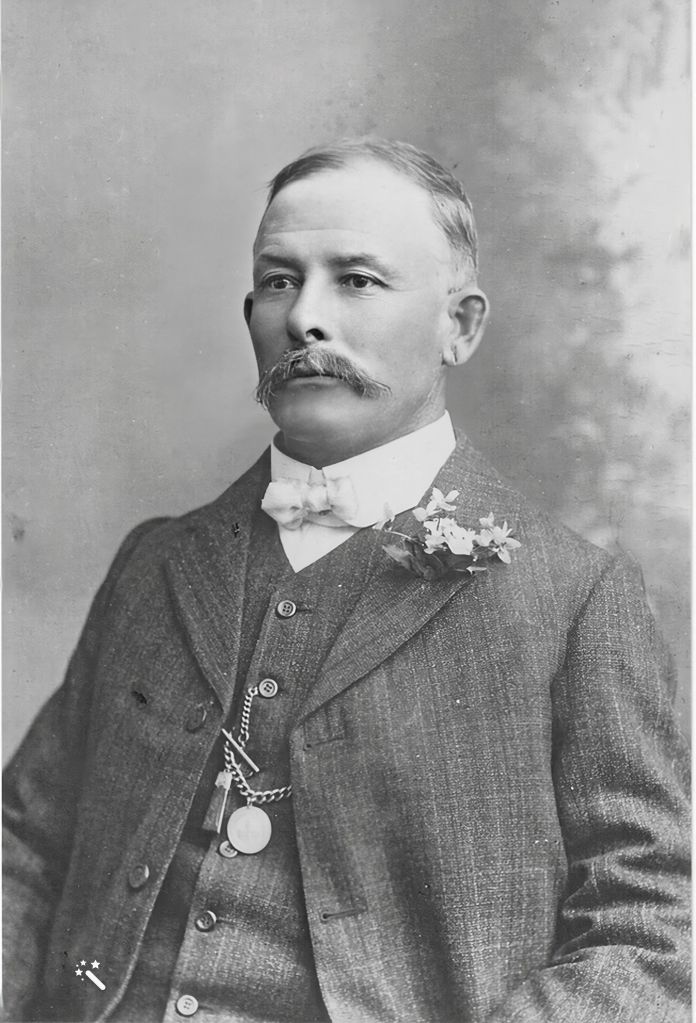
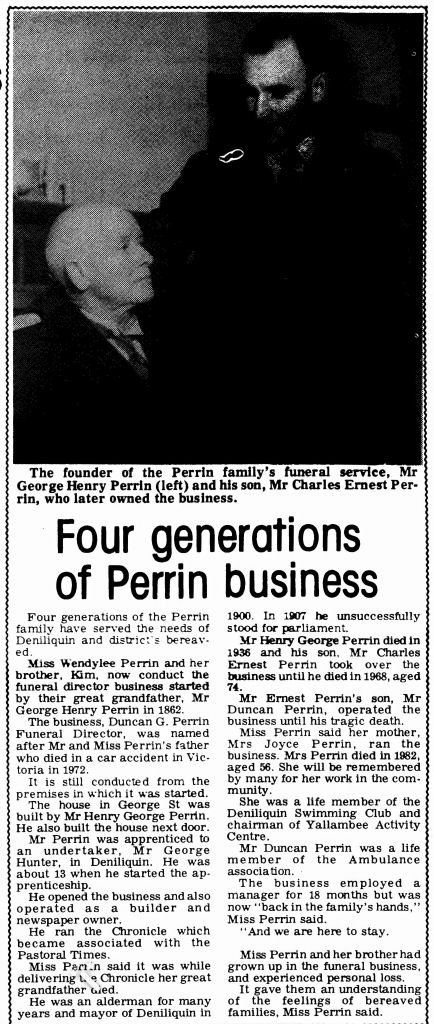
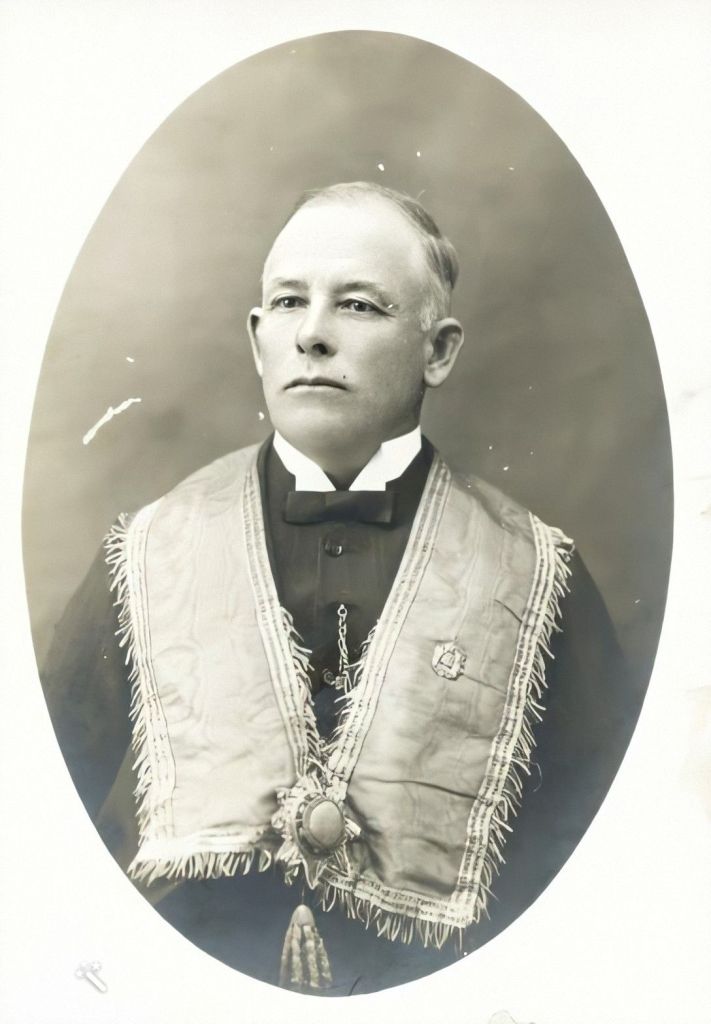
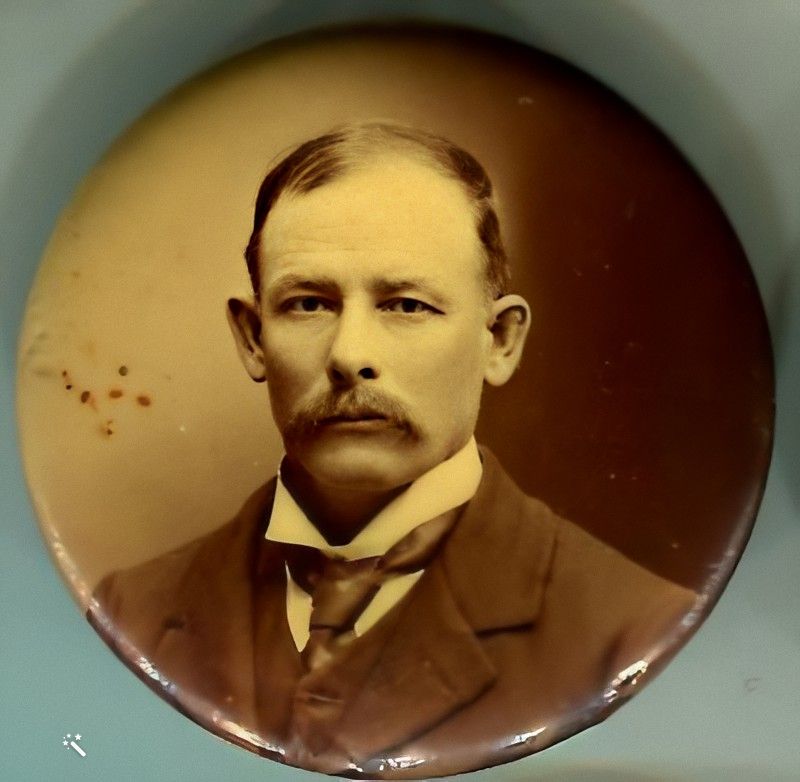
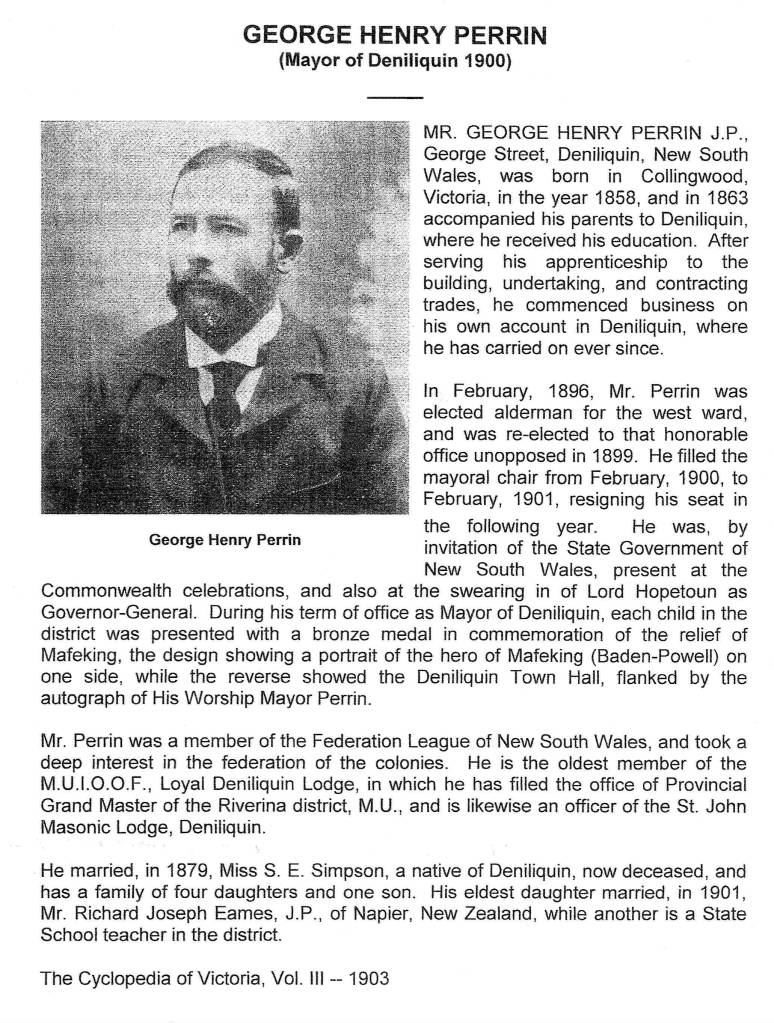
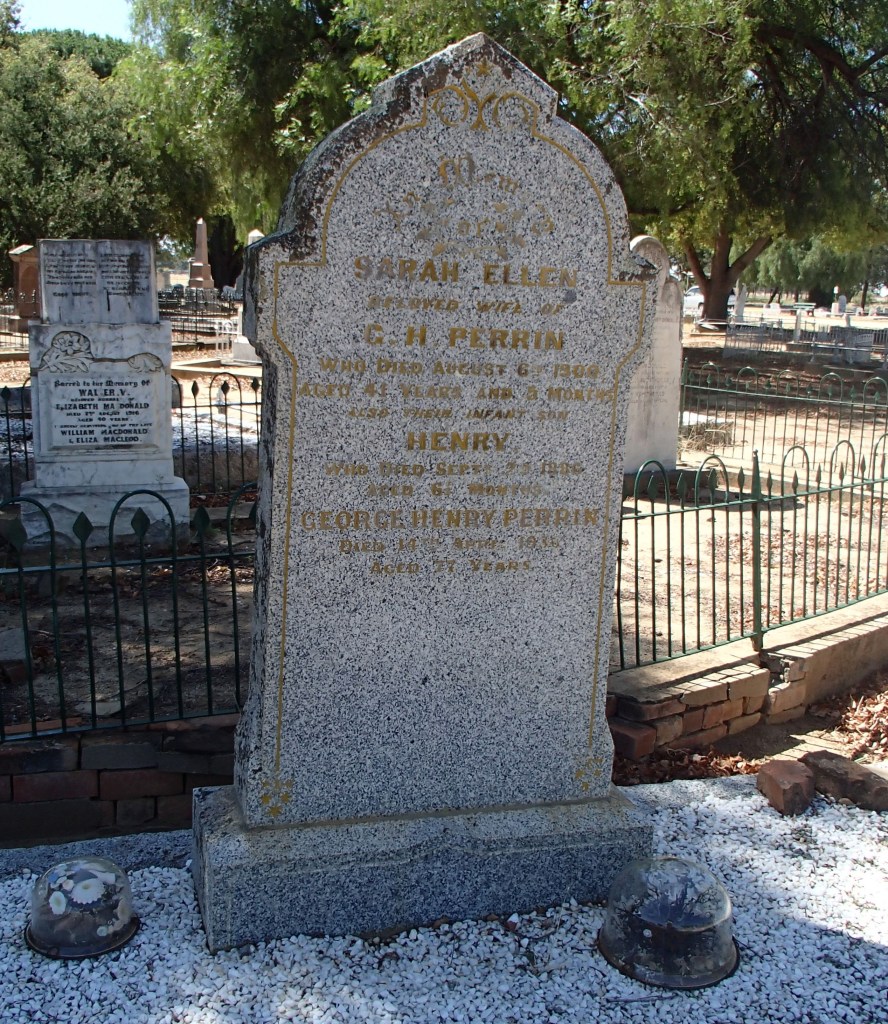
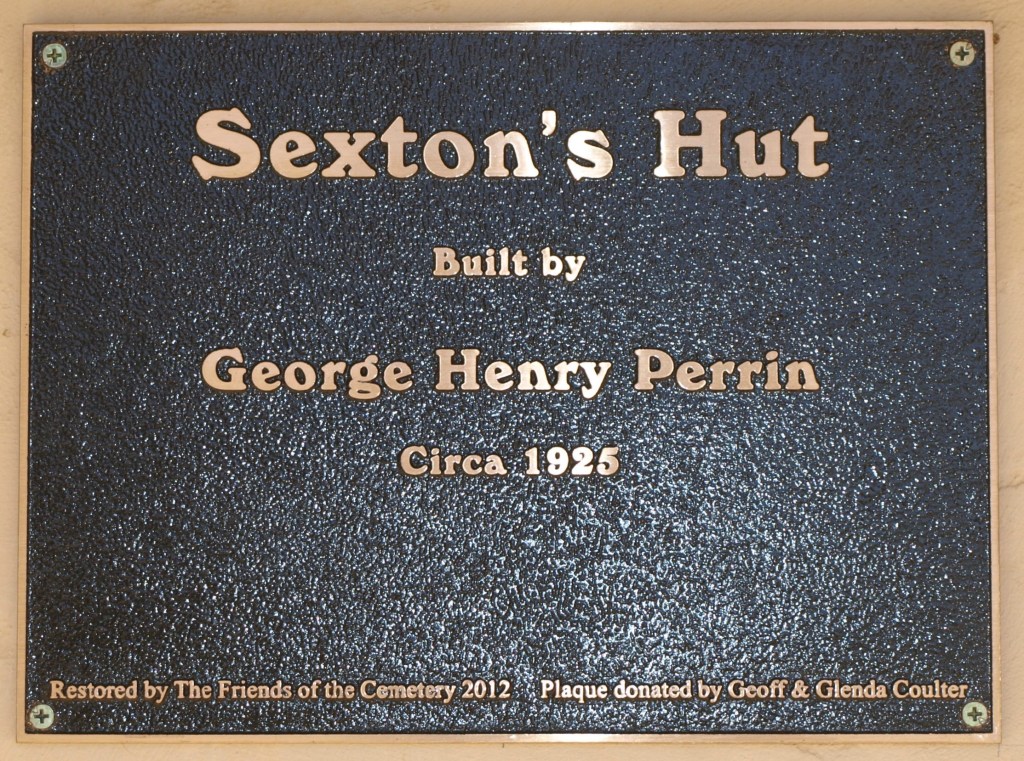
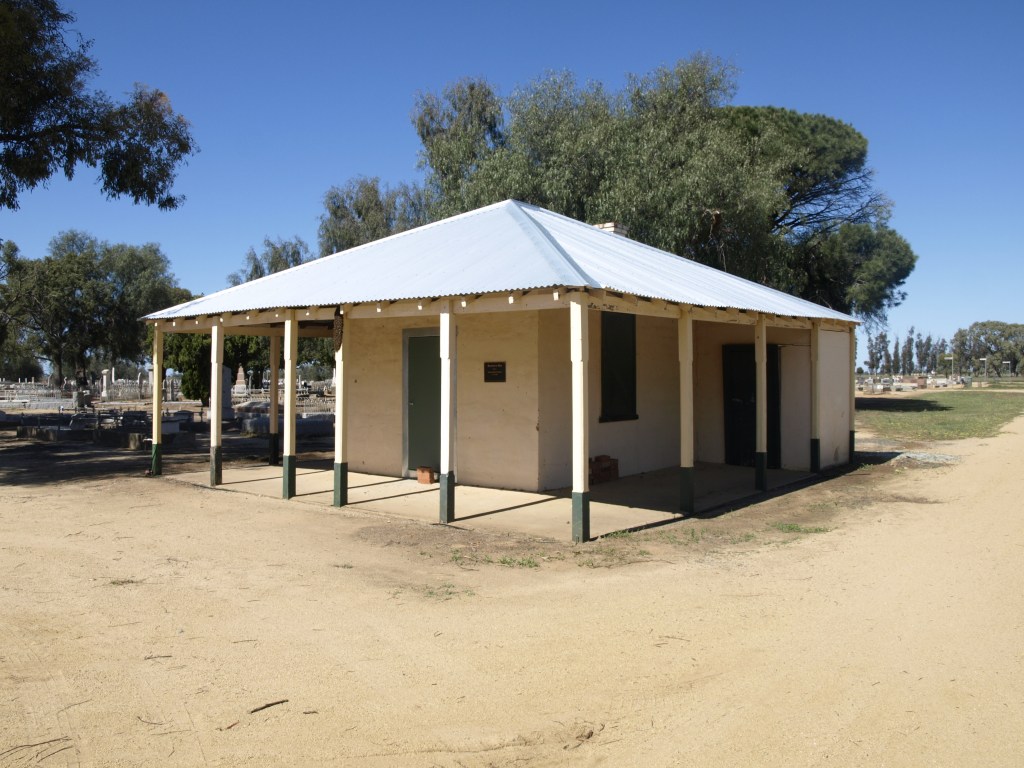
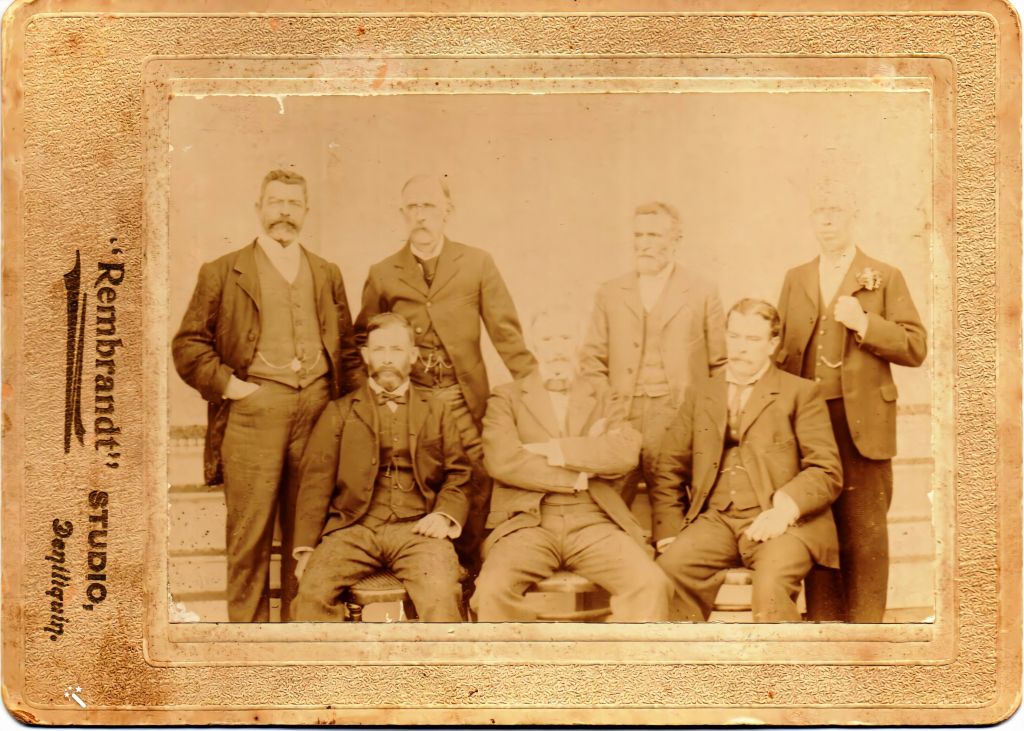
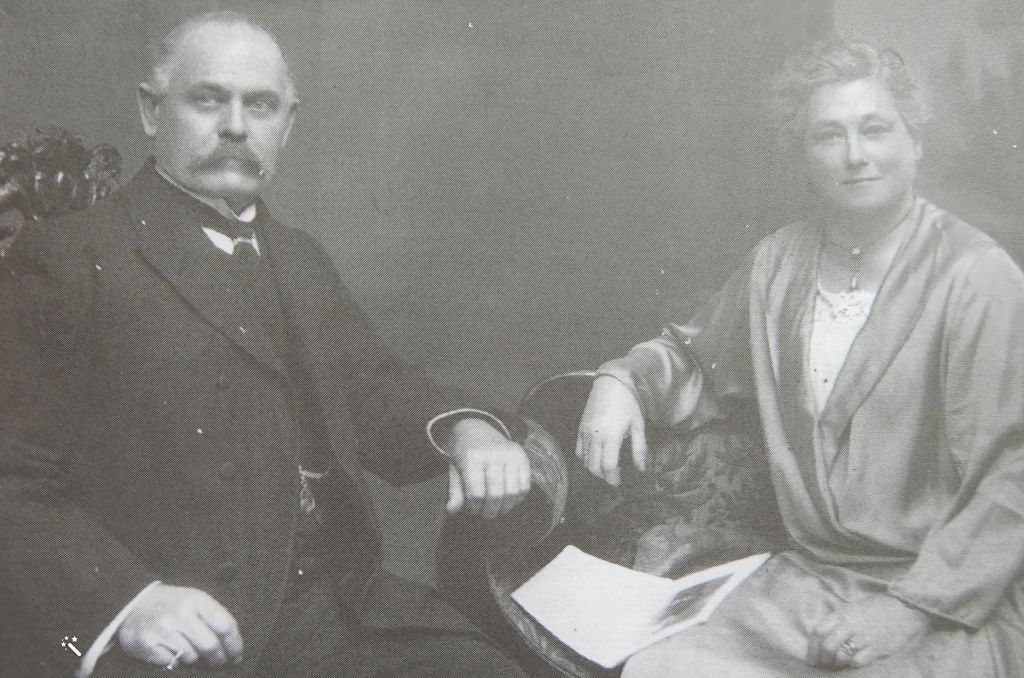
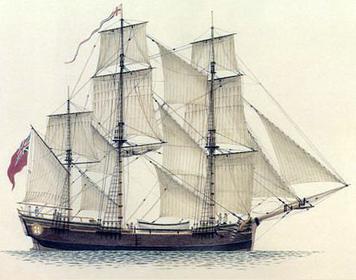
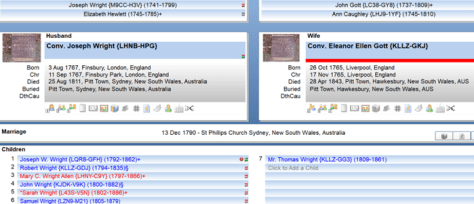
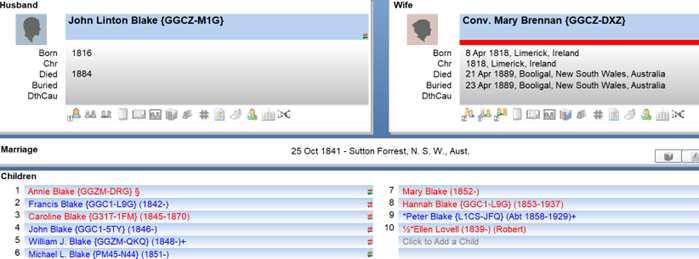
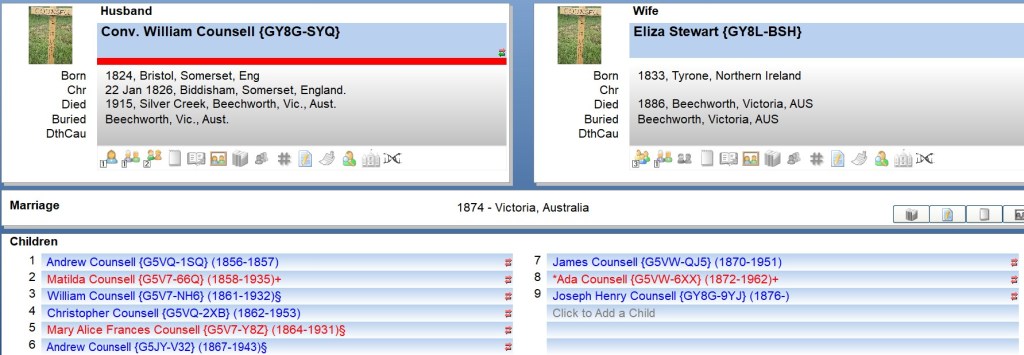
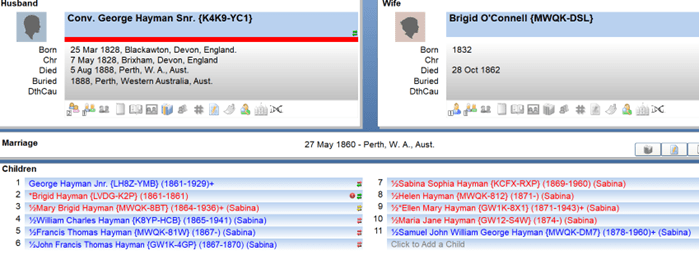
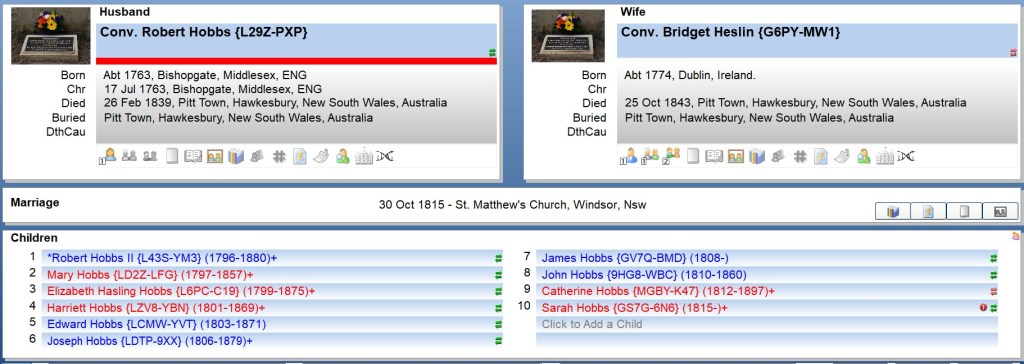
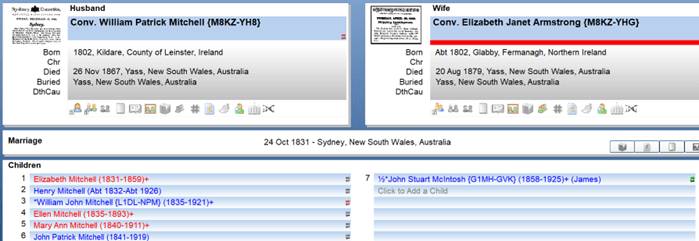
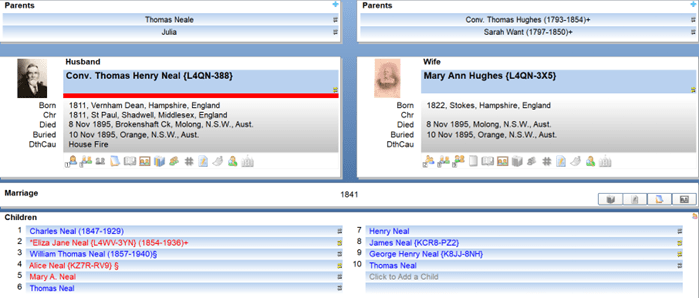
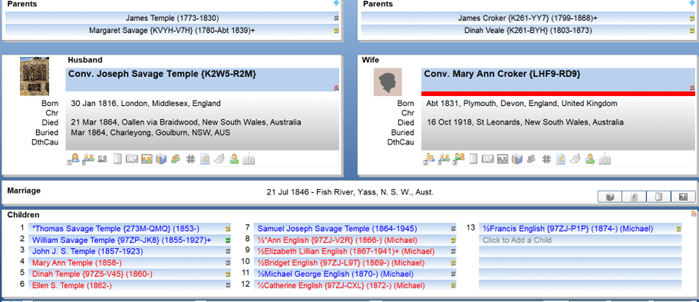
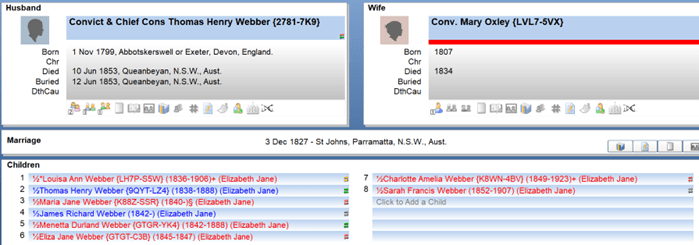
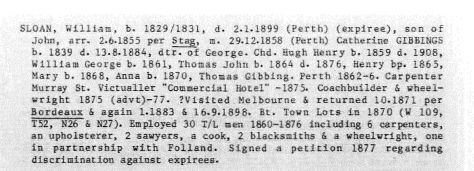
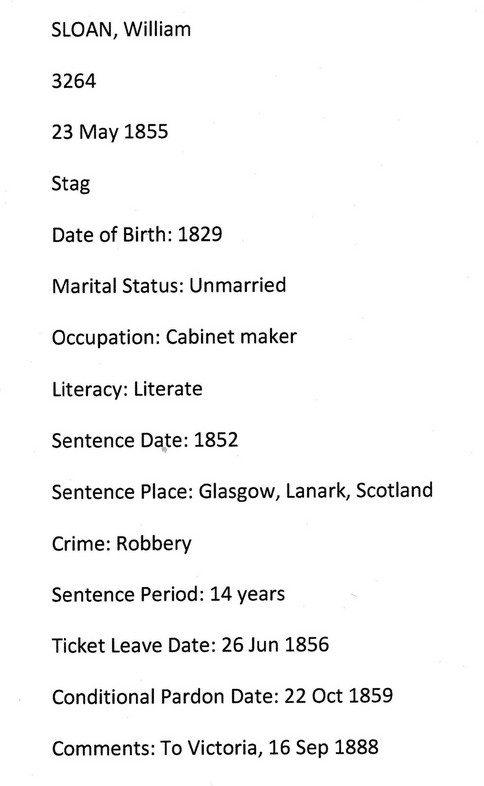
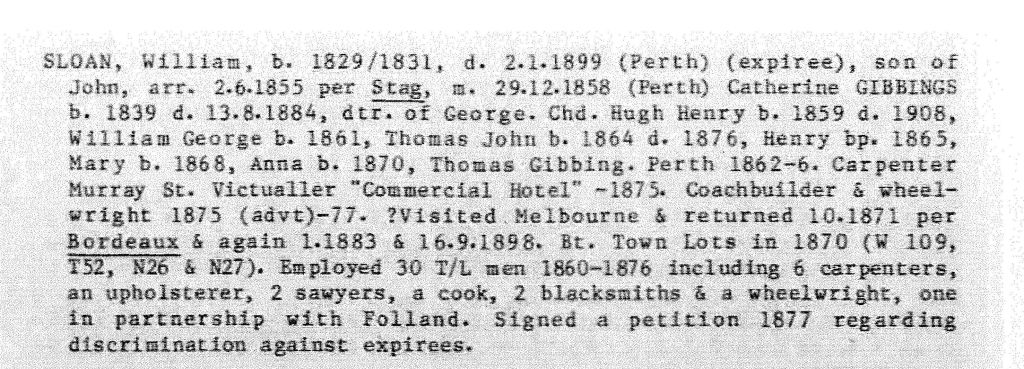
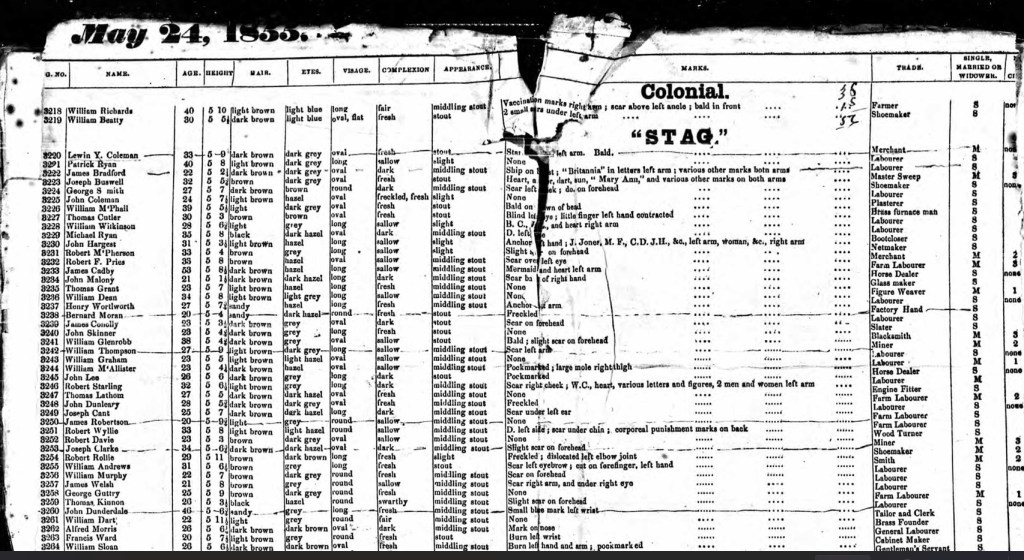
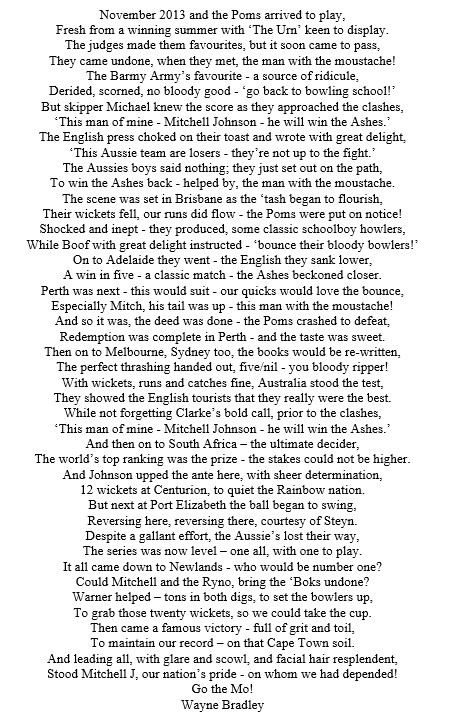
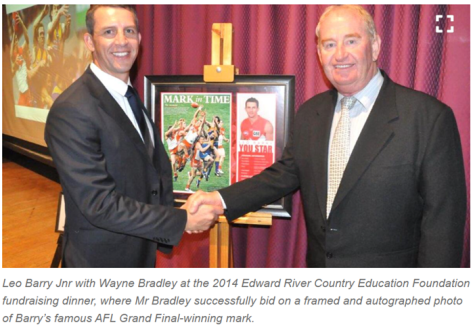
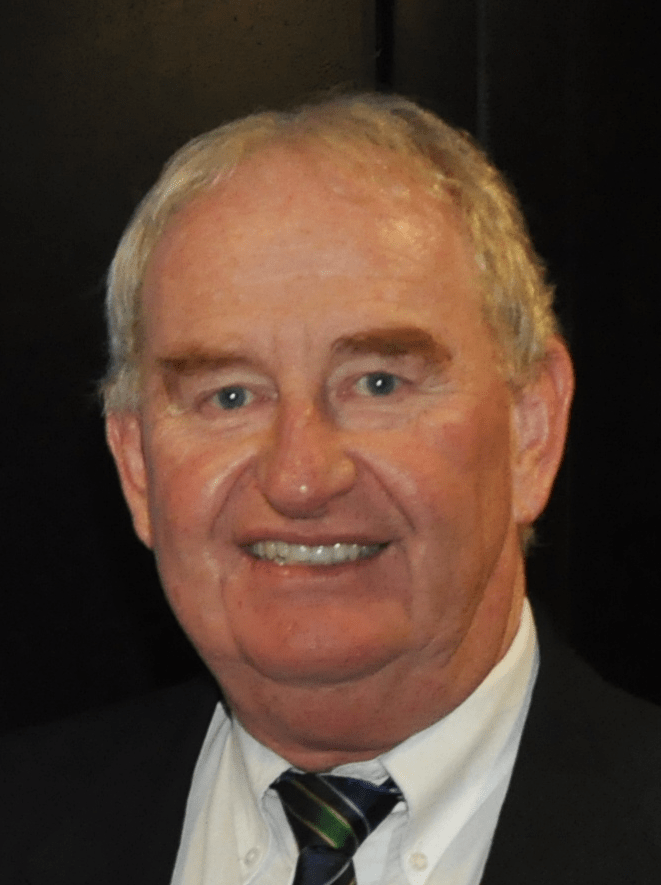

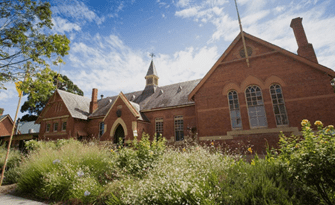
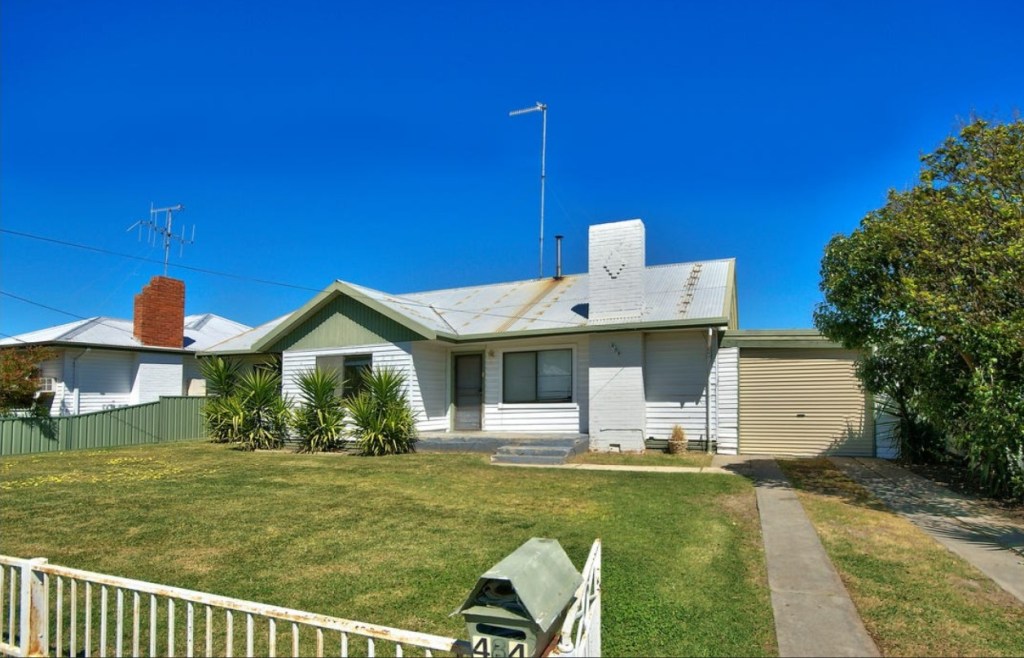

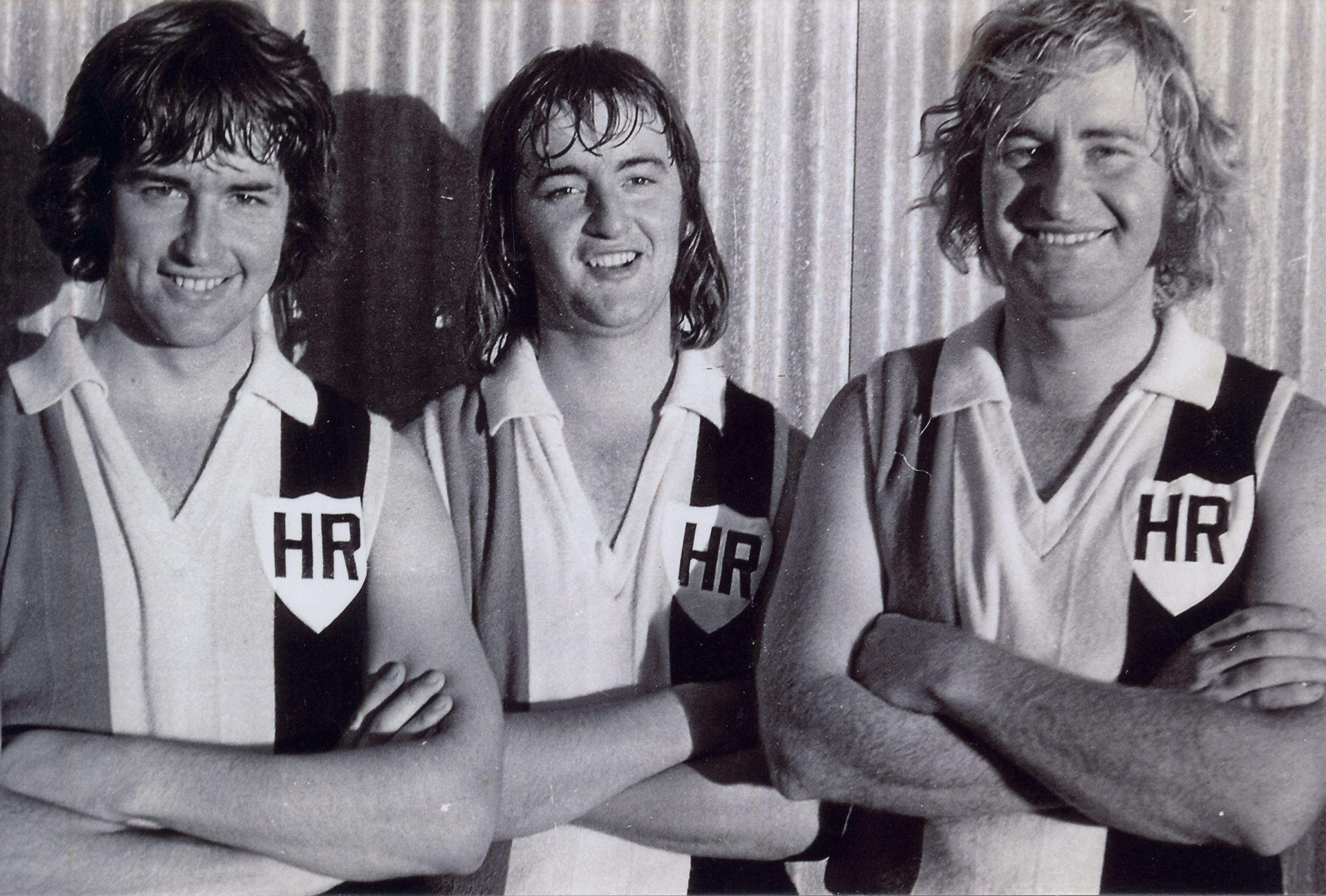
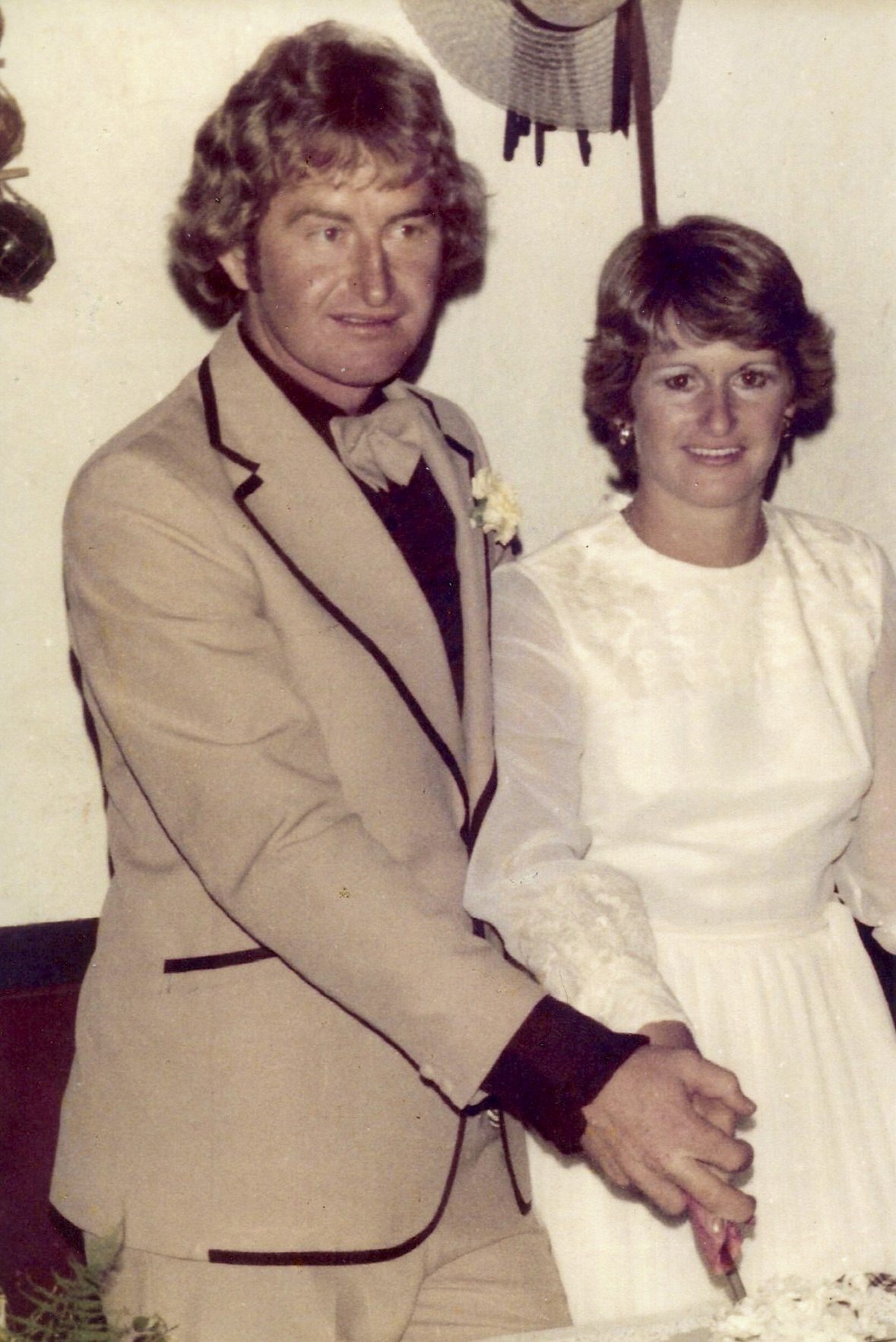
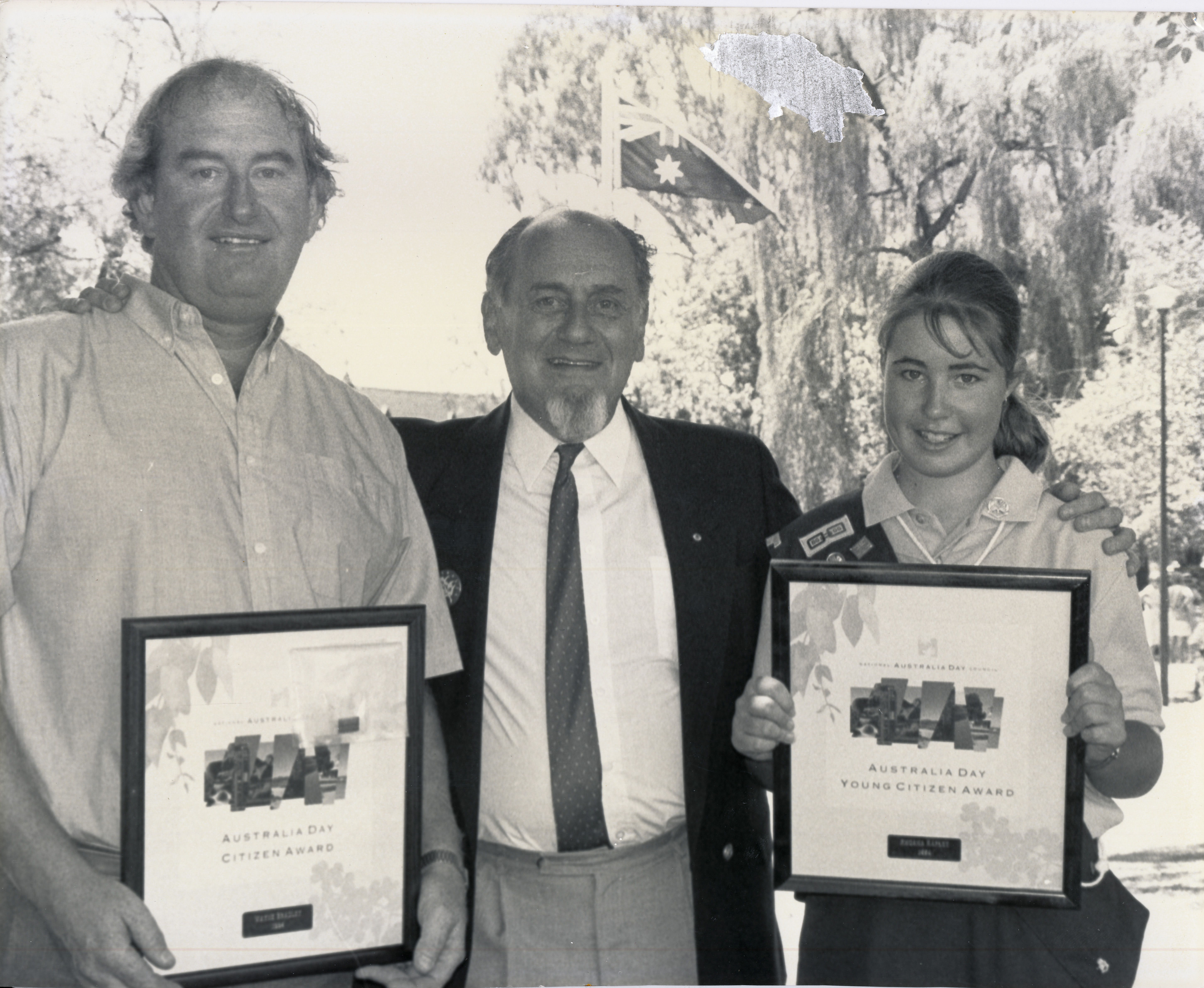
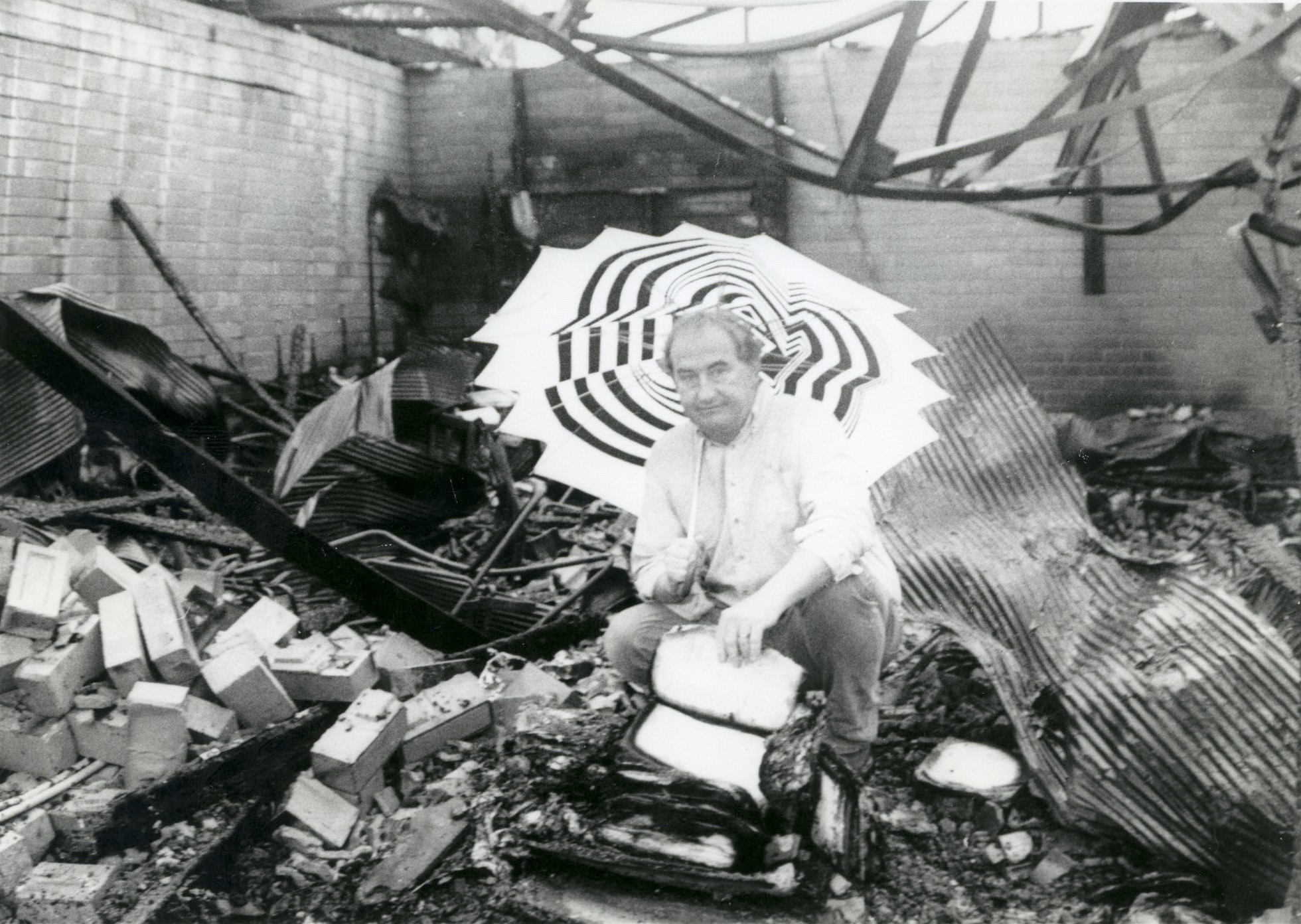
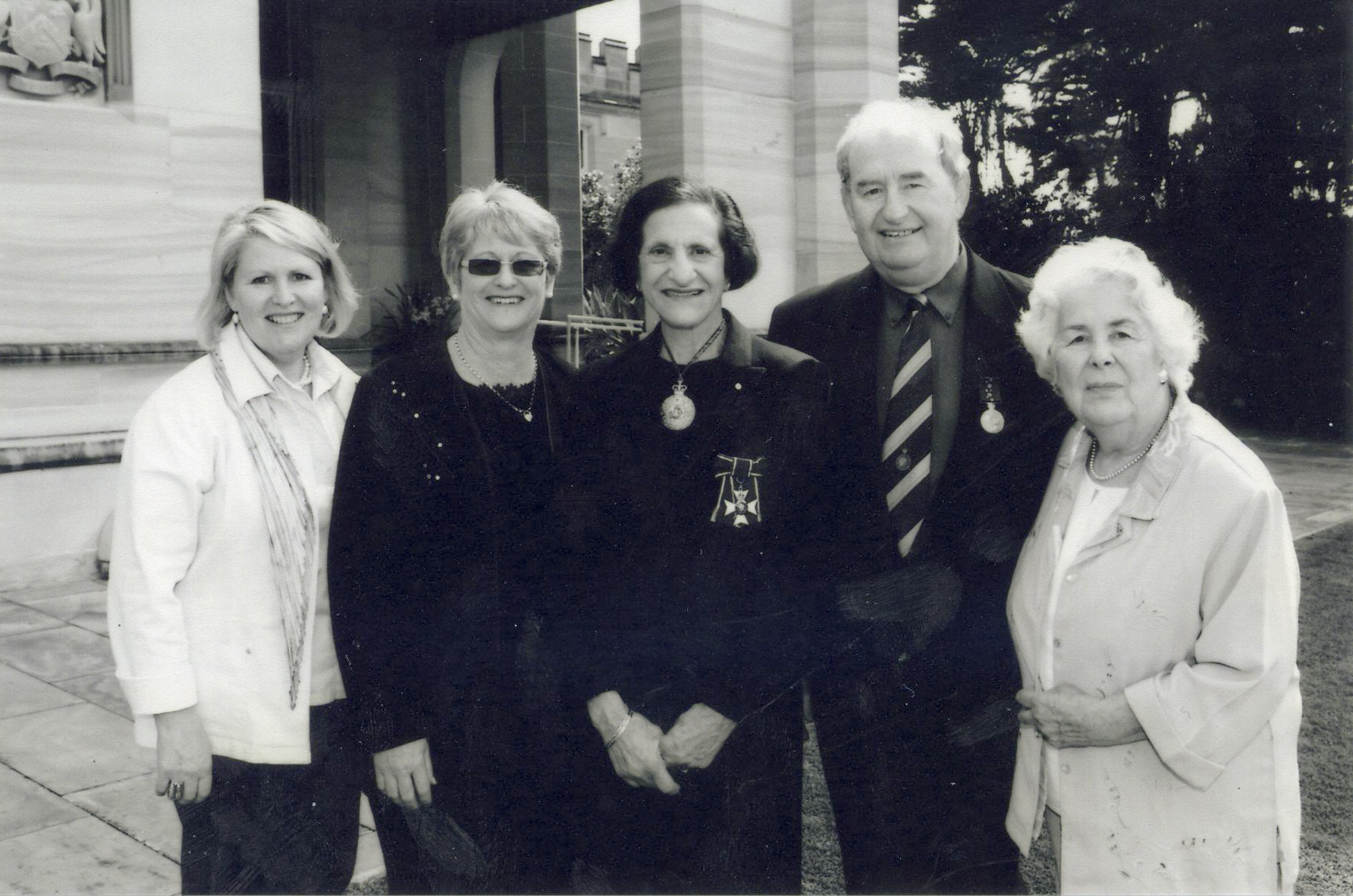
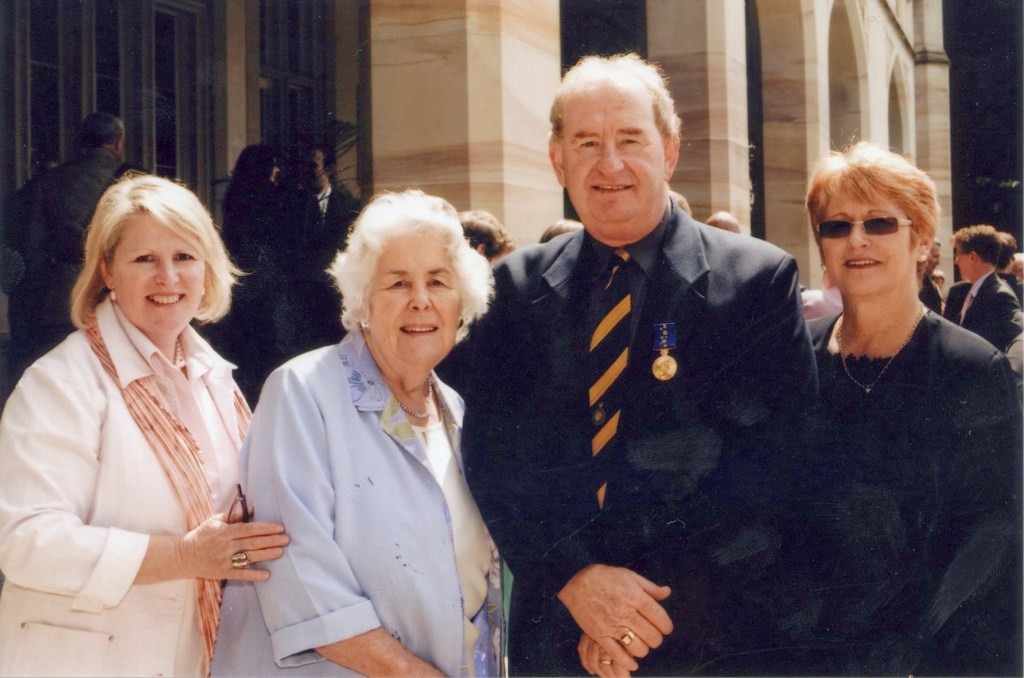
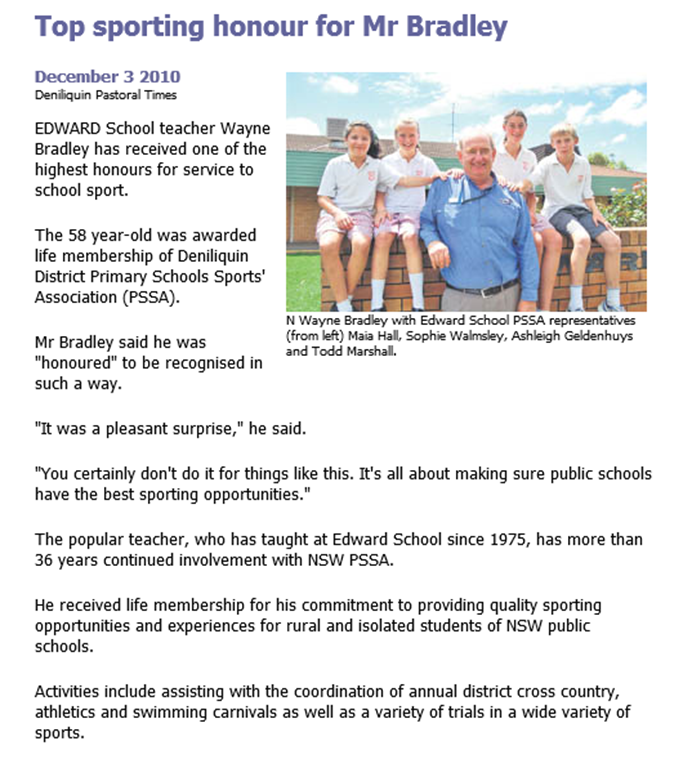
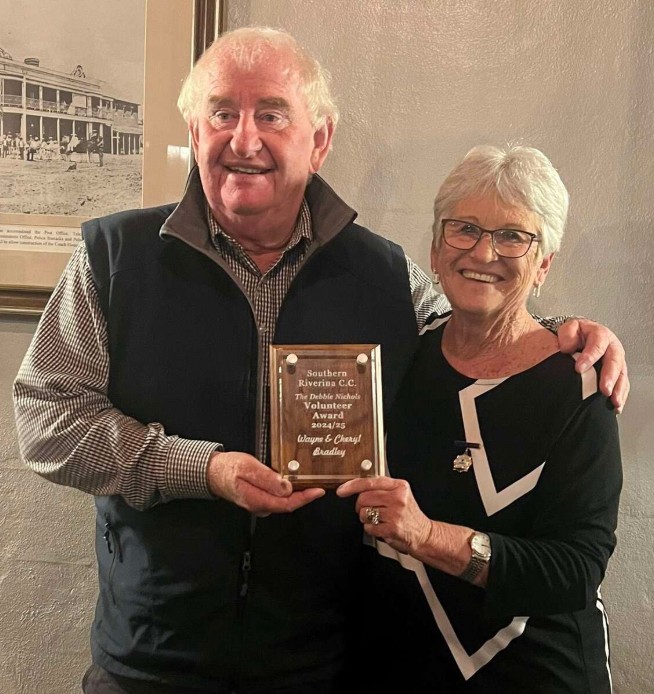
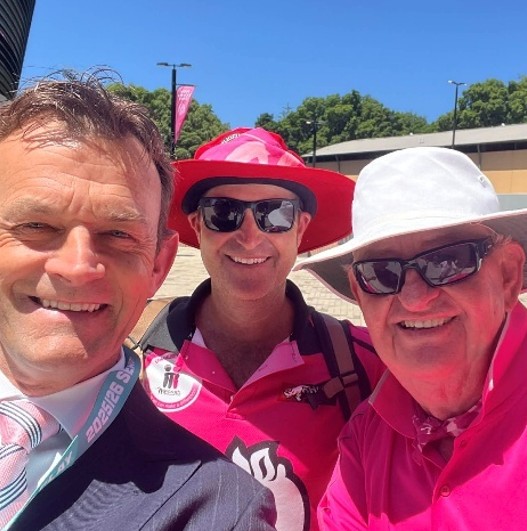
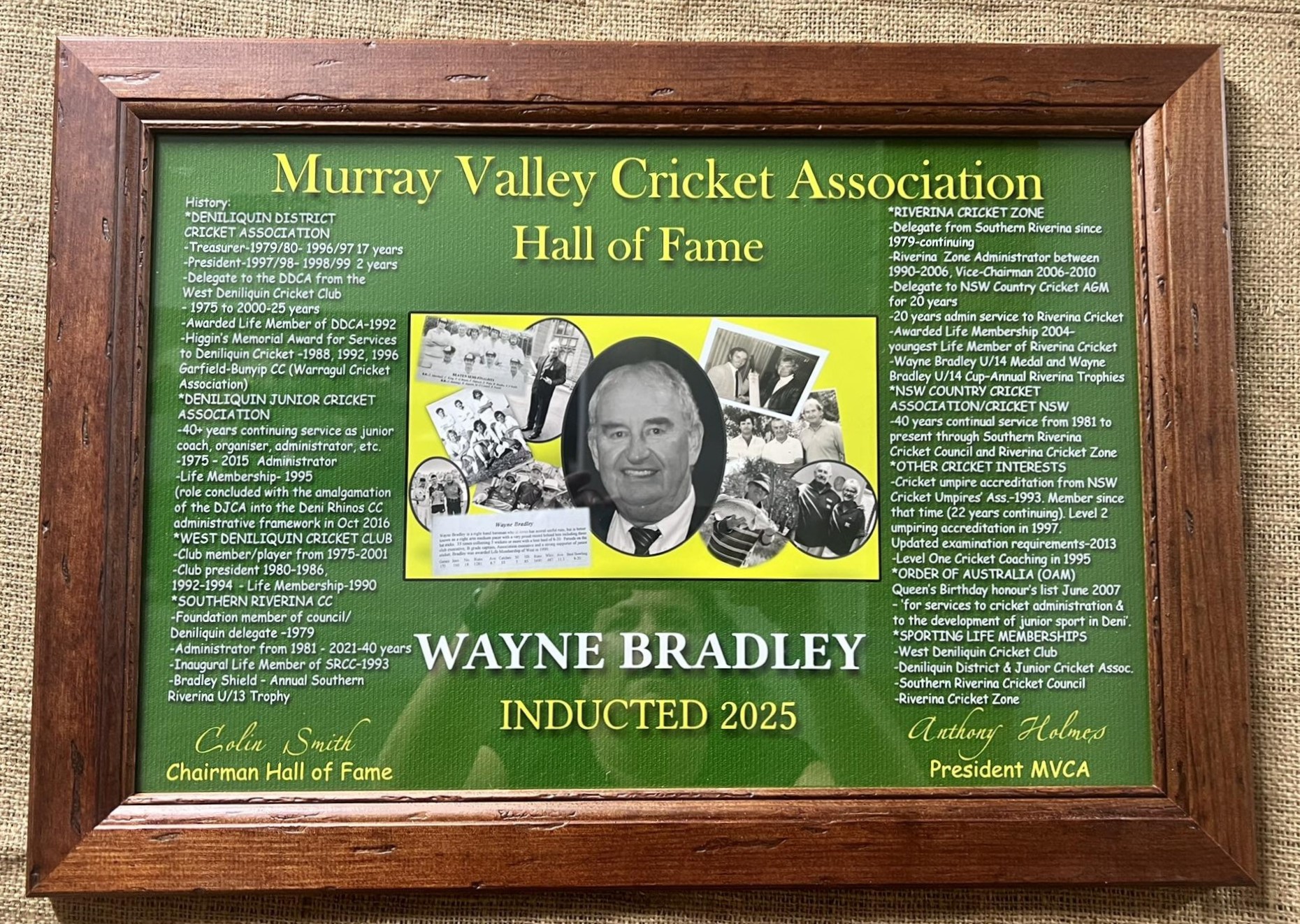
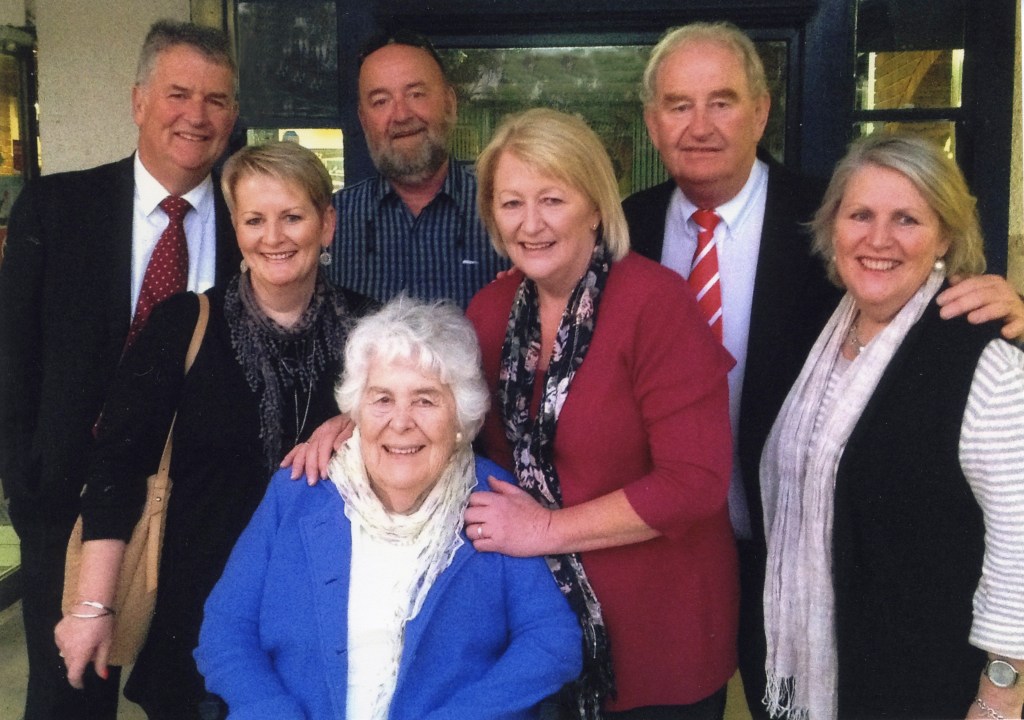

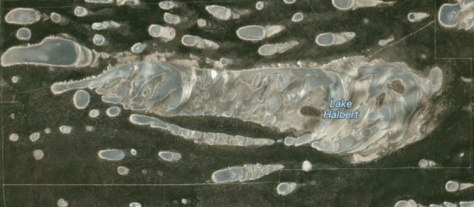
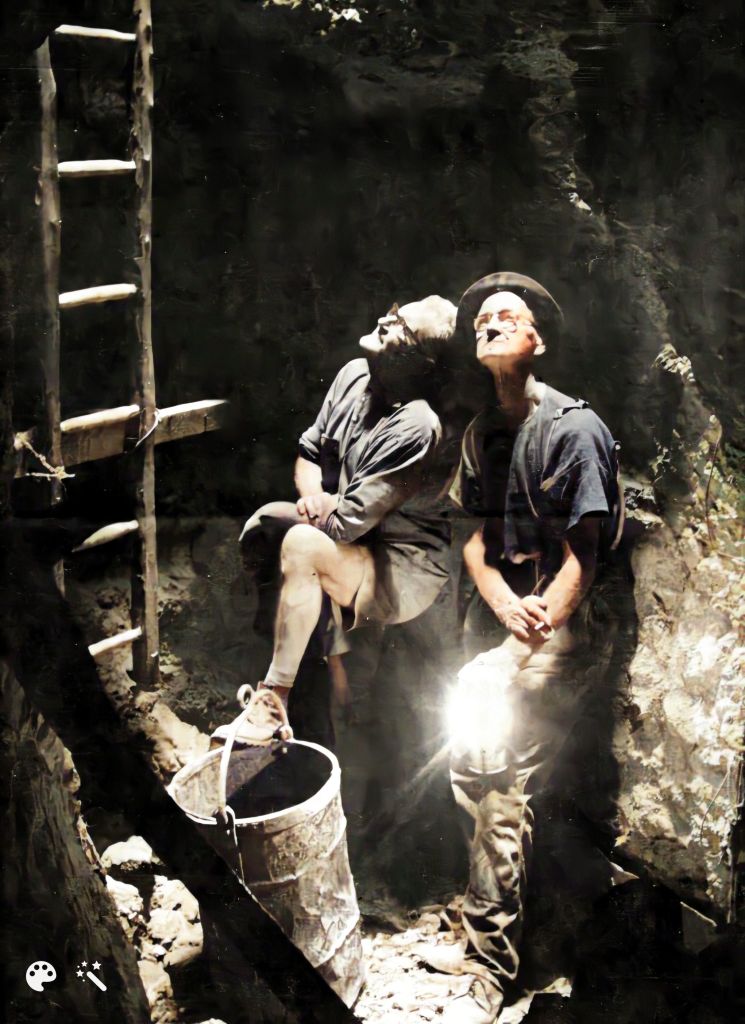

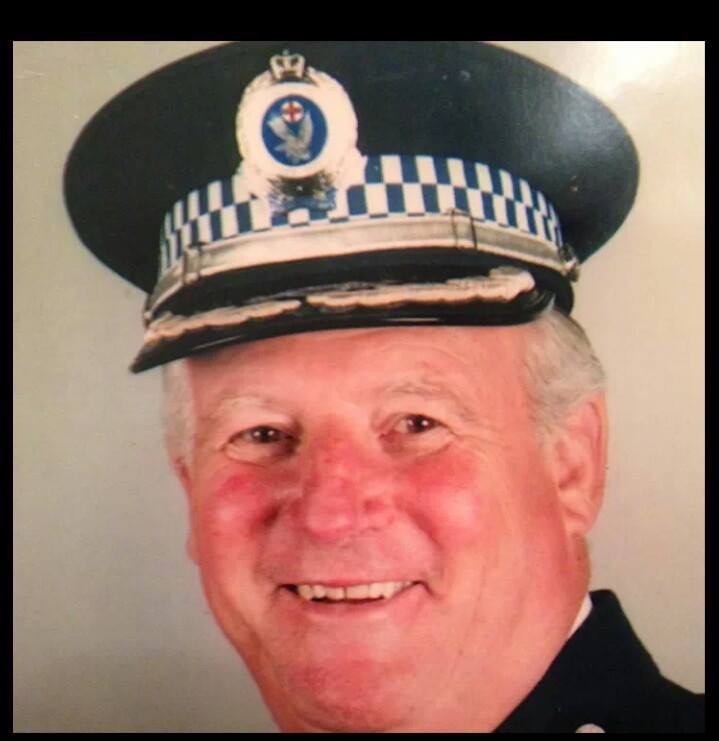
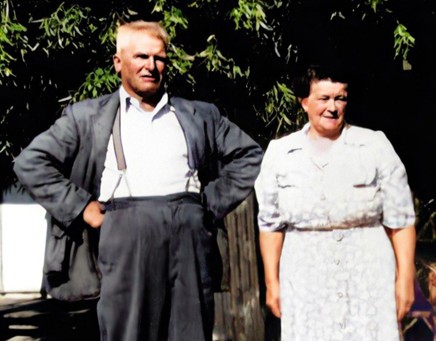

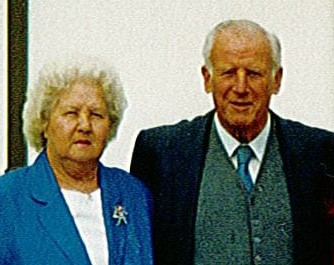

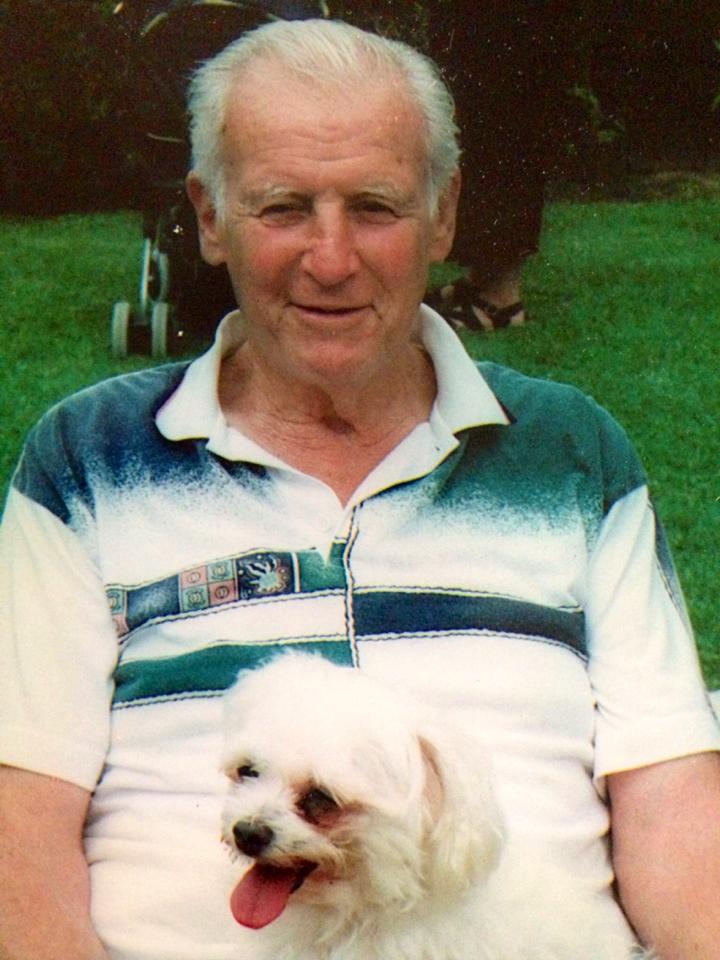

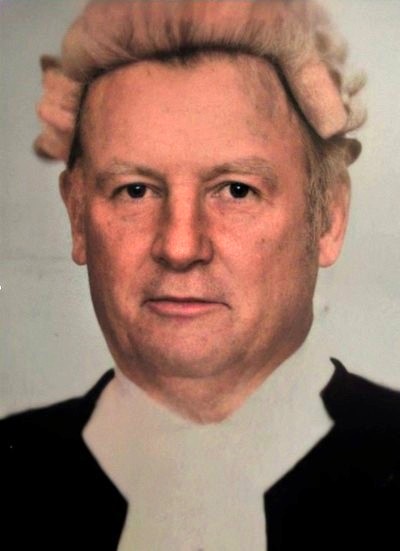



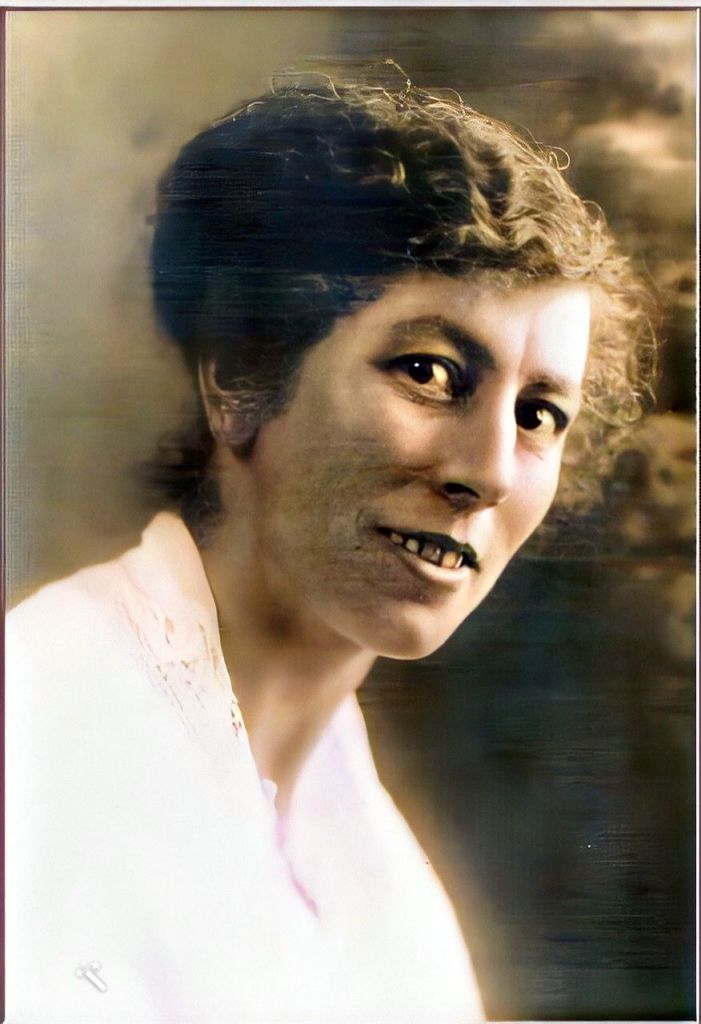
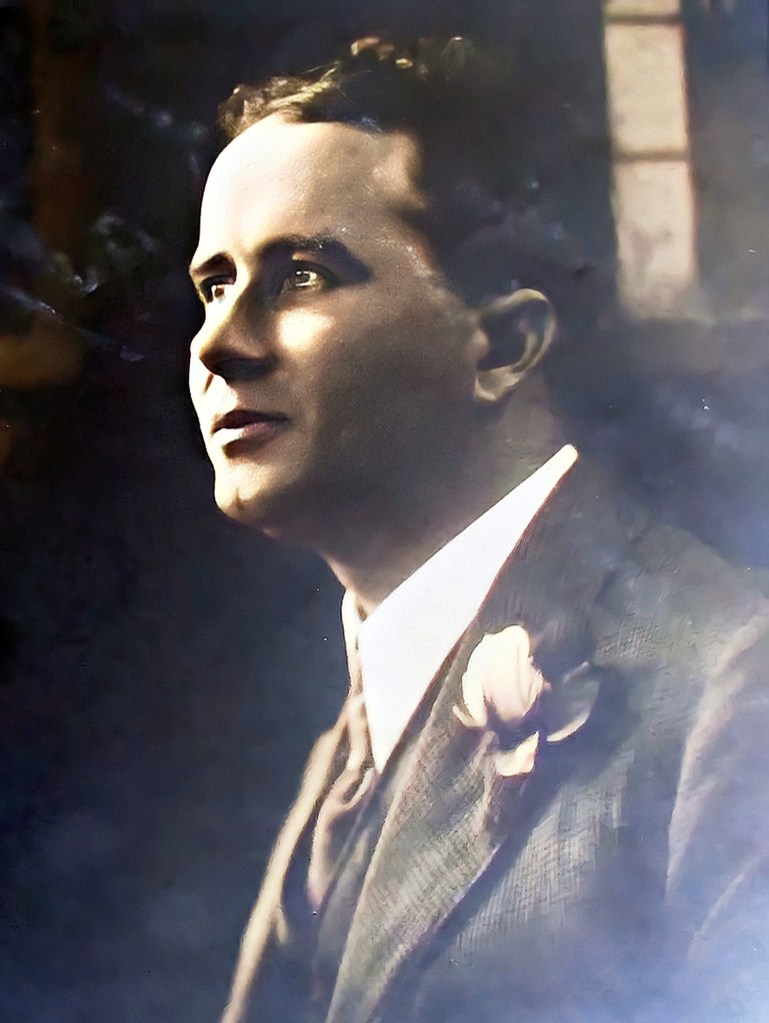

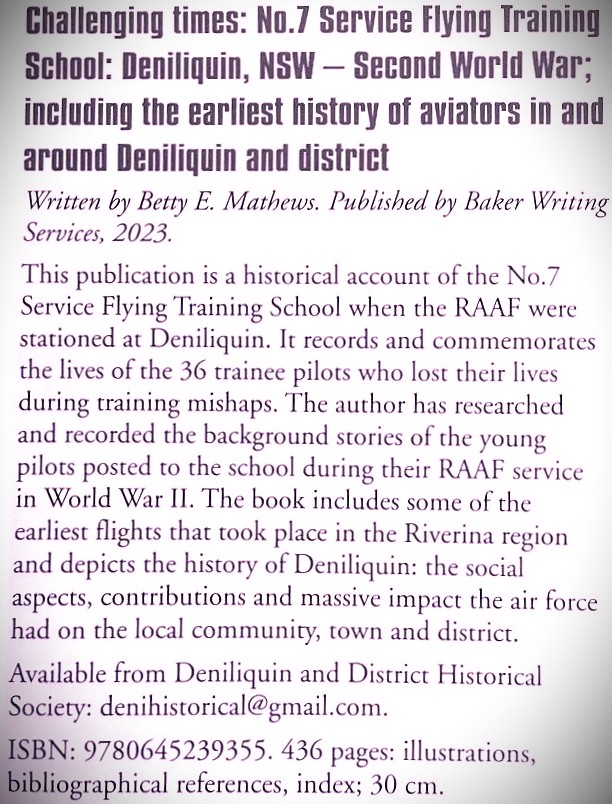
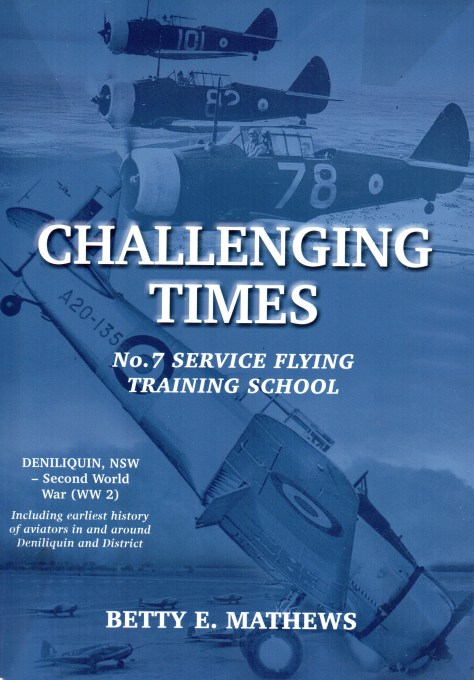
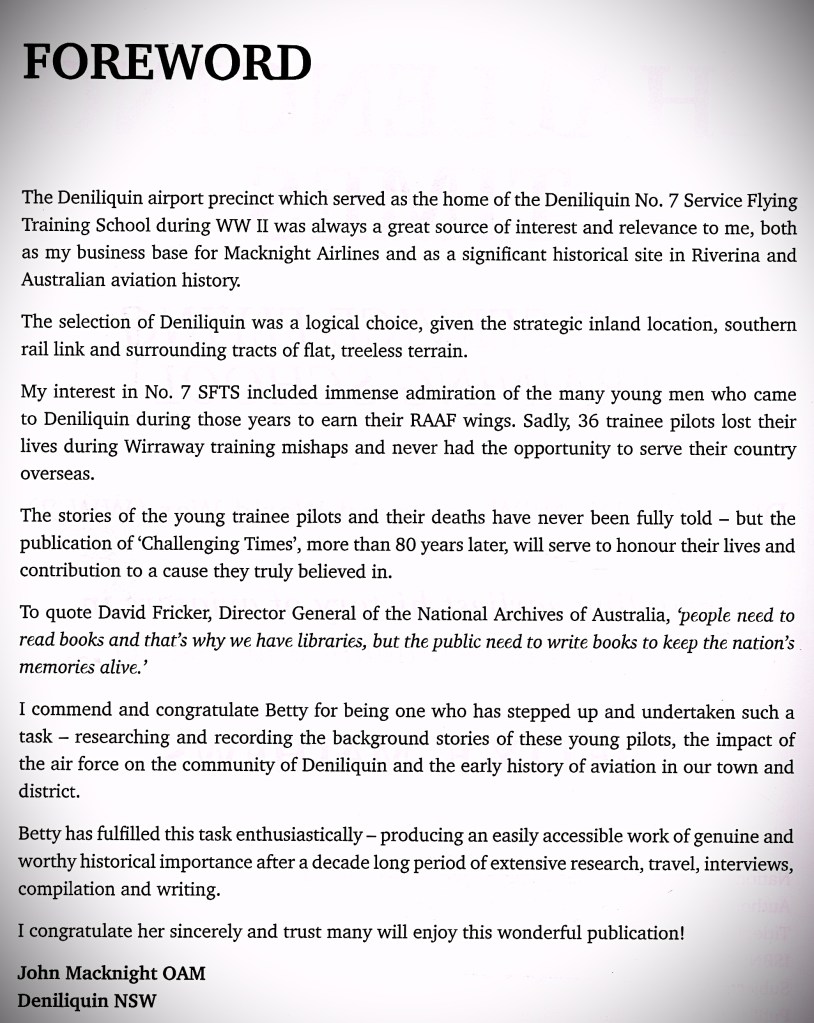
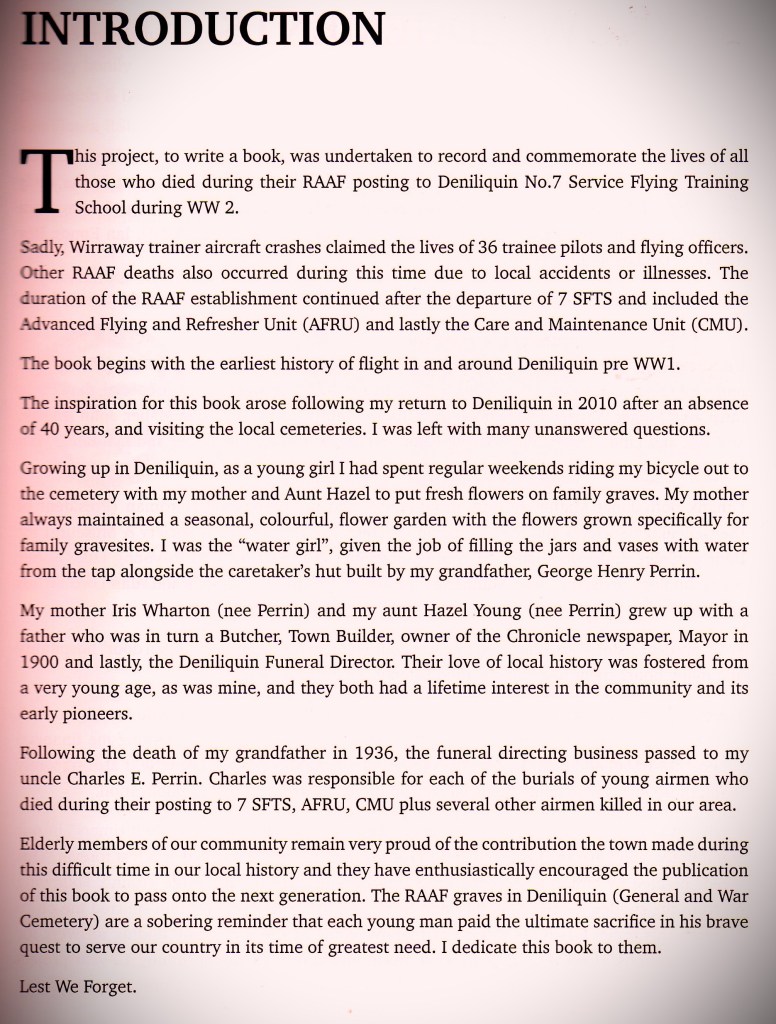


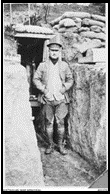

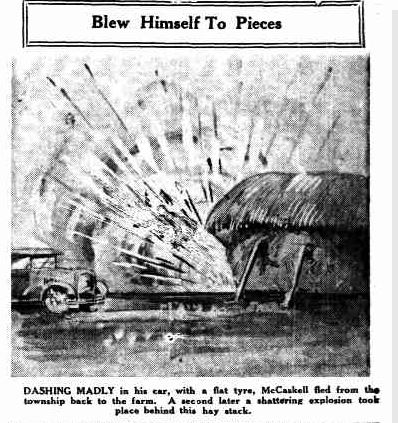

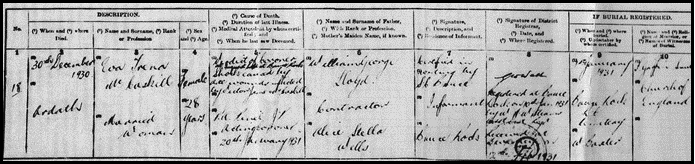


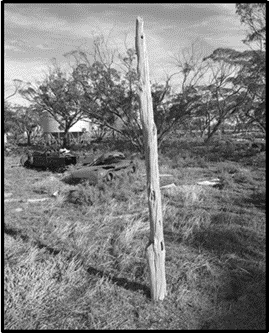
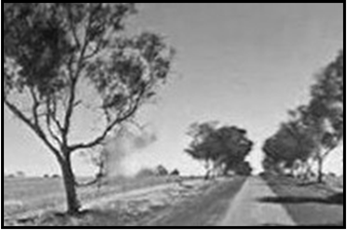
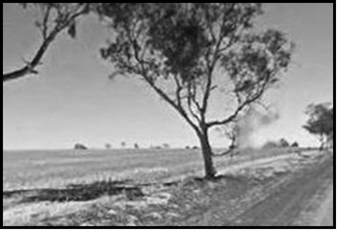

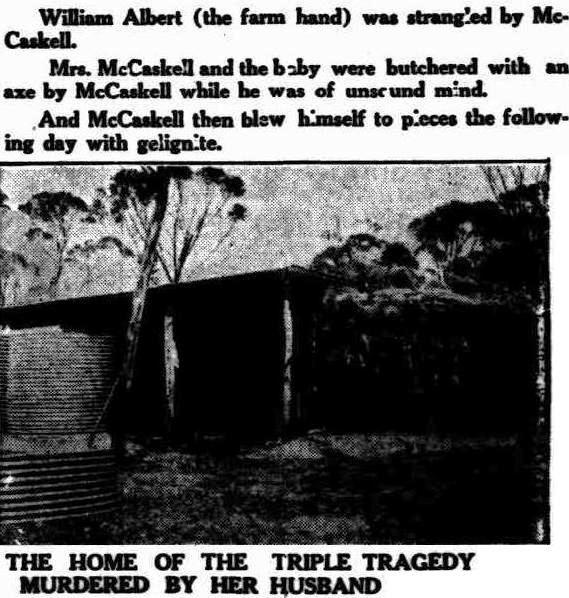
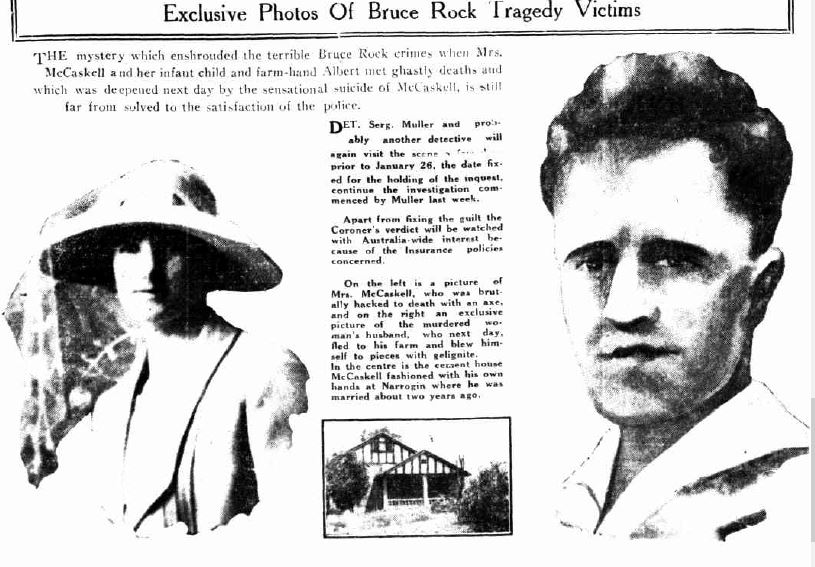
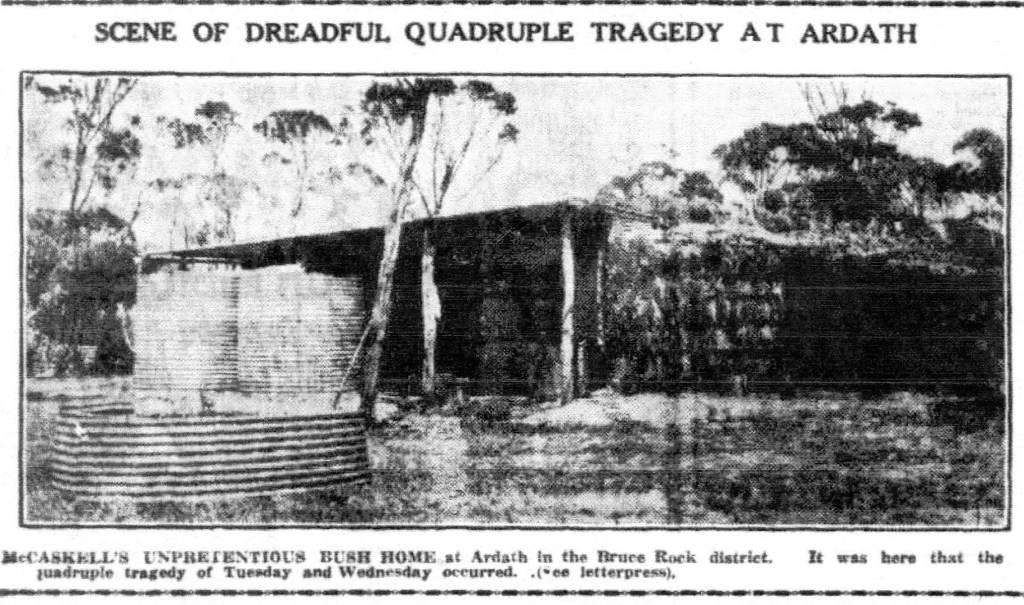

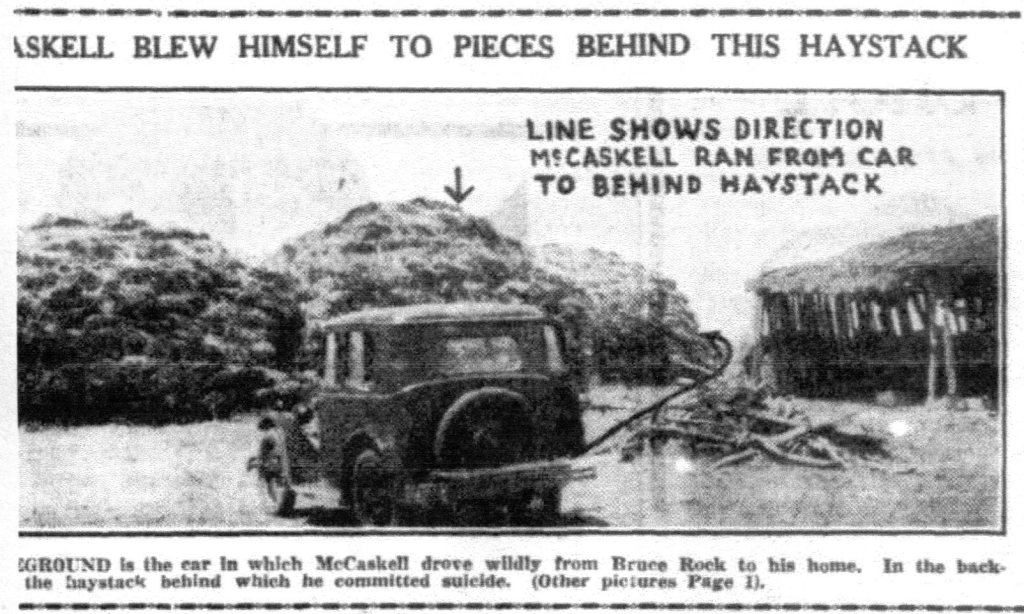


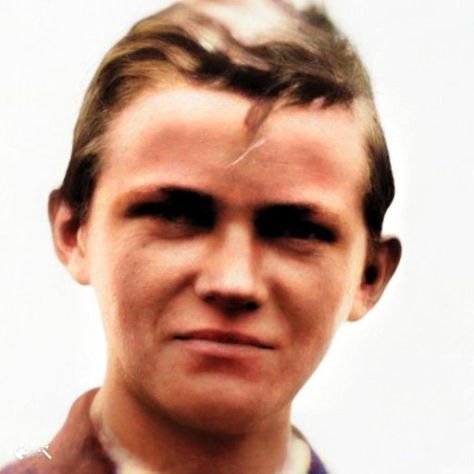

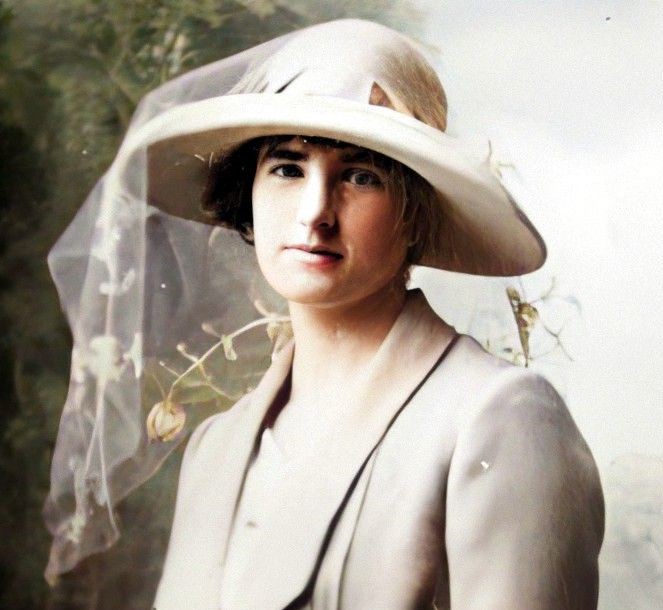


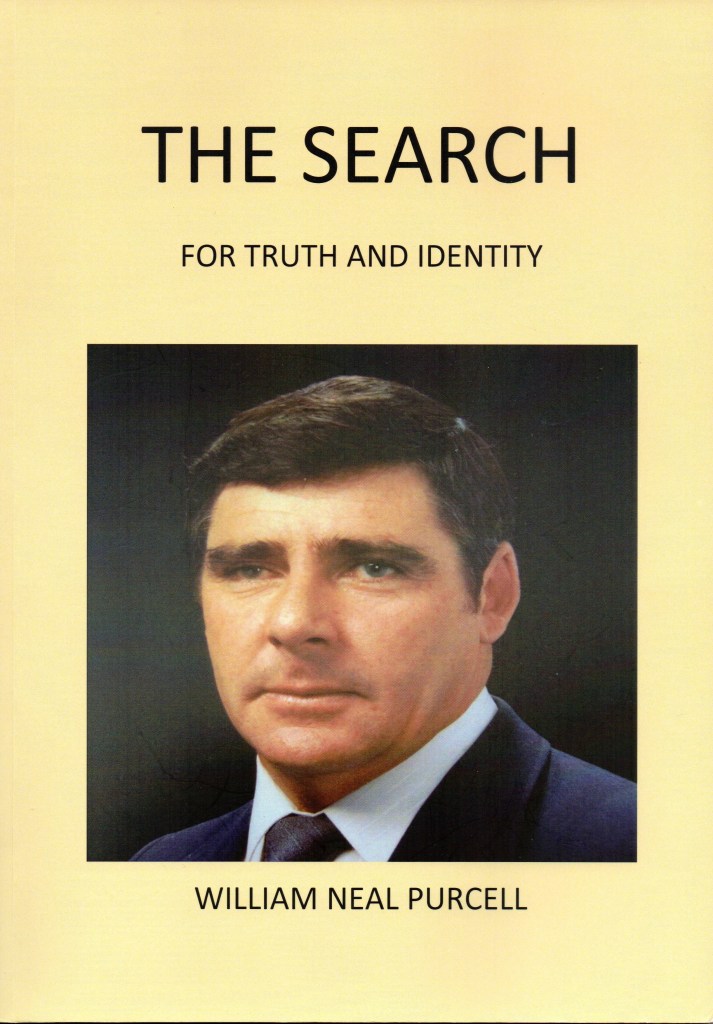

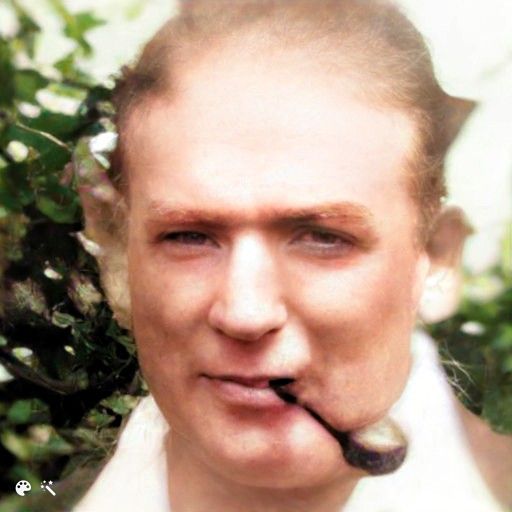


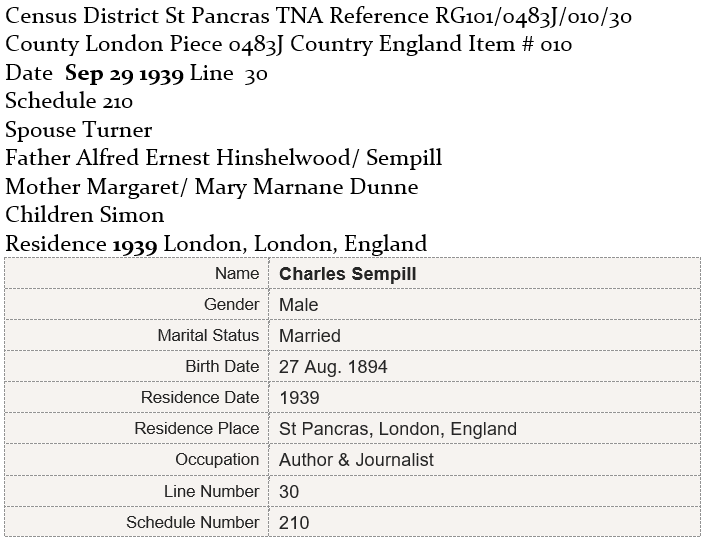

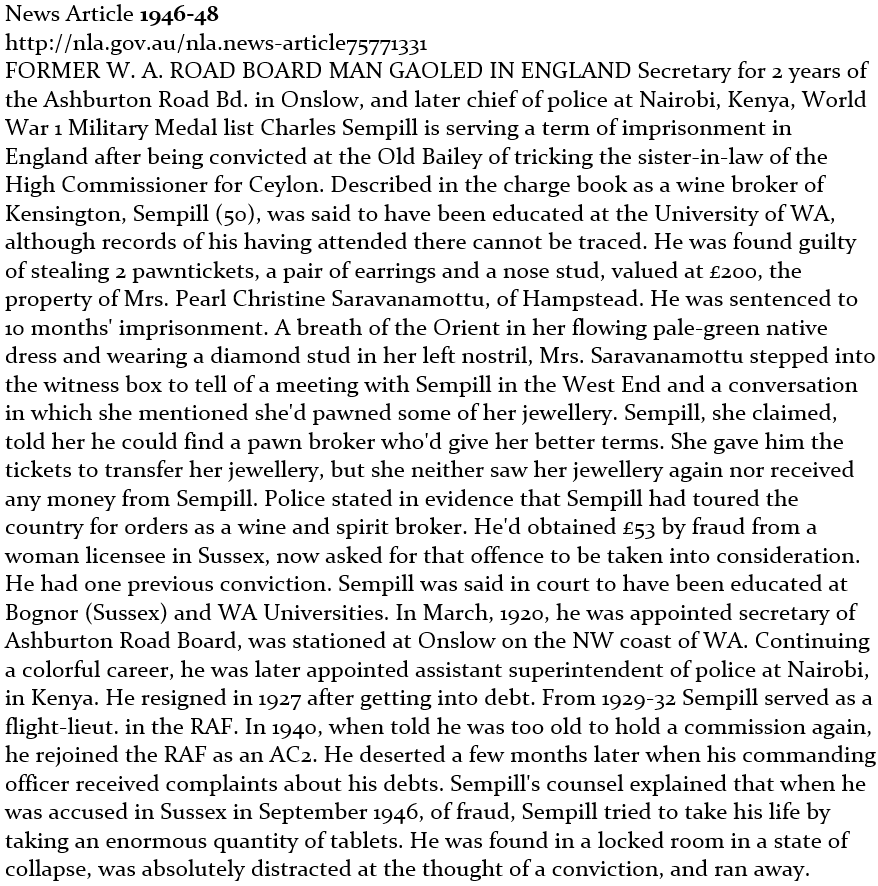
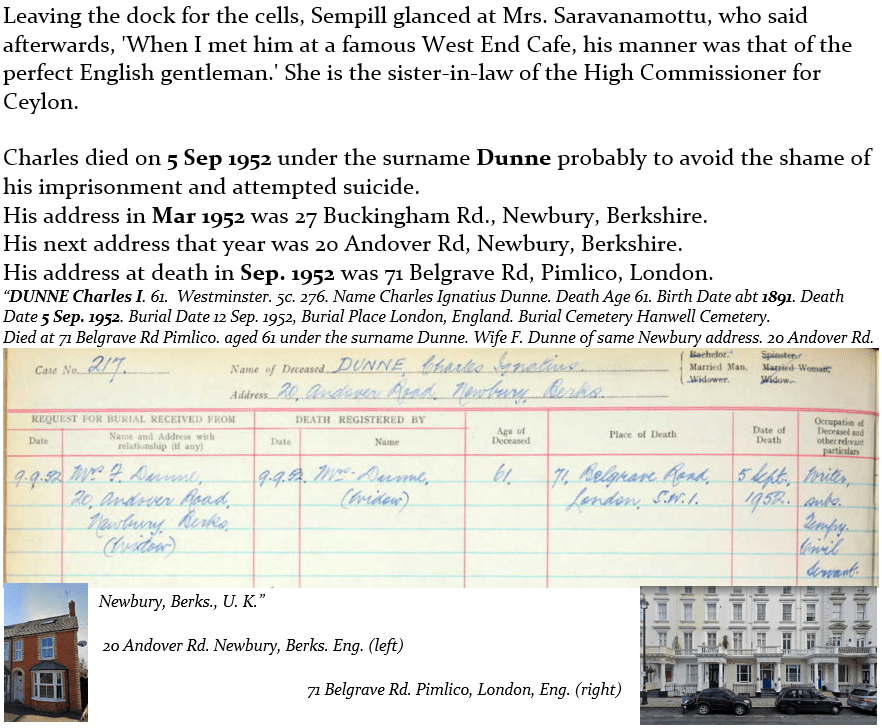


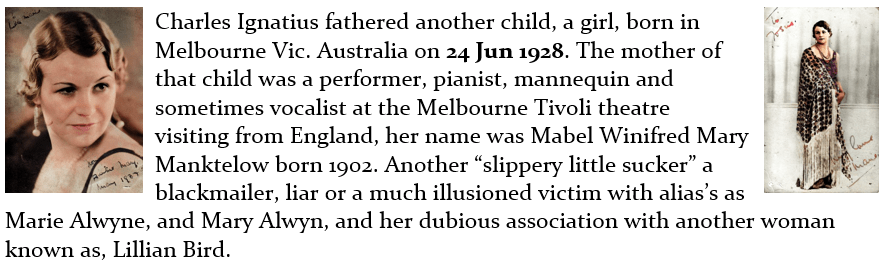
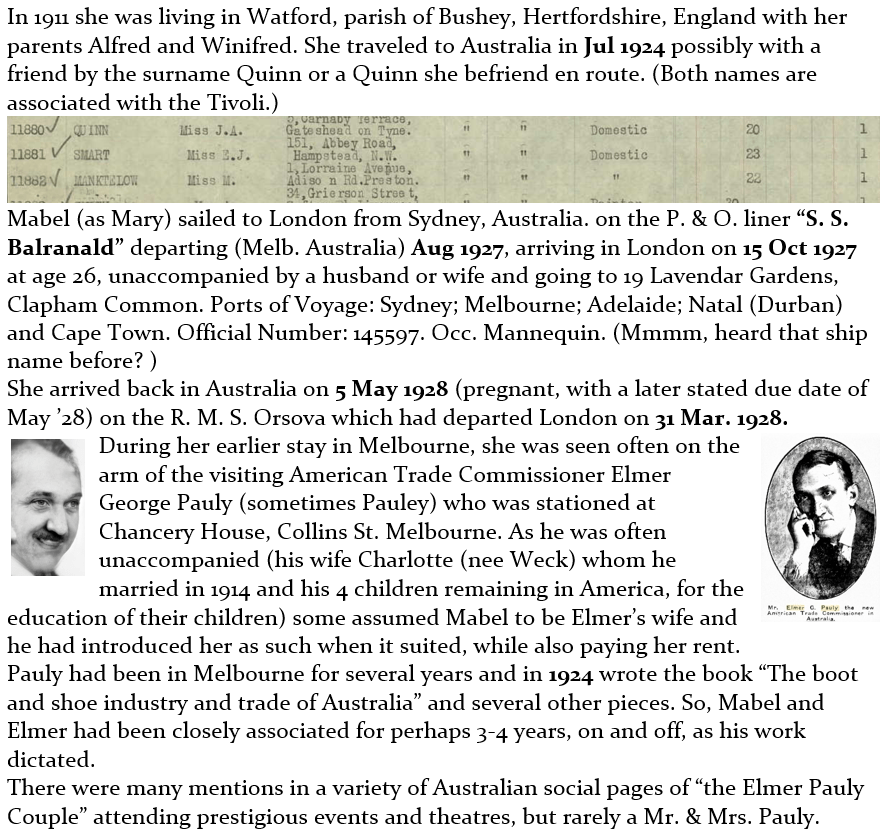
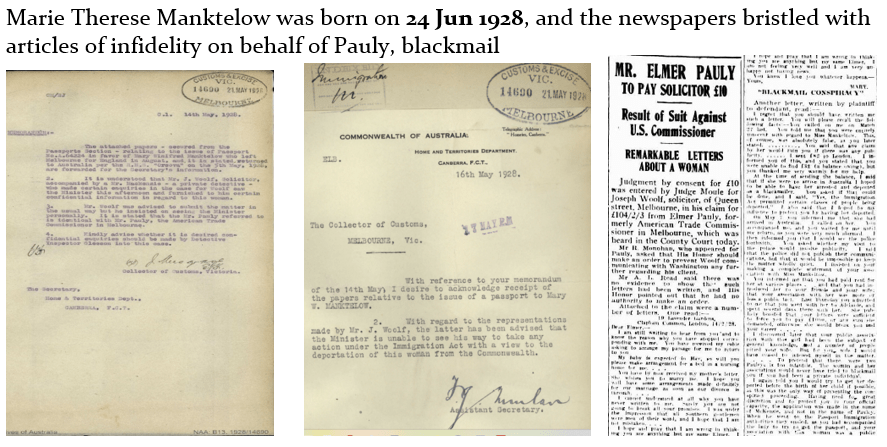


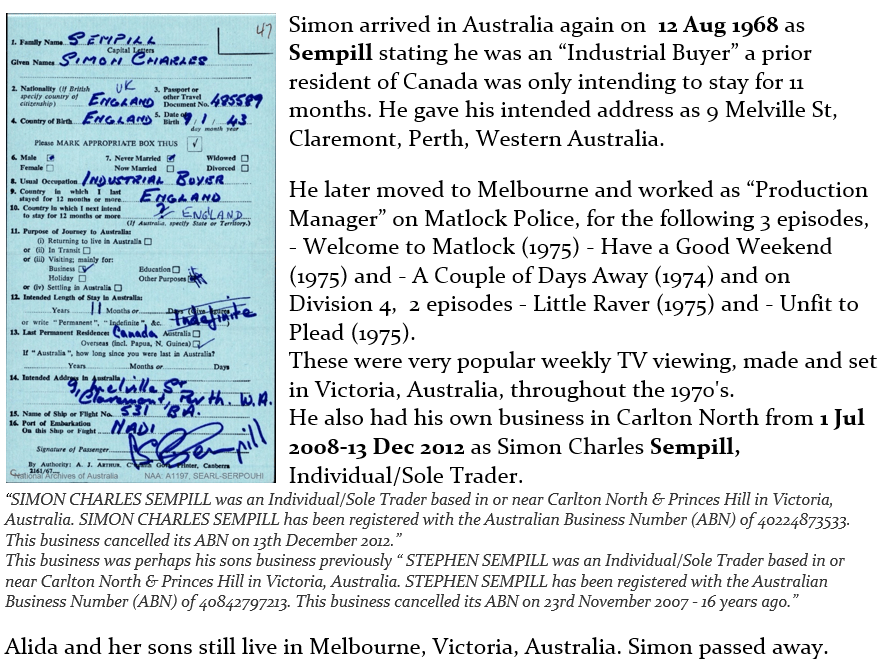


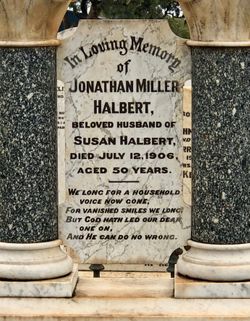
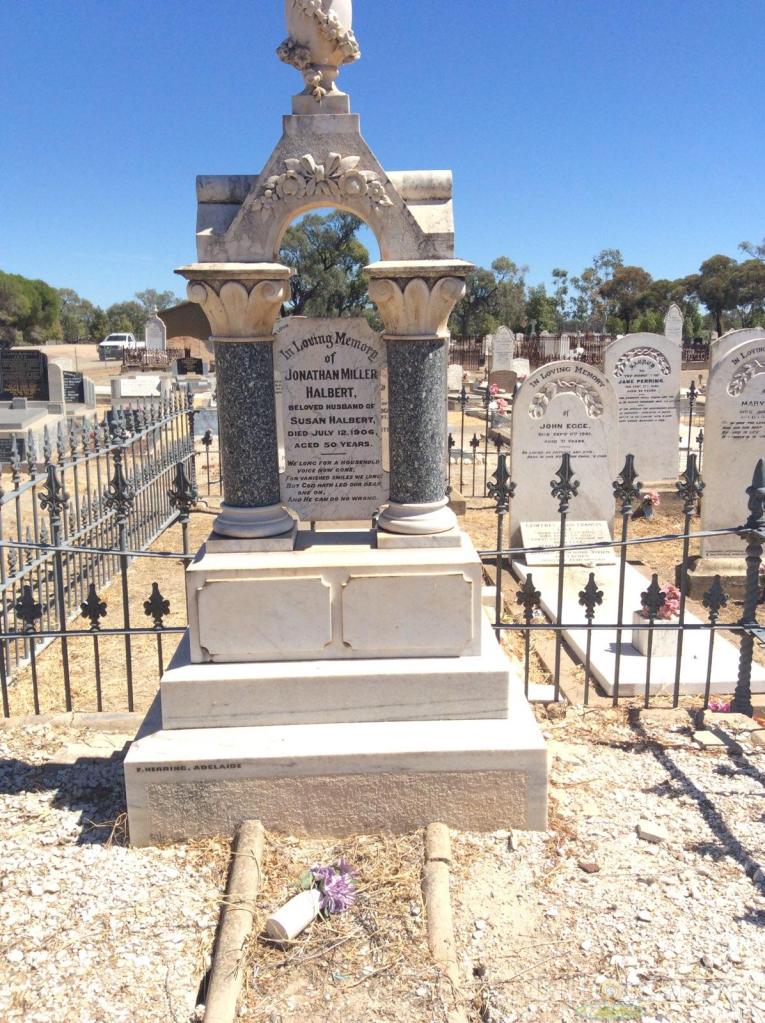

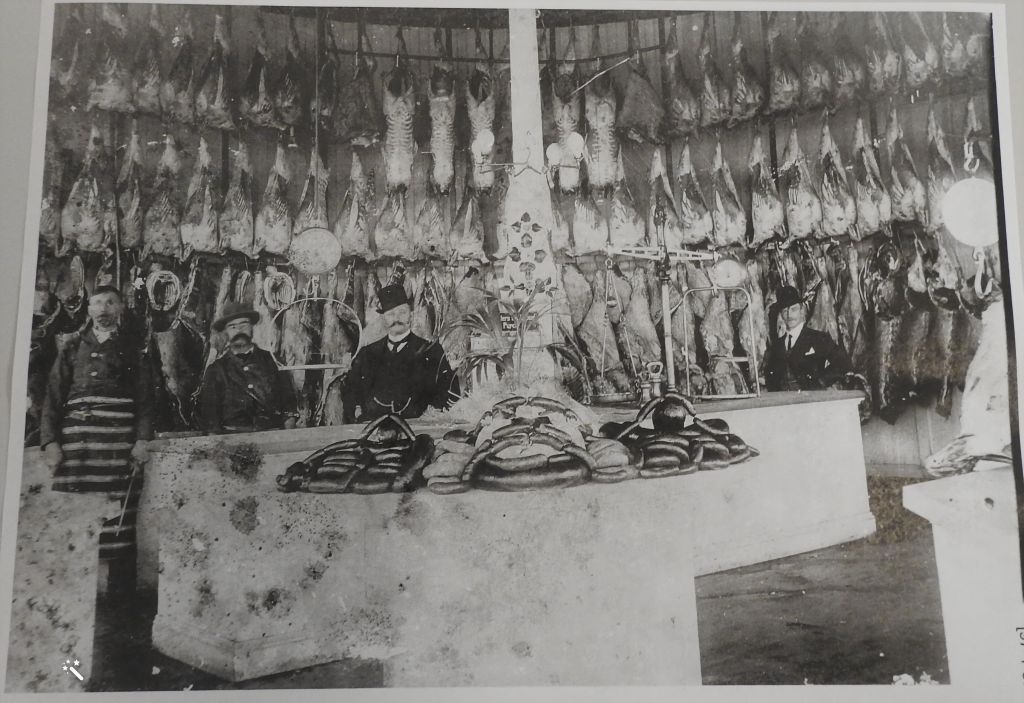
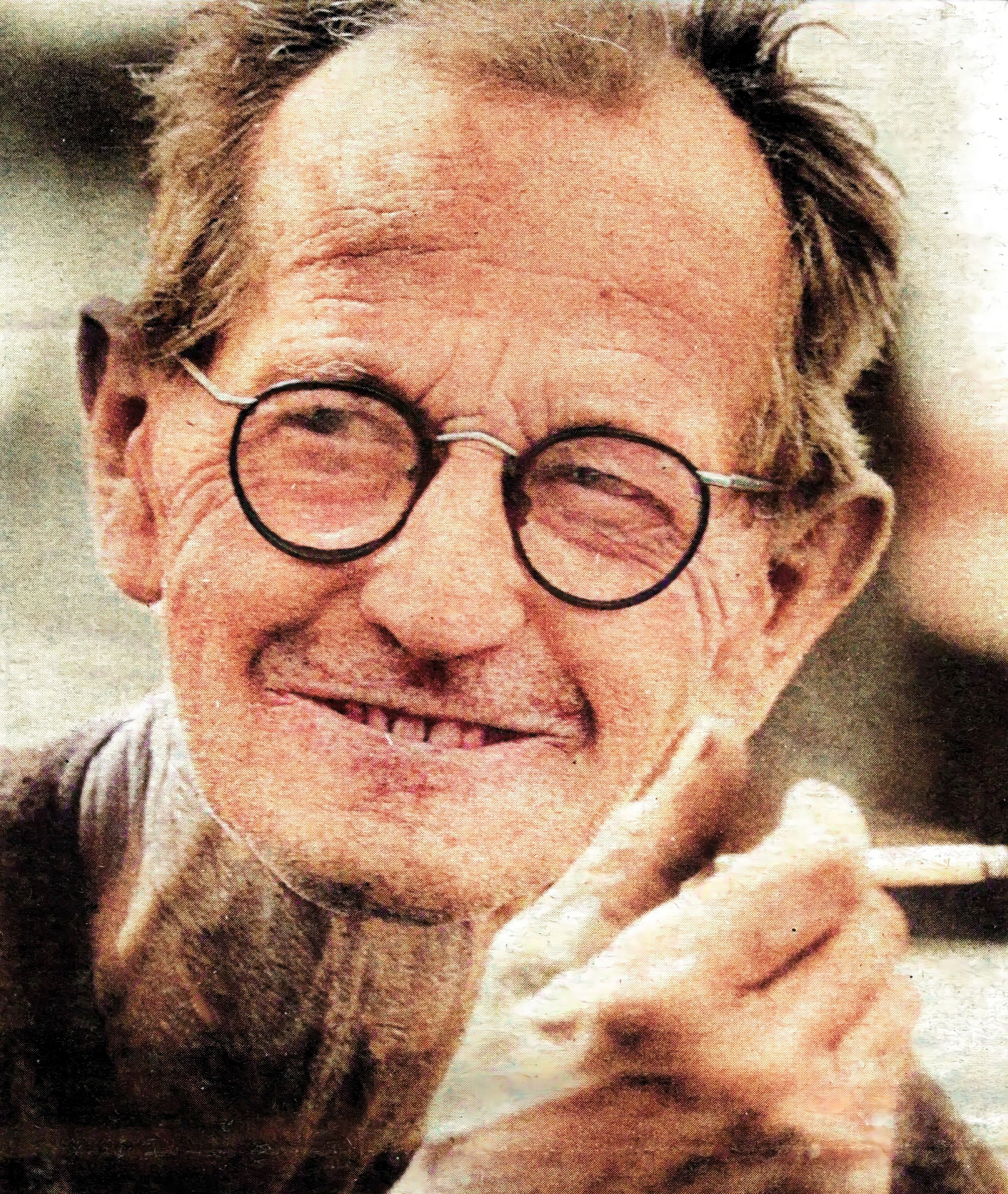
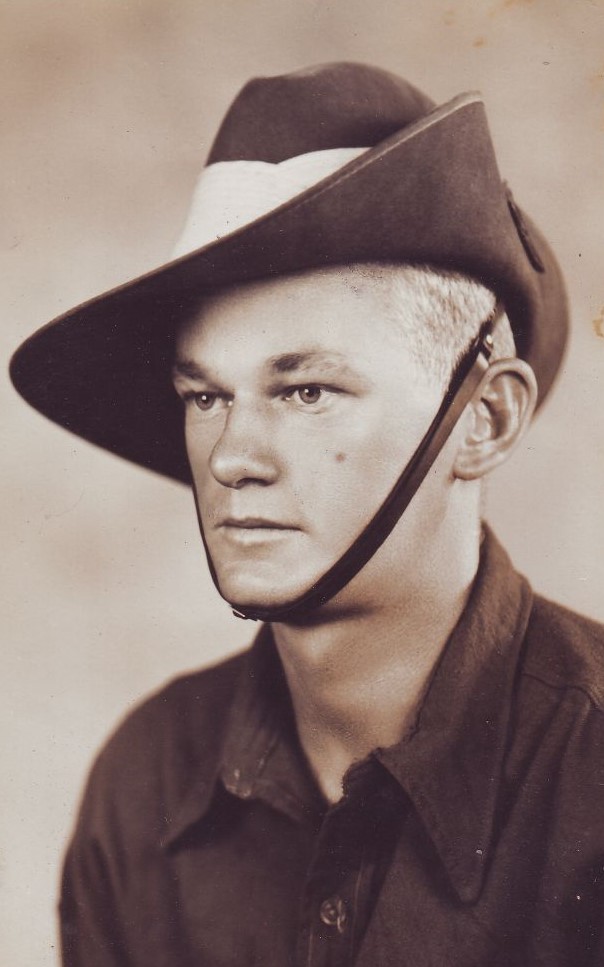
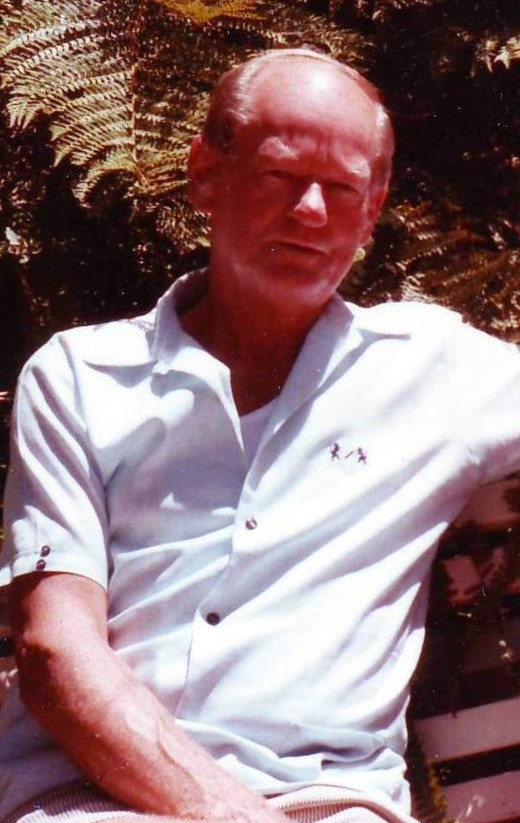
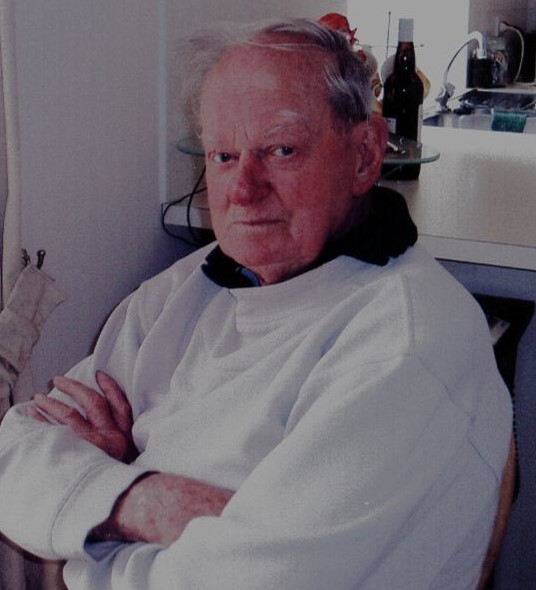


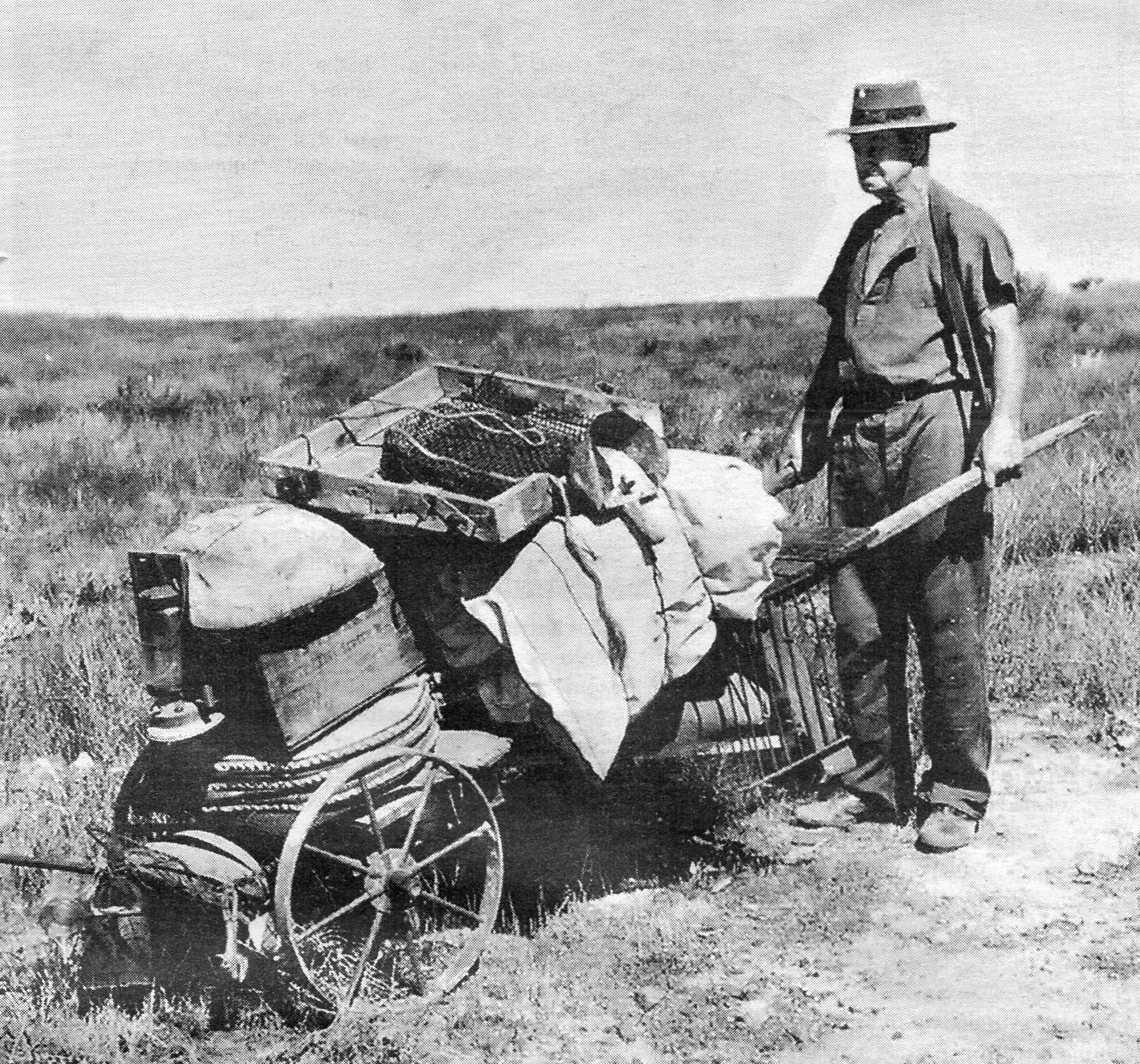
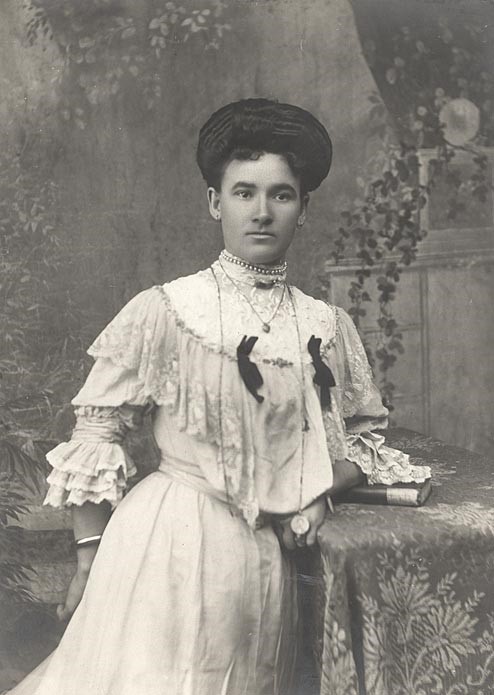

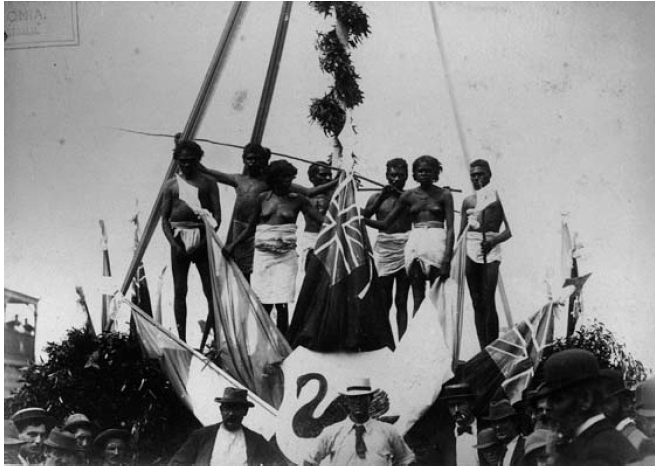


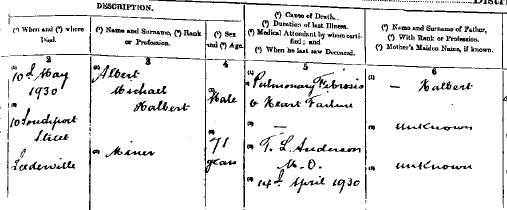


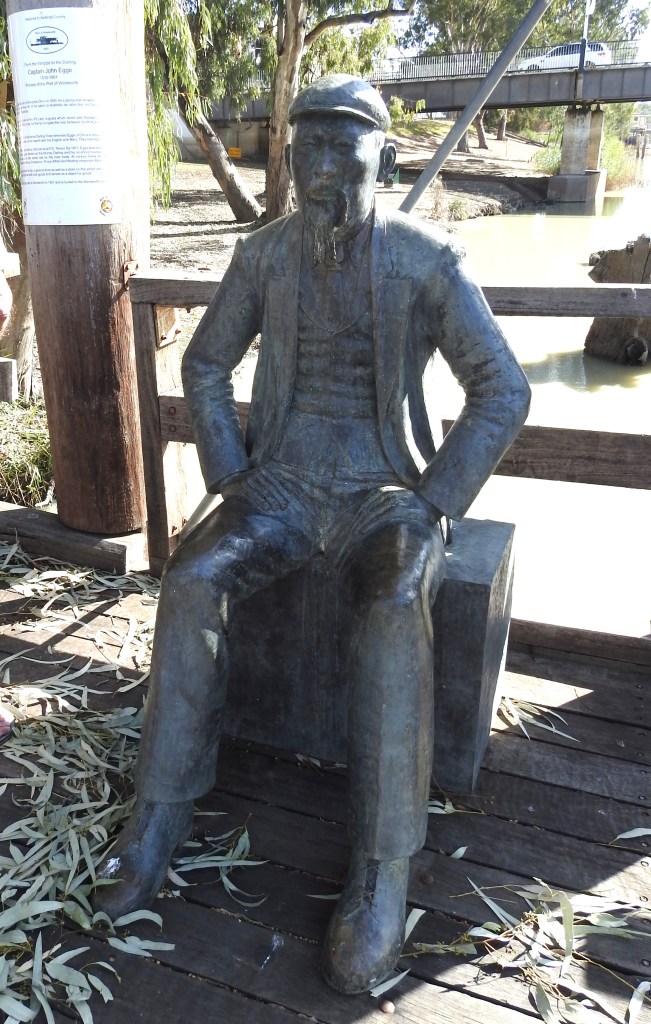
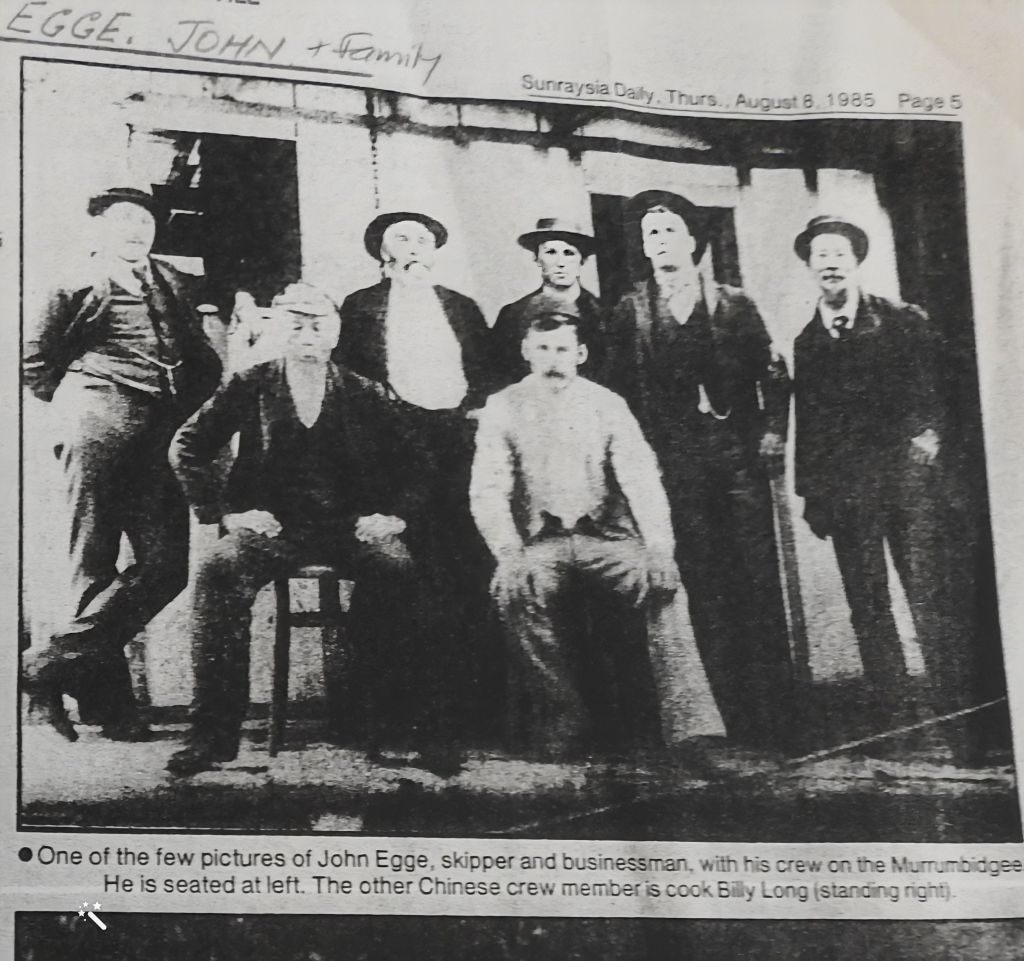
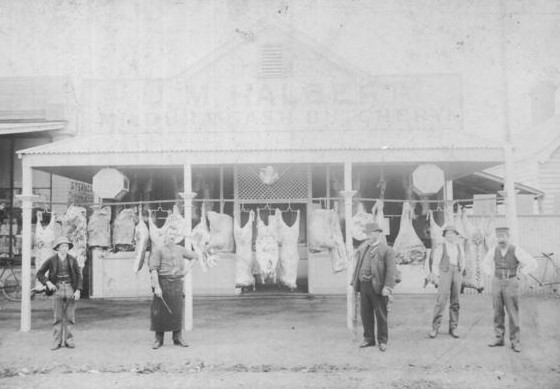


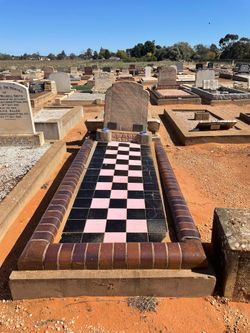
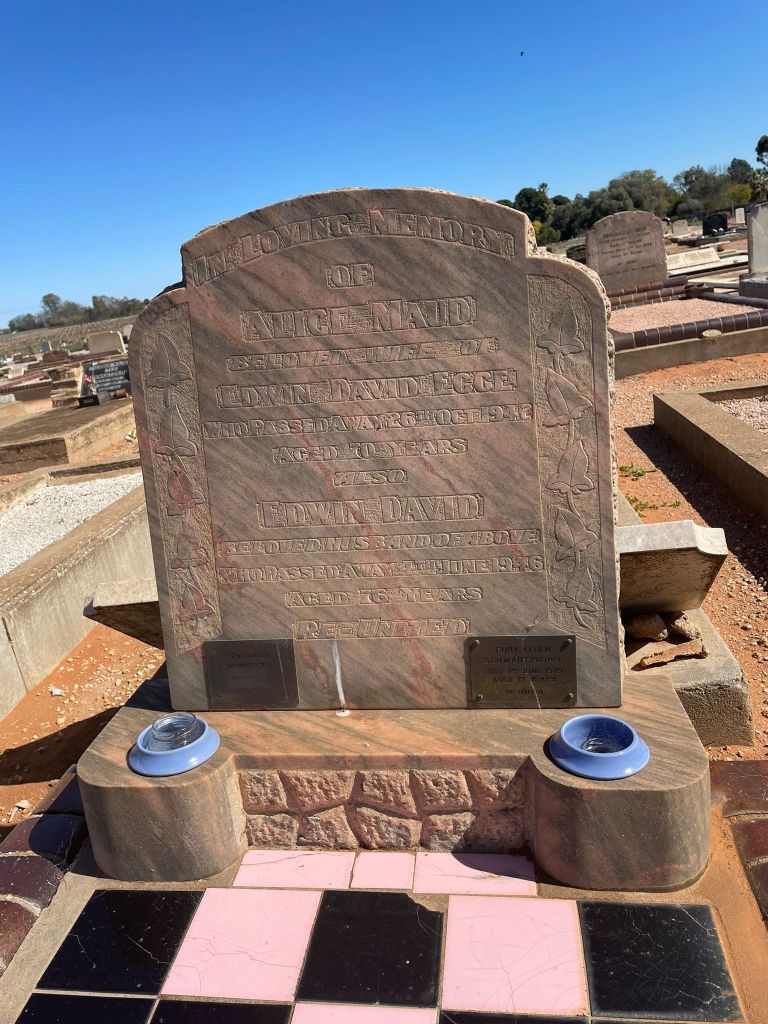
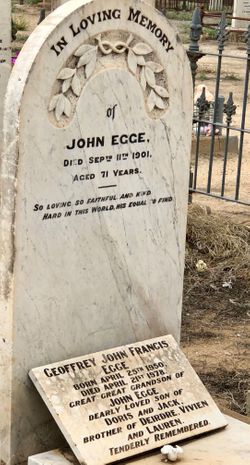
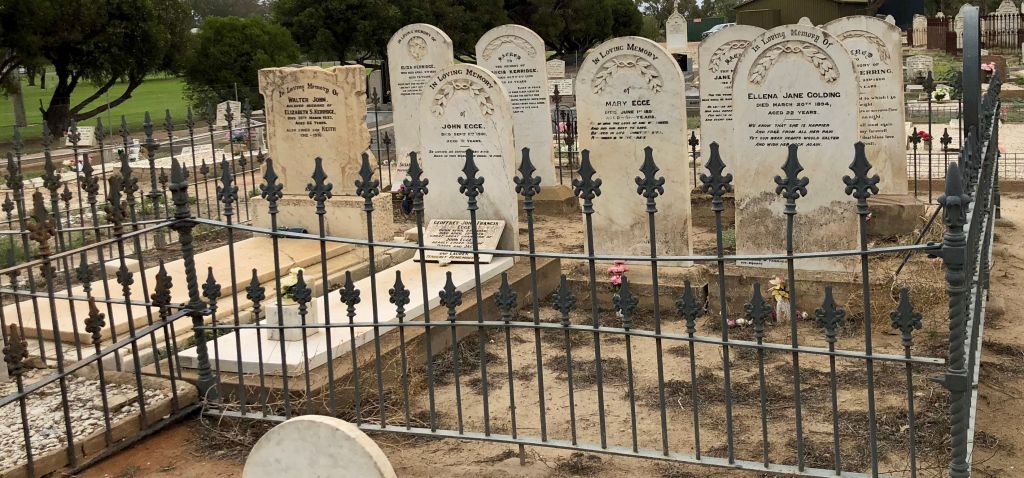
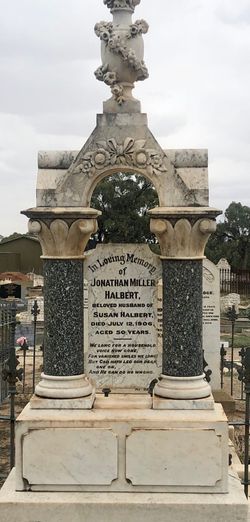
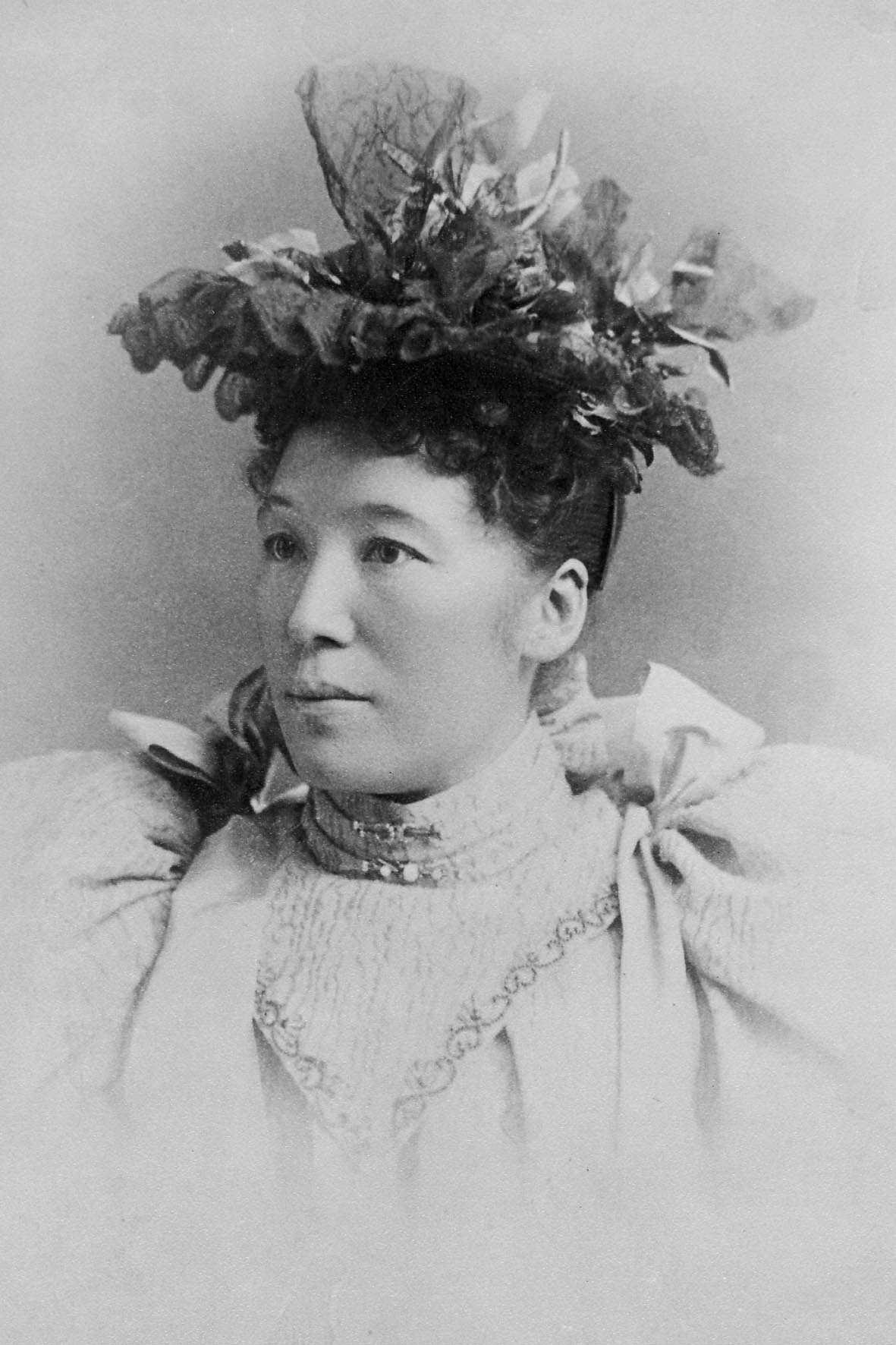
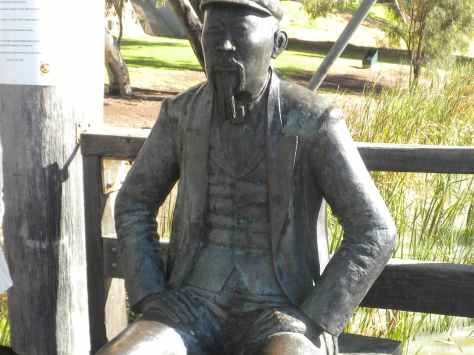


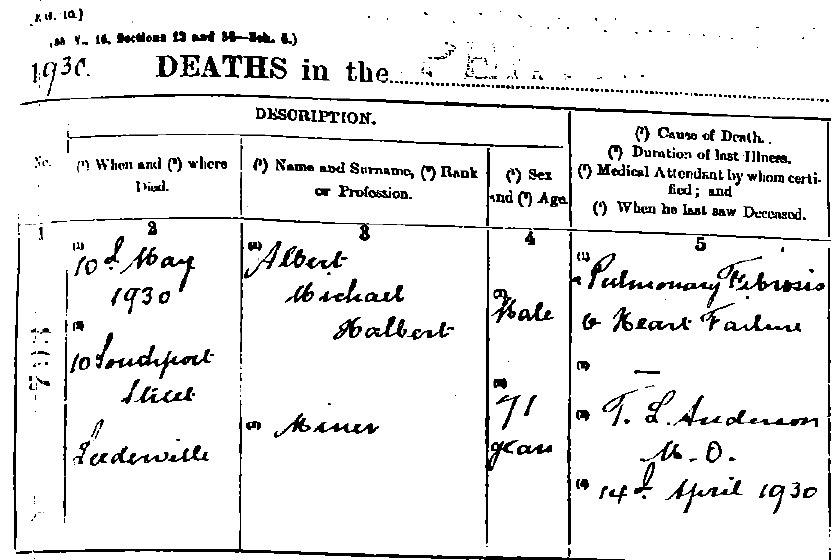

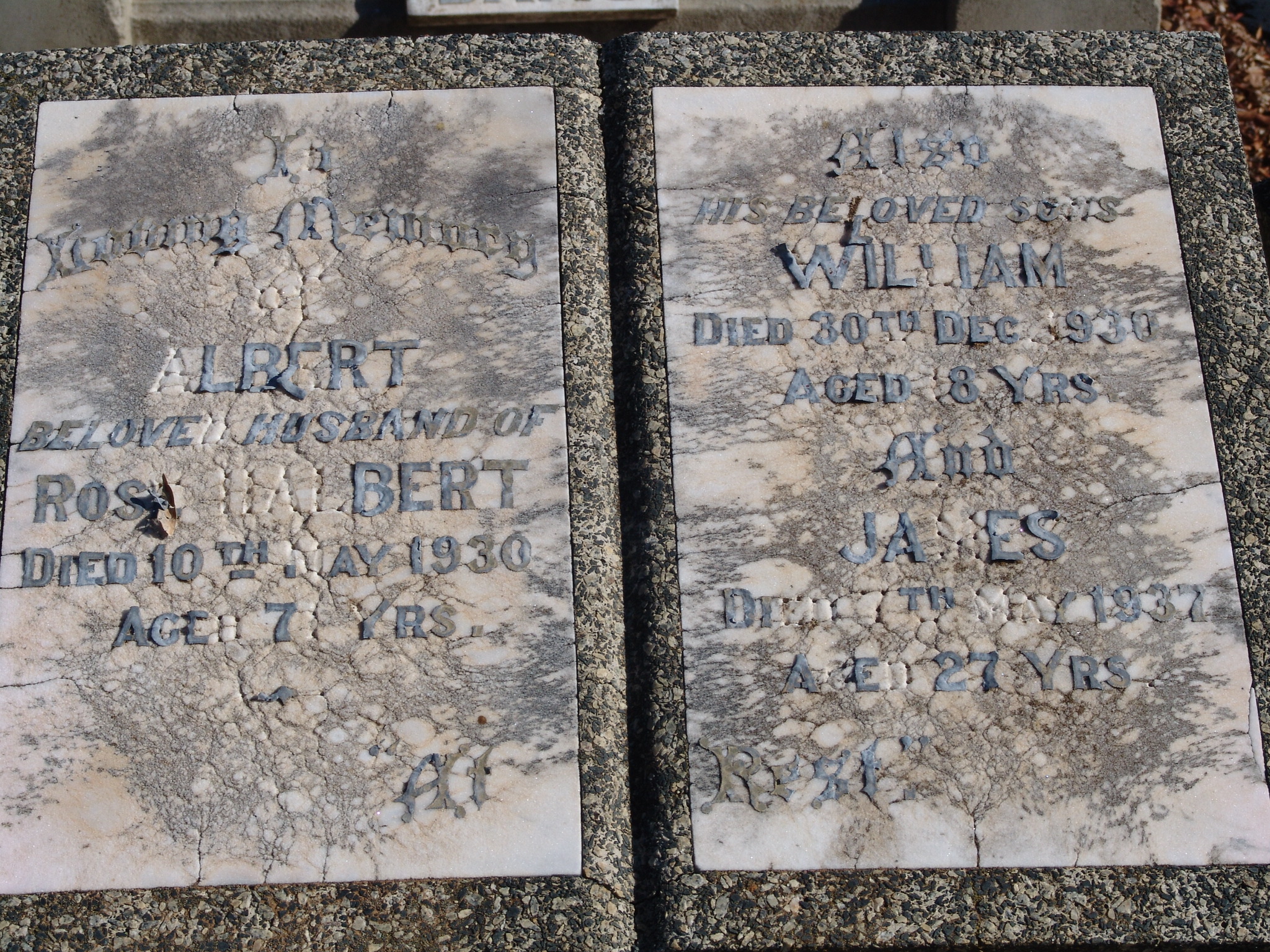
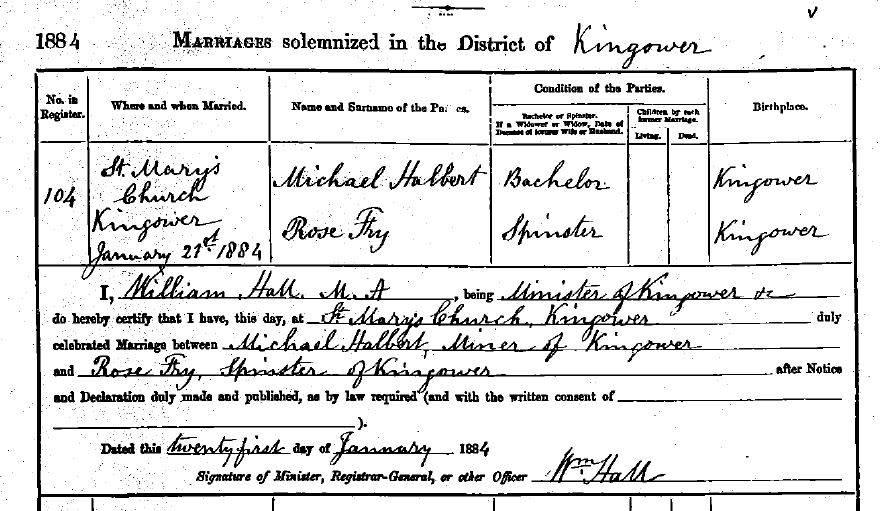
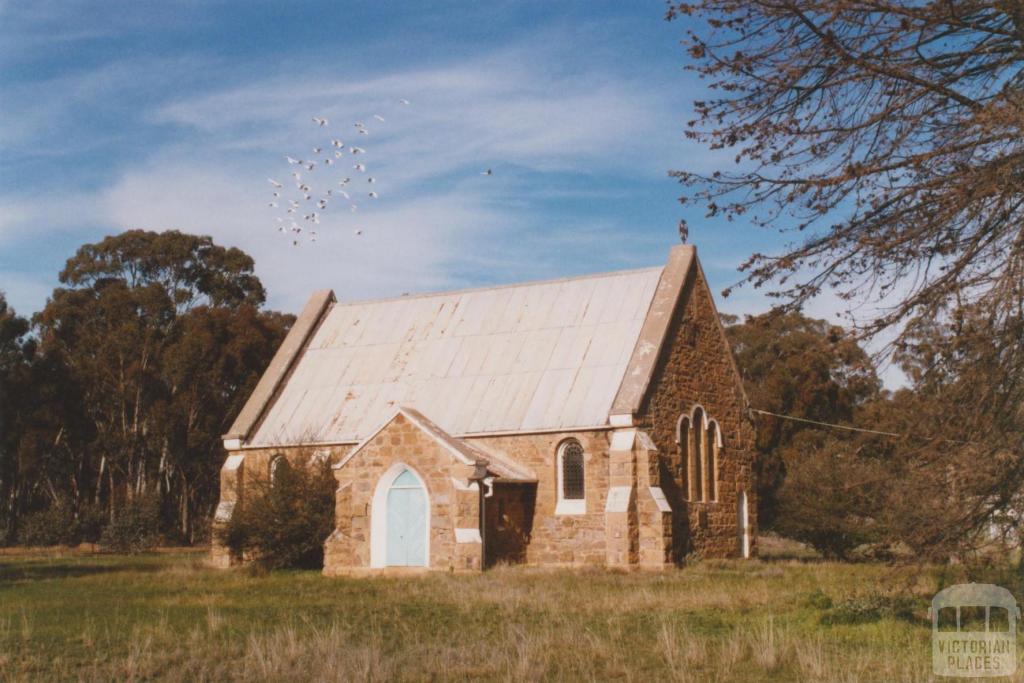
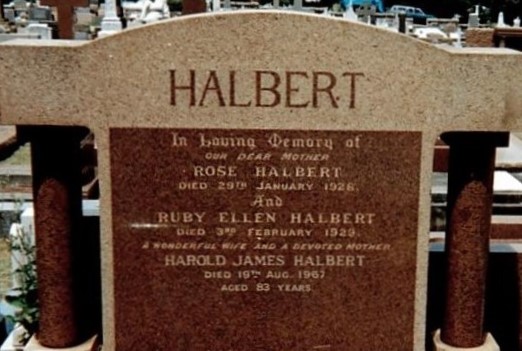
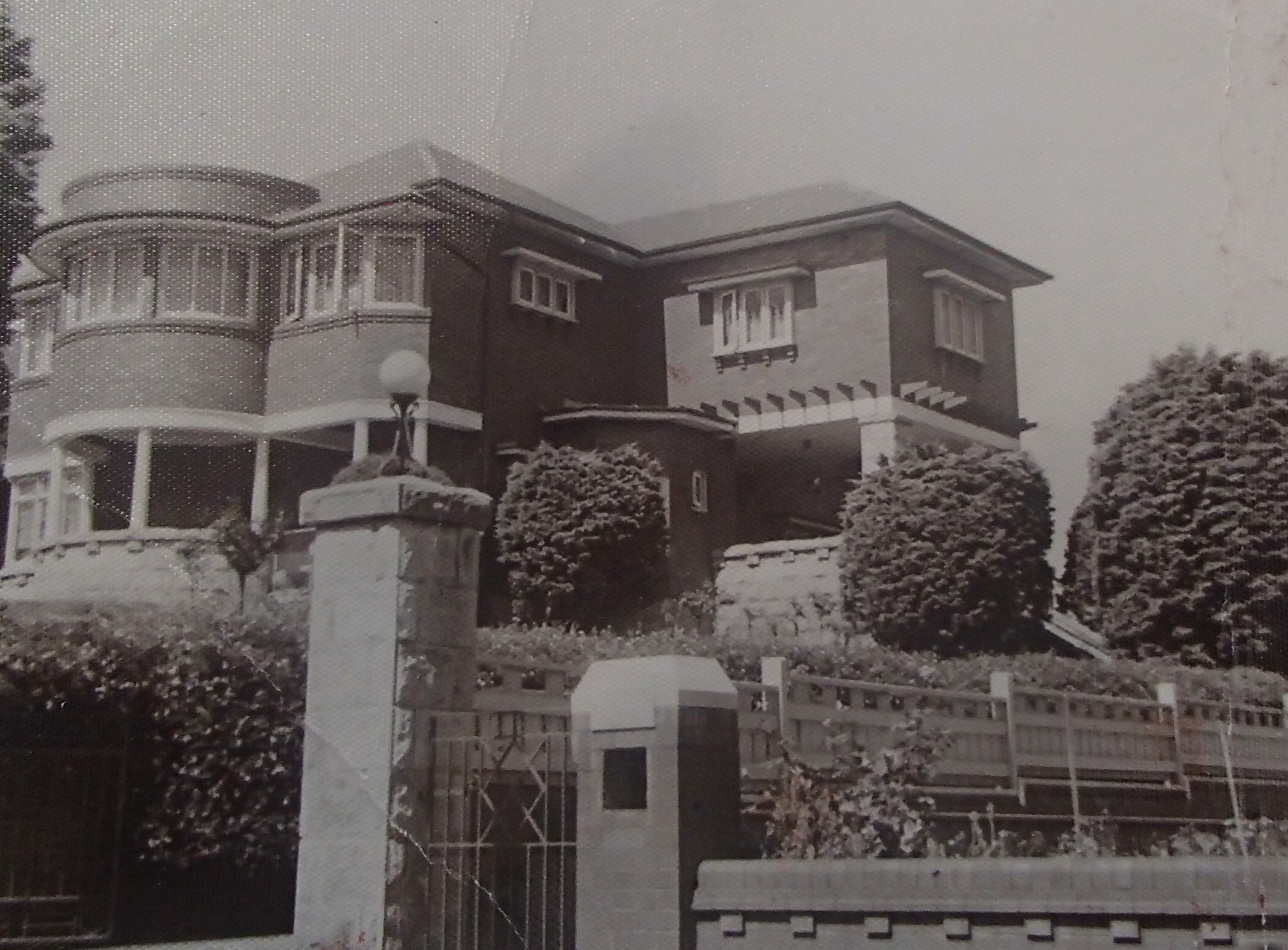


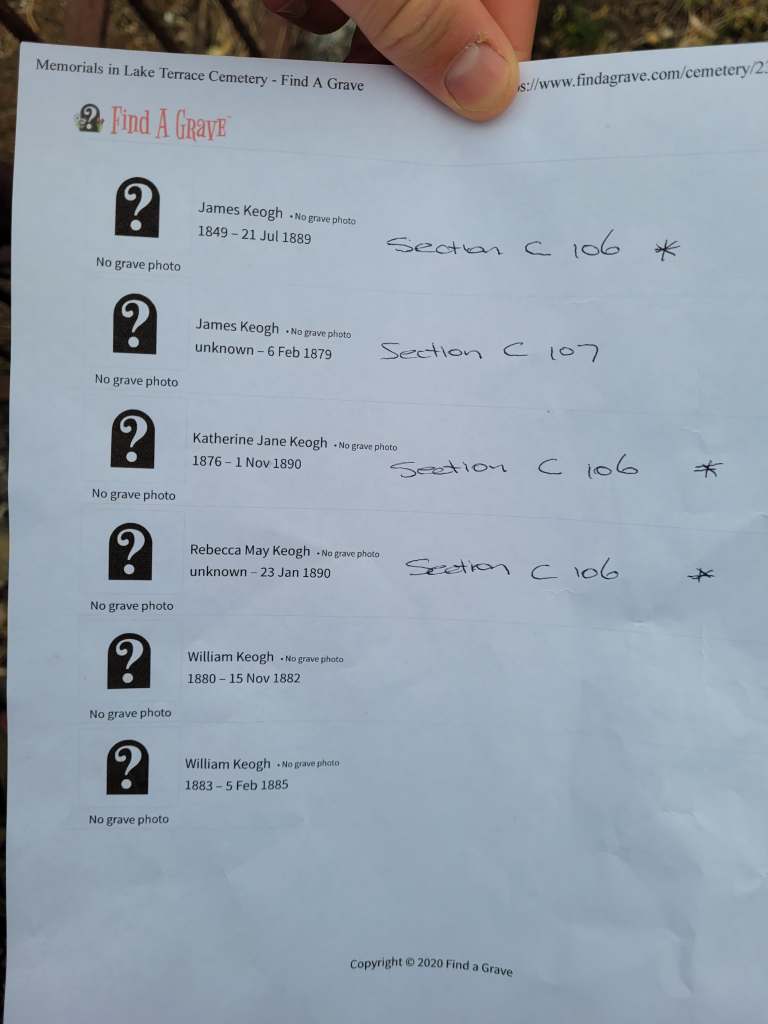


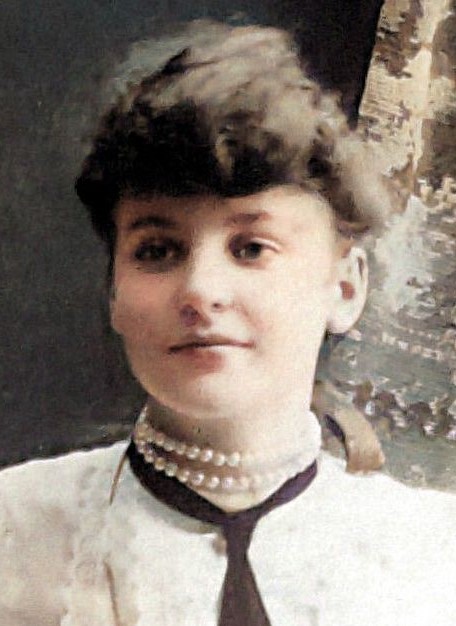


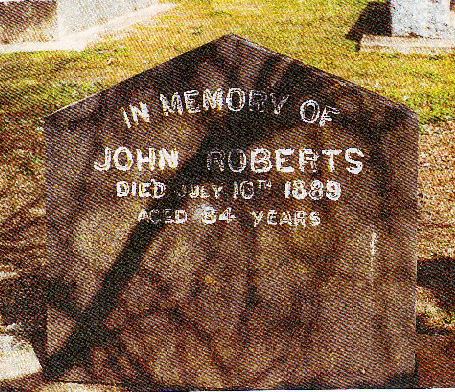


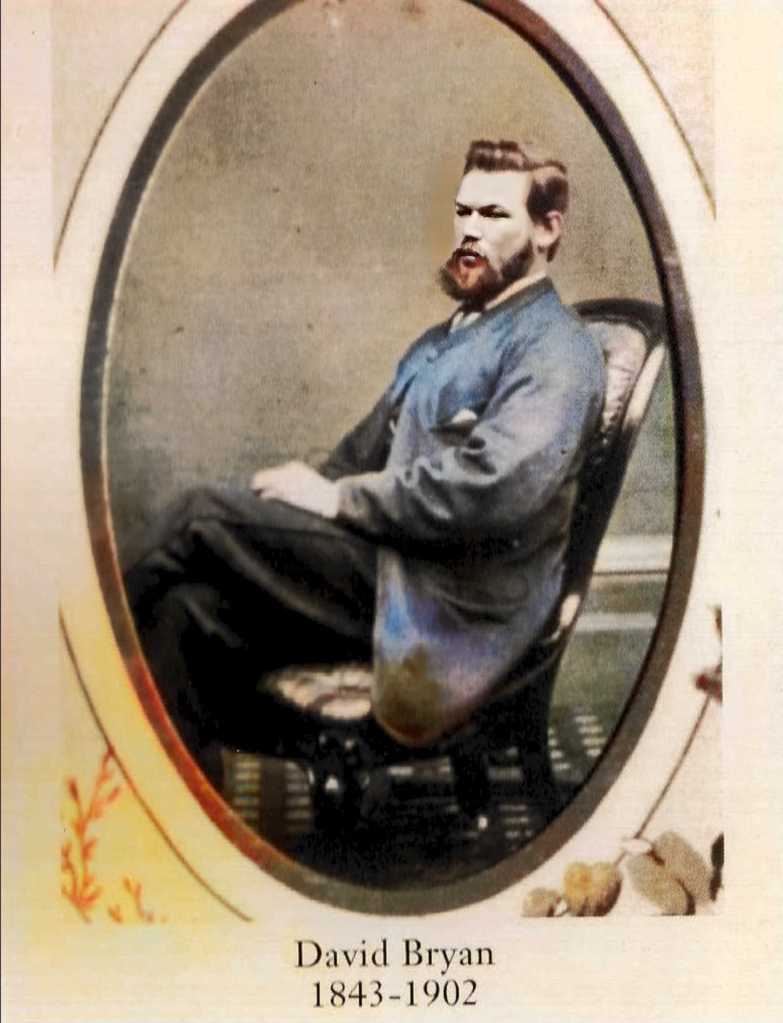

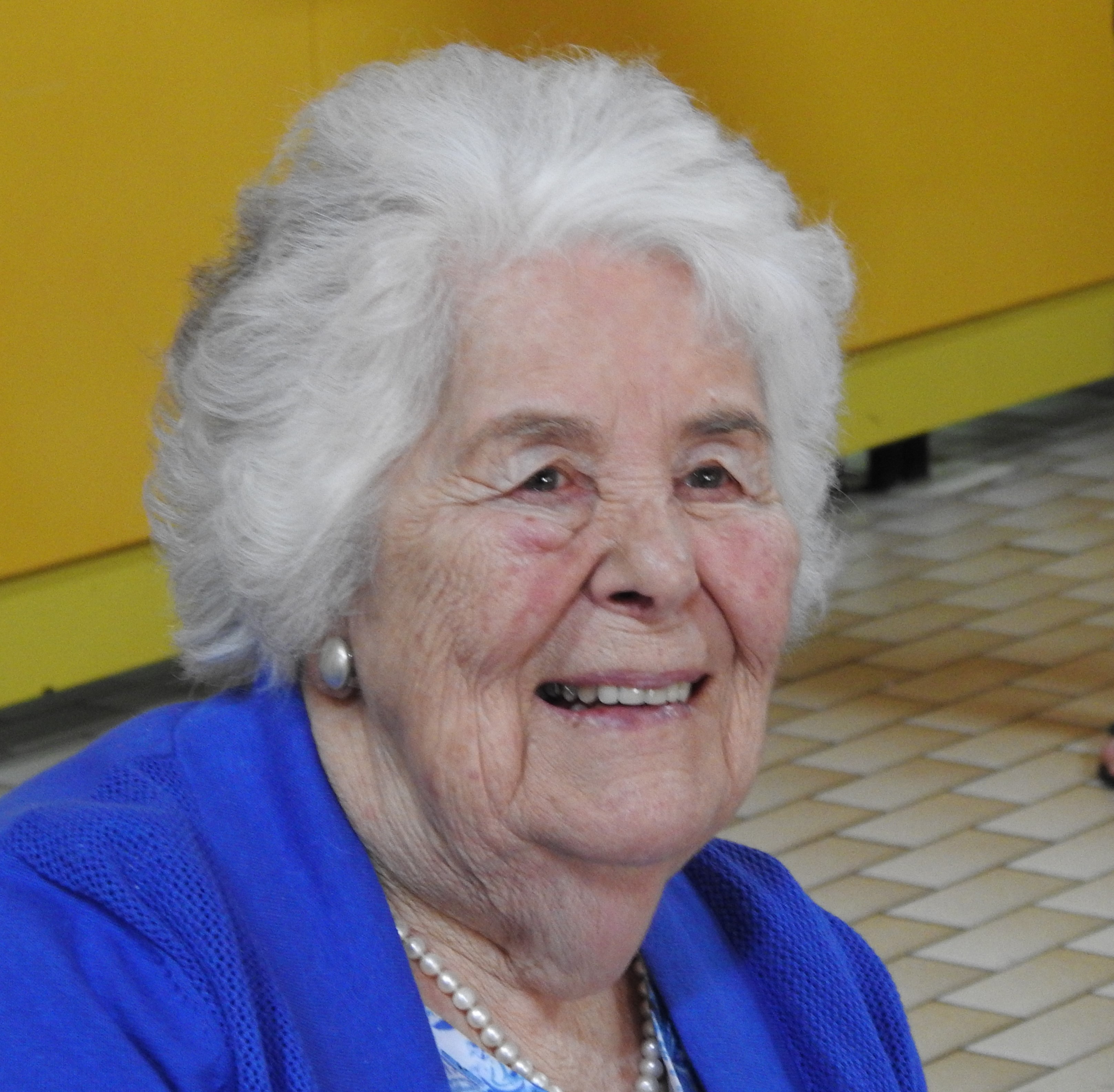
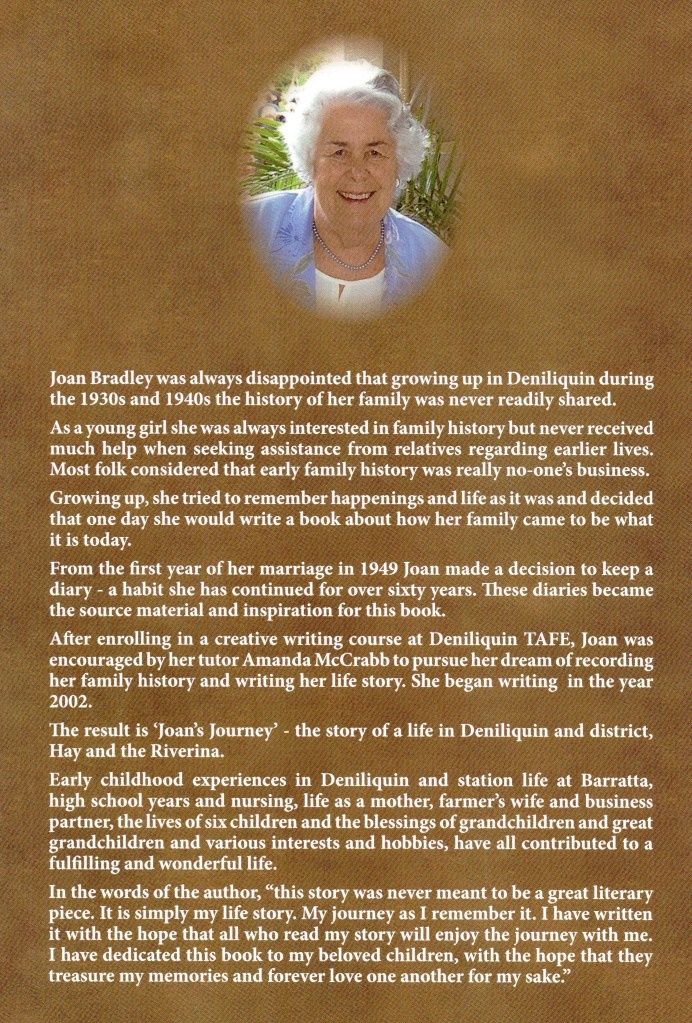

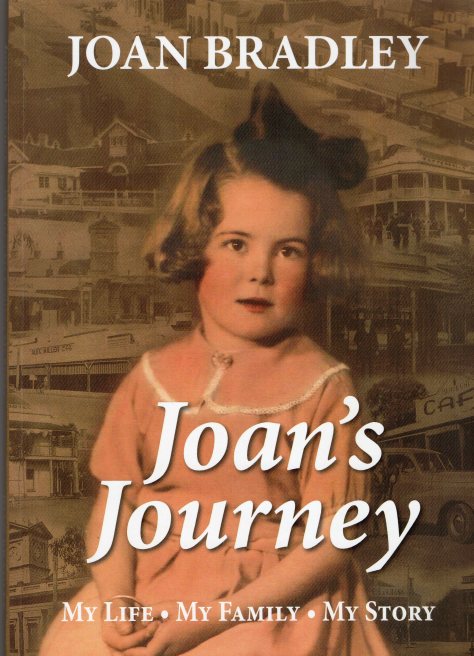
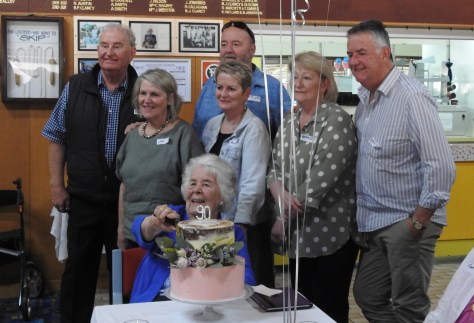




 Bryan. Halbert. McMillan. Perrin.